Things to Do in Lake Toba: Top Attractions & Travel Guide 2025
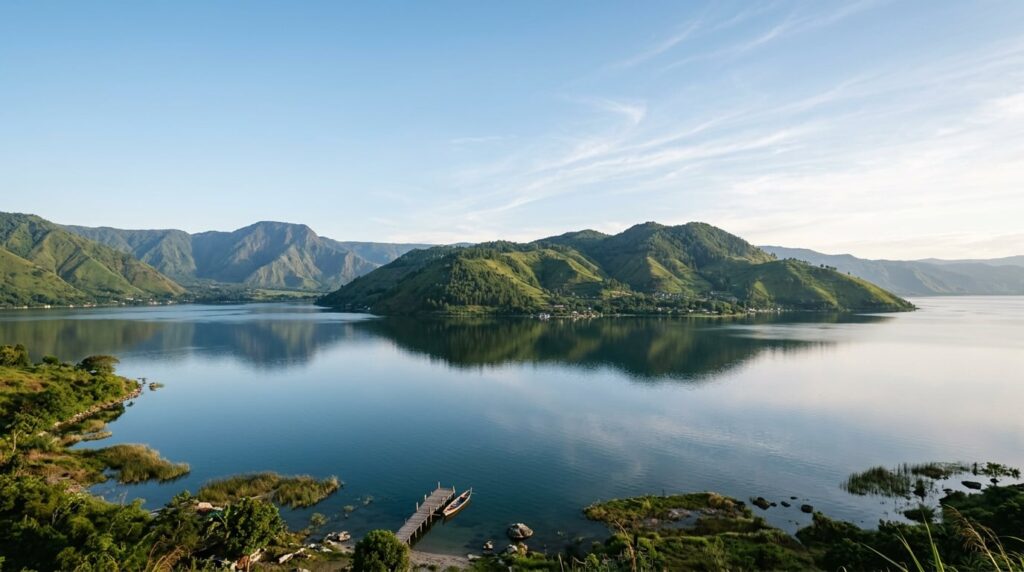
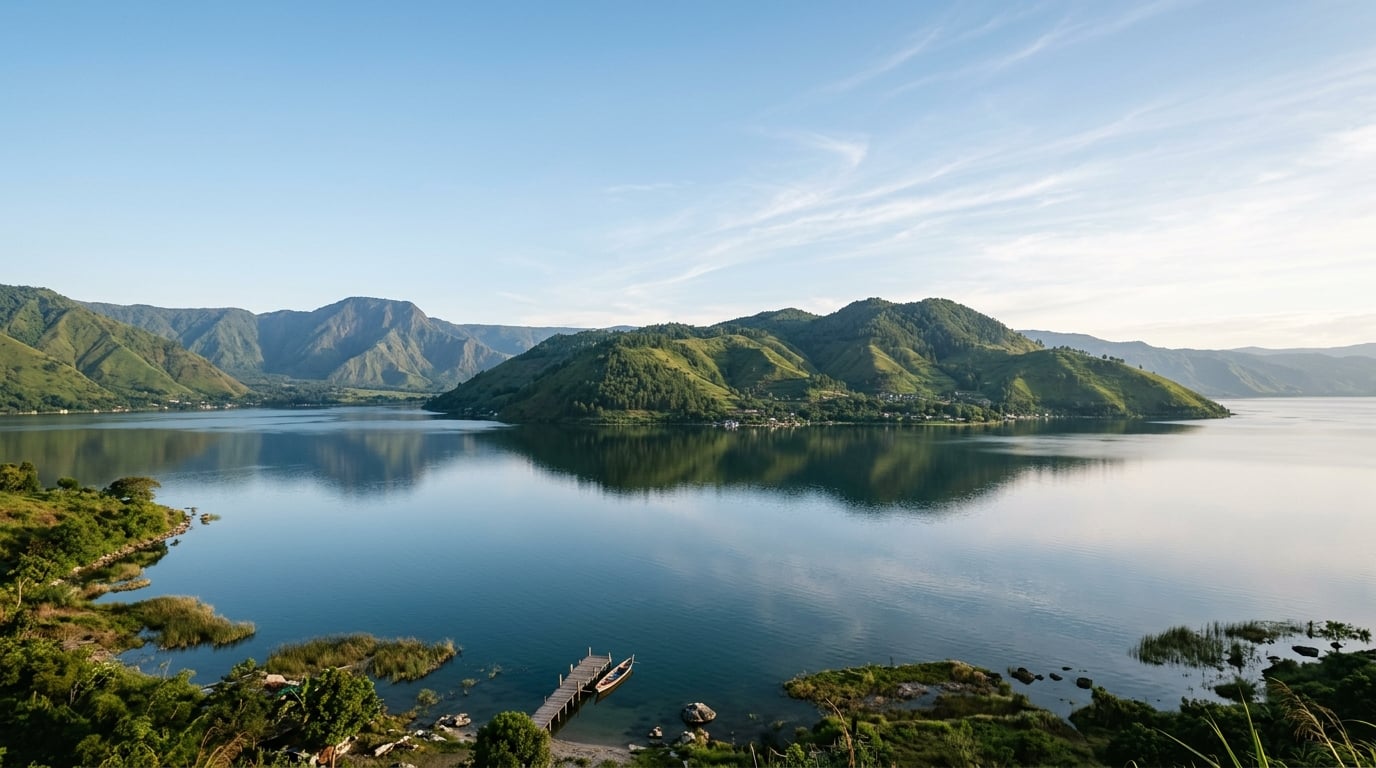
Lake Toba sits in the highlands of North Sumatra like a sea trapped inside a mountain range — because that’s essentially what it is. This is the largest volcanic lake on the planet, filling a caldera left behind by a supervolcanic eruption roughly 74,000 years ago, an event so massive it’s linked to a period of global cooling in the geological record. The lake stretches close to 100 kilometers long and 30 kilometers wide, with depths exceeding 500 meters in places. At the center of it all rises Samosir Island, a piece of land large enough to be mistaken for a country of its own.
If you’re researching things to do in Lake Toba, Indonesia for a 2025 or 2026 trip, the good news is that access has improved considerably over the past few years. Silangit International Airport now handles more direct routes from Jakarta and other Indonesian hubs, roads around the caldera have been repaved and widened, and ferry schedules between Parapat and Samosir Island run more frequently than they did a decade ago. UNESCO’s Global Geopark designation, granted in 2020 and reaffirmed after review in 2024, has also brought renewed attention — and funding — to conservation and visitor infrastructure around the lake. None of this has diluted what makes Toba special. It’s still slow, still deeply Batak in character, and still one of the more underrated destinations in Southeast Asia, even as Lake Toba tourism numbers slowly climb back toward pre-pandemic levels.
This Lake Toba travel guide 2025 walks through the top Lake Toba attractions, practical tips for anyone planning to visit Lake Toba, and a few less-obvious experiences worth adding to your itinerary — whether you have a long weekend or a full week to spare. If you’re coming from elsewhere in the archipelago and want to compare notes on other Sumatra and Java stops, our guides to things to do on Java Island and must-visit places on Java Island are worth a look before you build a longer Indonesia route.
Visit Samosir Island
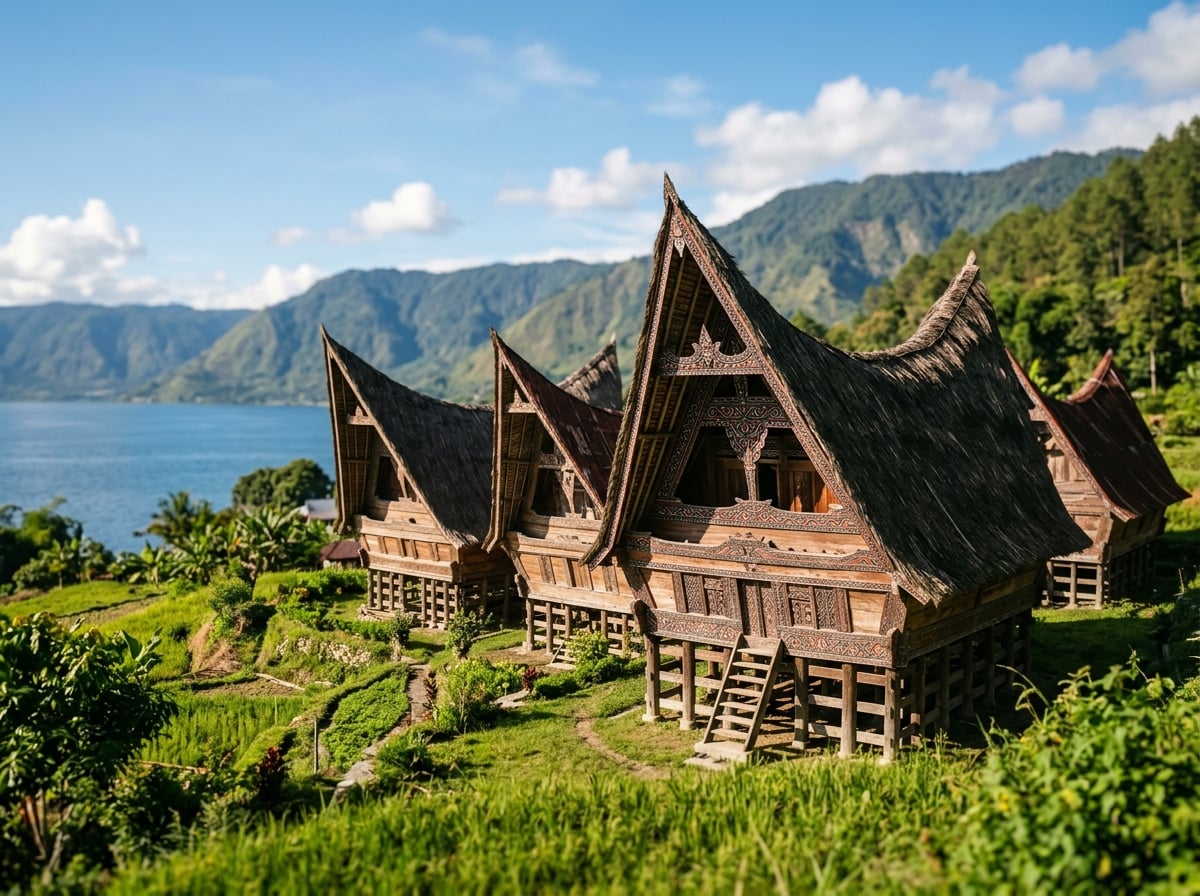
Any list of Lake Toba tourist attractions has to start with Samosir. This island in the middle of the caldera is roughly the size of Singapore and has been home to the Batak Toba people for generations. It’s less a single attraction and more a self-contained world — villages, farmland, hot springs, and hiking trails all packed onto one landmass surrounded by water, and reachable from the mainland town of Parapat in under an hour.
The village of Tomok is usually the first stop for boat arrivals, and it’s home to the Tomb of King Sidabutar, a set of centuries-old stone tombs carved directly into rock and decorated with Batak motifs. Nearby, you can catch a Sigale-gale performance — a wooden puppet dance rooted in traditional funeral rituals that’s become one of the island’s signature cultural shows. A short trip further along the coast brings you to Ambarita, where stone chairs and tables once used for tribal councils (and, according to local history, for trials of accused wrongdoers) still sit under old trees.
For a home base, most travelers pick Tuk Tuk, a small peninsula packed with guesthouses, lakeside cafés, and budget-friendly homestays. It’s an easy place to slow down — rent a scooter, cycle along the shoreline, or just swim in water that stays comfortably warm year-round thanks to the lake’s volcanic origins. If you’re comparing where to sleep on Lake Toba Samosir Island, it’s worth checking a dedicated roundup of the best hotels in Lake Toba before you book, since availability tightens up quickly during the dry season.
Take a Boat Tour of Lake Toba
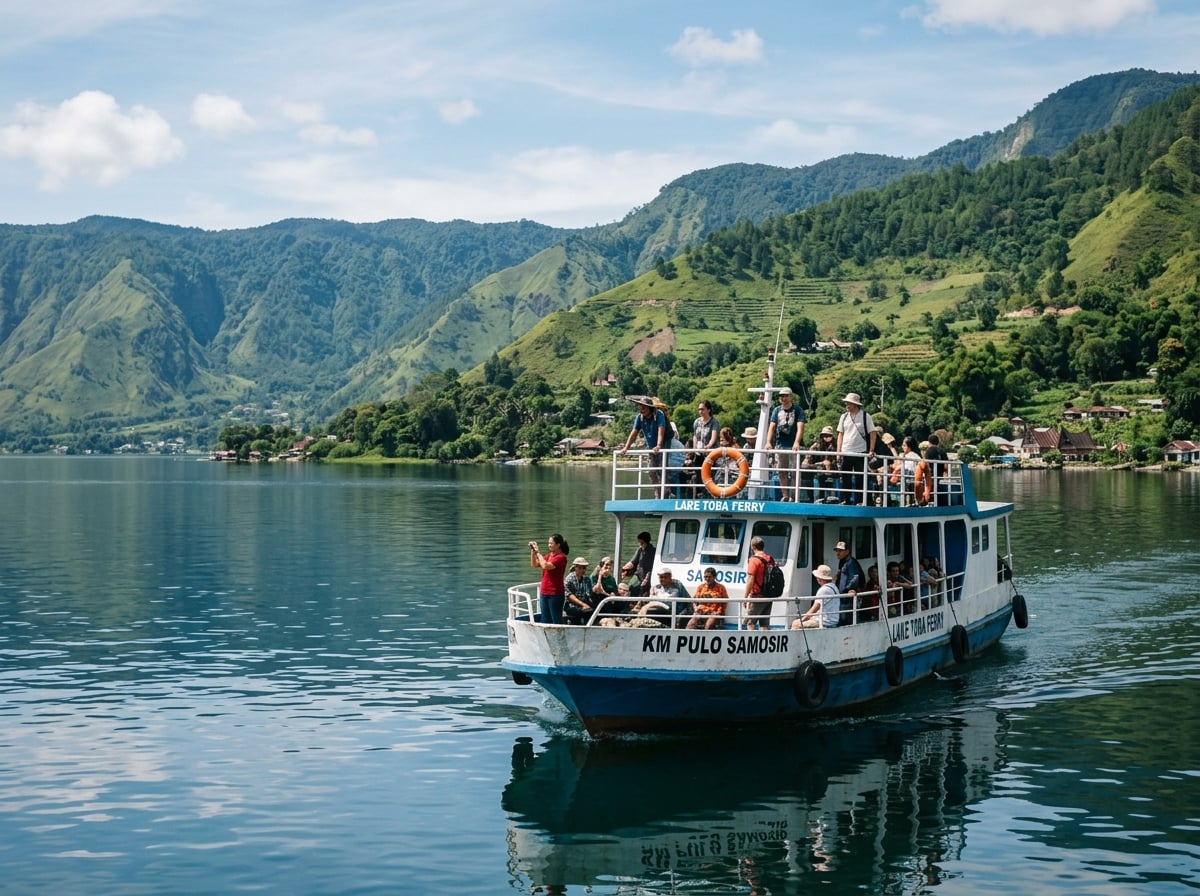
No Lake Toba travel guide is complete without time on the water itself. Public ferries connect Parapat on the mainland with Tomok and Tuk Tuk on Samosir, and the crossing takes about 45 minutes — cheap, scenic, and running on a fairly reliable schedule throughout the day. If you want more flexibility, chartering a wooden boat gives you access to quiet coves, small beaches, and lakeside villages that the public ferries skip entirely.
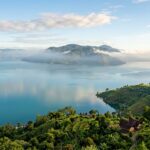
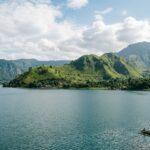
What you notice most from the water is scale. The caldera walls rise steeply on either side, green and terraced with farmland in places, and the lake itself stretches far enough that the far shore sometimes disappears into haze. Sunrise cruises are worth setting an early alarm for — the water tends to be glassy calm before the wind picks up, and the surrounding hills take on a gold color that photographs don’t quite capture. Anyone weighing whether to visit Lake Toba against other Sumatra stops should know this boat crossing alone tends to be the moment people remember most.
Explore the Traditional Batak Villages
Beyond Samosir’s main tourist stops, the Batak villages scattered around the lake offer some of the richest cultural experiences in North Sumatra. In Ambarita, Simanindo, and Tomok, you’ll find rows of Rumah Bolon — traditional houses raised on wooden stilts with dramatic curved roofs said to resemble buffalo horns or boat hulls, depending on who you ask. Simanindo in particular hosts regular Tortor dance performances accompanied by traditional gondang drums, usually scheduled around midday tour-bus arrivals.
Ulos weaving is another highlight worth seeking out. This handwoven cloth carries deep ceremonial meaning in Batak culture — given at births, weddings, and funerals — and buying directly from village weavers is one of the more meaningful ways to support the local economy rather than relying on souvenir shops. Prices for a genuine hand-loomed ulos typically start around 300,000 to 500,000 Indonesian rupiah (roughly $19–$32 USD at current exchange rates), depending on size and pattern complexity.
Hike to the Top of Bukit Beta and Beyond
For travelers who want elevation with their scenery, several hikes around the lake deliver serious payoff for relatively moderate effort. Bukit Holbung — often nicknamed the “Teletubbies Hills” for its rolling grassy ridgelines — has become one of the most photographed viewpoints in the region, and for good reason: the 360-degree views over the caldera are hard to beat. Bukit Beta and Menara Pandang Tele offer similar rewards with slightly different vantage points, and both have seen new viewing platforms added in the past couple of years to handle growing visitor numbers.
Most of these hikes take two to three hours round trip and are best done early morning or late afternoon, both to avoid the midday heat and to catch better light for photos. Bring more water than you think you’ll need — shade is scarce along most of these ridgeline trails — and decent footwear, since the paths can get slippery after rain.
Visit the Hot Springs in Pangururan
On the western side of Samosir, the town of Pangururan sits at the base of Mount Pusuk Buhit, a peak the Batak people regard as the sacred origin point of their ancestors. At its foot, natural hot springs offer warm, sulphur-rich pools with lake and mountain views — a genuinely good way to unwind after a day of hiking or cycling. Entry to most of the public pools costs only a few thousand rupiah, and private soaking areas are available at some of the small resorts nearby for a bit more.
The narrow isthmus connecting Samosir to the mainland near Pangururan also makes for one of the more scenic drives on the island, with water visible on both sides of the road at once.
Chase the Waterfalls
The hills surrounding Lake Toba hide a surprising number of waterfalls. Sipiso-piso, on the northern rim near Tongging, drops roughly 120 meters into a steep gorge and remains one of the tallest and most dramatic waterfalls in Indonesia — the viewpoint near the top is free and easily reached by car. On Samosir itself, Efrata Waterfall offers a gentler, terraced cascade that’s popular with families. For something more adventurous, the Situmurun (Binangalom) waterfall drops directly into the lake and can only be reached by boat, making it a favorite stop on private charter tours.
Other Things to Do at Lake Toba, Indonesia
A few less-publicized experiences round out a well-planned Toba itinerary. The Lintong coffee-growing region south of the lake produces some of Sumatra’s best-regarded arabica beans, and several small farms around Pangururan and Lintong ni Huta welcome visitors for informal tastings. Cycling the ring road around Samosir — roughly 100 kilometers if you do the full loop — is increasingly popular with travelers who want a slower, more physical way to see the island’s villages and coastline. If your visit lines up with it, the annual Lake Toba Festival, usually held around September, features traditional boat races, dance performances, and craft markets that are worth timing a trip around.
Food is worth planning around too. Grilled lake fish, spicy Batak-style pork dishes (for non-Muslim travelers), and the region’s own take on arsik — fish cooked with turmeric, lemongrass, and andaliman pepper — show up on almost every menu near the water. A closer look at where to eat around Lake Toba is worth bookmarking before you go, since options thin out fast once you leave Tuk Tuk and Parapat. If you want a wider survey of the island’s landmarks beyond what’s covered here, this guide to Lake Toba’s must-see destinations makes a useful companion read.
Practical Tips for Visiting Lake Toba
- Getting there: Silangit International Airport is about an hour’s drive from Parapat and now receives regular flights from Jakarta, Medan, and a growing number of regional routes. Kualanamu International Airport near Medan is the larger alternative, roughly 4–5 hours away by road.
- Best time to visit: The dry season, roughly May through September, gives the most consistent weather for hiking and boat trips. Shoulder months like April and October can still work well and tend to have fewer visitors.
- Getting around: Ferries link Parapat with Tomok and Tuk Tuk throughout the day. On Samosir itself, renting a scooter (around 75,000–100,000 rupiah per day) is by far the easiest way to get around; hiring a driver for a day is a solid option if you’d rather not navigate unfamiliar roads yourself.
- Climate: At roughly 900 meters above sea level, Lake Toba stays noticeably cooler than lowland Sumatra. Evenings can dip into the high teens Celsius, so pack a light jacket even in dry season.
- Money and connectivity: Cash is still preferred in most villages and homestays; ATMs are limited outside Parapat and Pangururan. Mobile signal is decent around Tuk Tuk but patchy in more remote hiking areas.
- Where to stay: Tuk Tuk remains the most convenient base for first-time visitors, with the widest range of guesthouses and restaurants. Travelers looking for something quieter often base themselves in Pangururan or the smaller villages along Samosir’s western shore.
For a broader look at etiquette, packing, and common mistakes first-timers make, our companion piece on things to keep in mind while visiting Lake Toba pairs well with this attractions guide.
Frequently Asked Questions
Is Lake Toba worth visiting in 2025?
Yes — improved flight access, better roads, and its UNESCO Global Geopark status have made it easier to visit than it was even five years ago, without sacrificing the slower, culturally rich atmosphere that draws people here in the first place. Lake Toba tourism has grown steadily since reopening, but the lake still doesn’t feel crowded the way Bali’s main hubs can.
How many days do you need at Lake Toba?
Three to four days is realistic for covering Samosir Island, a boat tour, one or two hikes, and the hot springs without rushing. A week allows time for the waterfalls and villages further afield.
Is Lake Toba safe for tourists?
Generally yes. The region sees relatively low crime, and the main safety considerations are practical ones — road conditions on scooters, sun exposure on hikes, and swimming only in designated calm areas of the lake.
What is Lake Toba best known for?
It’s best known for being the world’s largest volcanic lake, for Samosir Island at its center, and for the distinct Batak culture found in villages ringing the shoreline — a combination that makes it one of Sumatra’s most geologically and culturally significant tourist attractions.
What’s the best way to see Lake Toba island and Samosir together?
Base yourself in Tuk Tuk on Samosir, then use a combination of scooter and boat trips to reach Tomok, Ambarita, Simanindo, and Pangururan. Trying to day-trip the whole lake from Parapat without staying on the island itself means missing most of what makes Lake Toba worth the trip.
Final Thoughts
Lake Toba rewards travelers who slow down. The obvious highlights — Samosir Island, a boat crossing at sunrise, an afternoon at the hot springs — are worth every bit of their reputation, but the quieter moments tend to stick longer: a coffee farmer explaining how Lintong beans are dried, an elderly weaver working an ulos pattern she’s made a thousand times before, the sound of a ferry engine cutting through still morning water. Whatever pace you choose, there’s no shortage of things to do in Lake Toba, and few places in Indonesia pack this much geology, culture, and scenery into one caldera.