Luxury Alpin Panorama Hotel Hubertus: Inside South Tyrol's Most Photographed Wellness Retreat
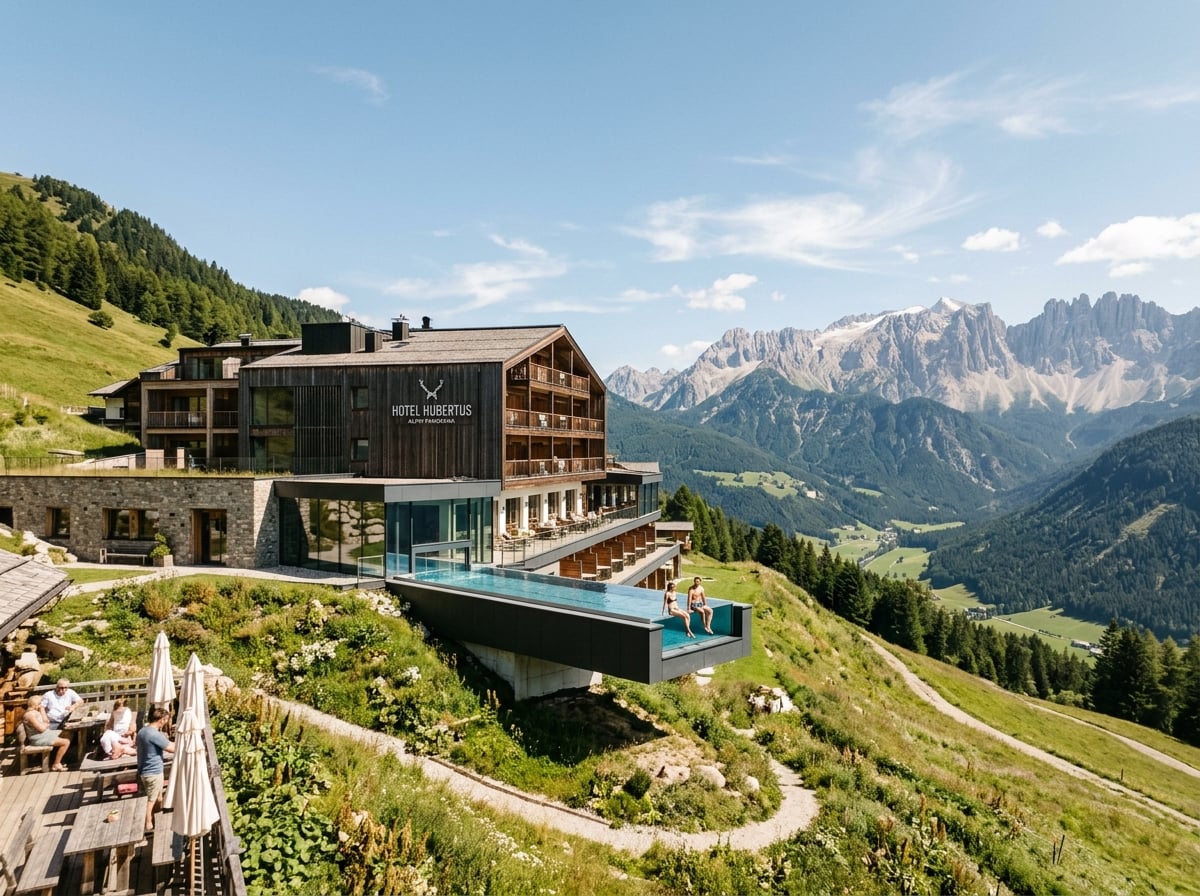
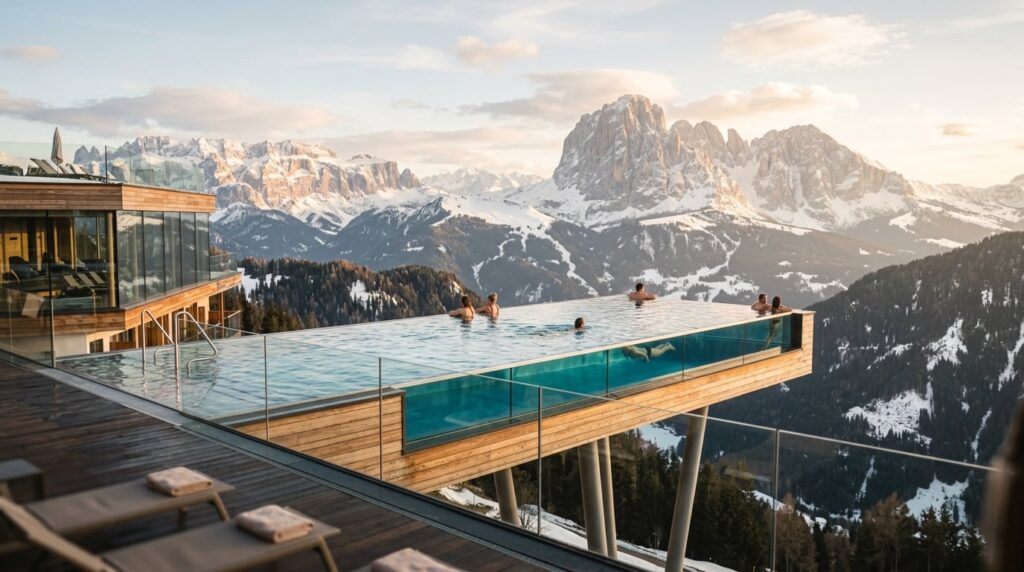
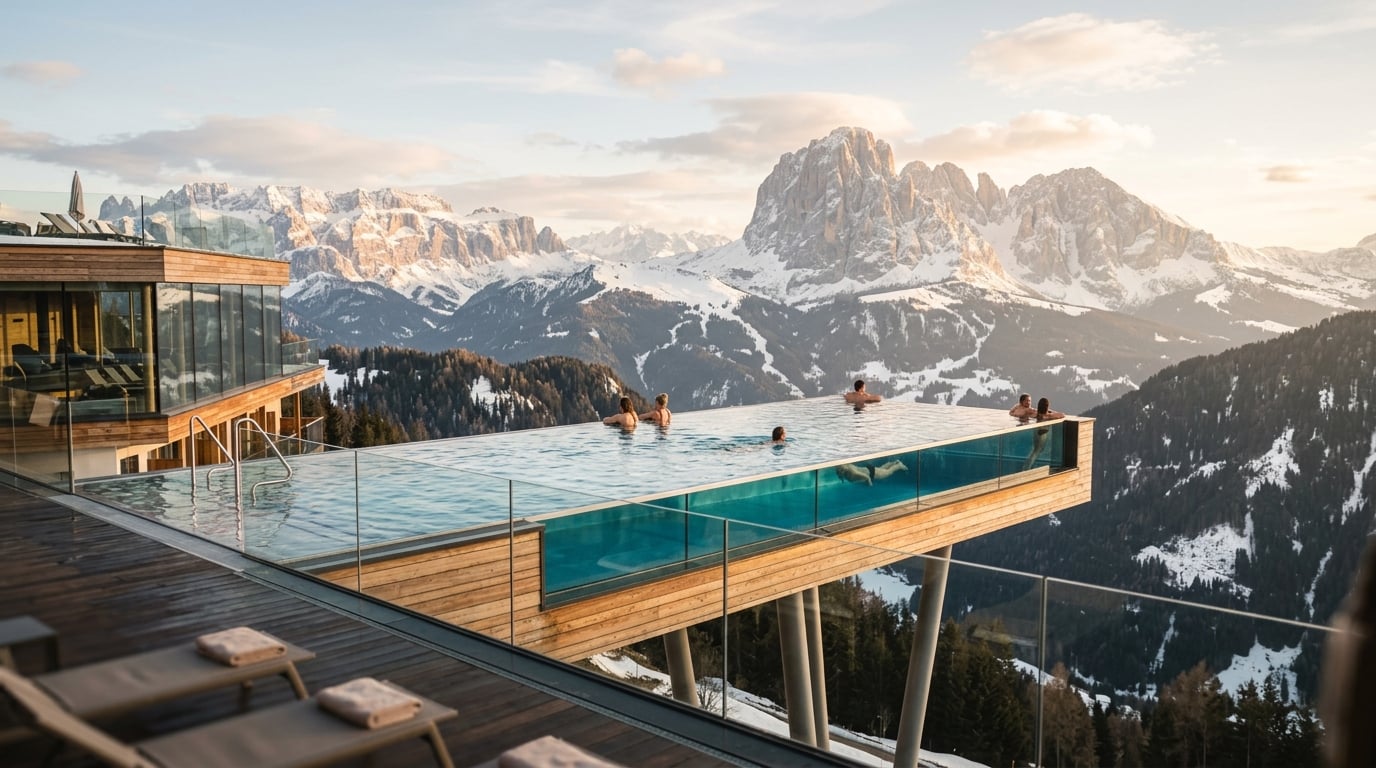
Perched on a sun-facing plateau above Olang (Valdaora) in South Tyrol, Italy, the Luxury Alpin Panorama Hotel Hubertus remains one of the most recognizable wellness addresses anywhere in the Dolomites. You've almost certainly seen it without knowing the name — the rooftop infinity pool, where swimmers seem to float above jagged limestone peaks, has been circulating across travel blogs, Pinterest boards, and Instagram reels for close to a decade now, and the image keeps resurfacing as travel photography leans harder into drone shots and short-form video. That single frame still pulls in thousands of curious visitors every season, but the hotel has built a lot more substance around it than a striking camera angle.
Run by the Aurer family across several generations, Hubertus sits at roughly 1,400 meters above sea level, facing directly toward Kronplatz (Plan de Corones), one of the largest and best-groomed ski and hiking areas in the entire Alpine arc. That position matters more than it might first appear. Guests get near ski-in convenience through the winter months and immediate access to hundreds of kilometers of hiking and biking terrain the moment the snow clears in spring. The property isn't tucked away in some remote side valley either — it's a short shuttle ride from the lifts, yet far enough from the village center to feel private, quiet, and unhurried.
Getting There and Choosing When to Visit
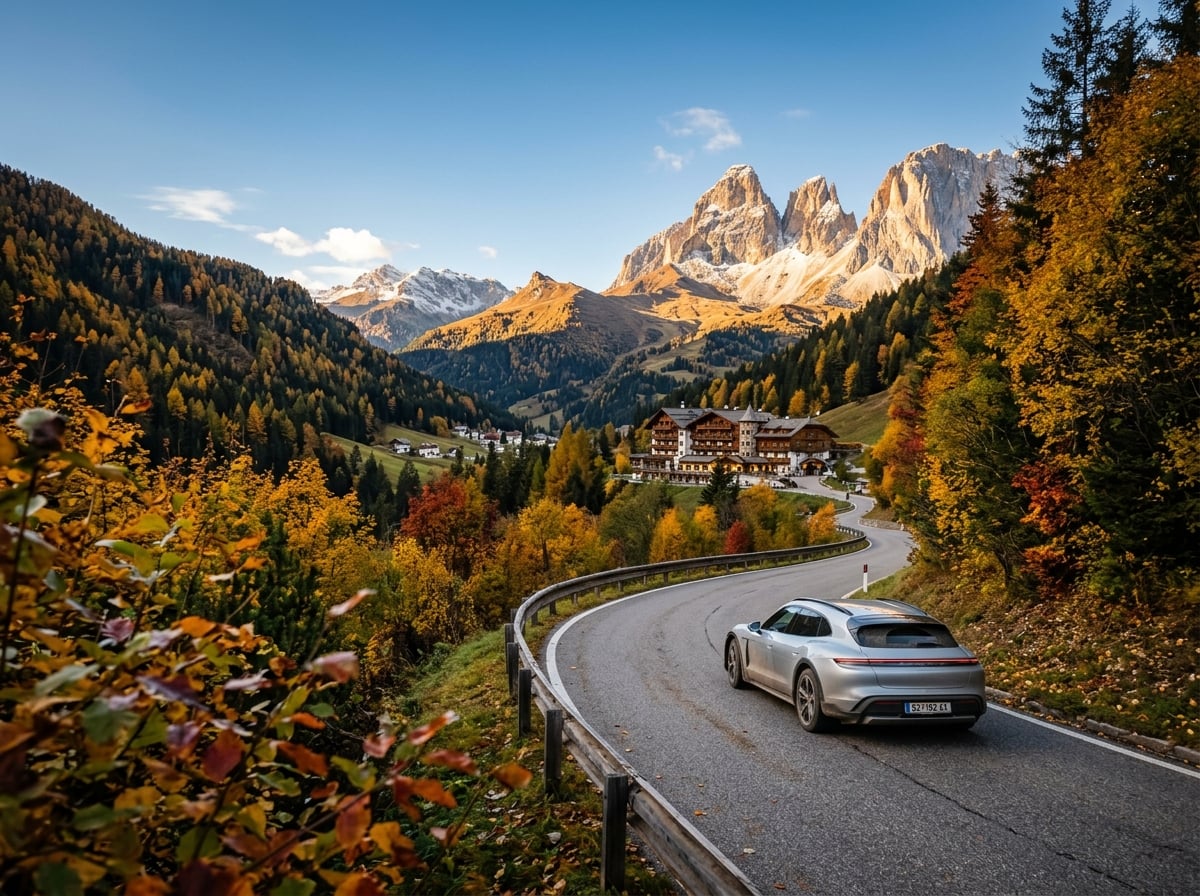
Most travelers reach Hubertus through Innsbruck Airport, about 90 minutes away by car, or through the smaller but closer Bolzano Airport, which has expanded its seasonal connections over the past couple of years. Verona and Venice work as backup entry points when flight schedules don't line up, though the drive from either runs closer to three hours depending on traffic through the Brenner corridor. The hotel arranges private transfers on request, and booking one in advance is genuinely worth doing during peak winter weeks, when regional taxi and shuttle availability tightens fast.
Winter, roughly December through late March, remains the property's prime season, largely because Kronplatz has one of the more dependable snow records in the Dolomites and a reputation for wide, sunny, exceptionally well-groomed runs that suit intermediate skiers and families better than expert-only terrain. Summer has quietly caught up in popularity, particularly from June through September, when daytime temperatures sit comfortably in the high teens and low 20s Celsius — ideal hiking weather, and the trails see noticeably fewer crowds than the more famous Dolomite valleys like Alta Badia or Cortina d'Ampezzo. Shoulder season, meaning late spring and early autumn, brings discounted rates and largely empty trails, though some outdoor facilities and lift-served activities run on reduced hours during those windows, so check ahead if a specific trail or lift is the whole point of your trip.
Rooms and Suites
Hubertus offers a spread of categories, from compact double rooms up to multi-room suites with private saunas and freestanding tubs positioned in front of floor-to-ceiling glass. Nearly every room includes a balcony, and the higher-tier categories face directly toward Kronplatz rather than the parking area or neighboring rooftops. That distinction is worth confirming at the time of booking, because the view genuinely shapes the experience here — this isn't a hotel where a mountain-view upgrade is just a line on a rate sheet. Travelers who want the same balcony-and-tub combination without an Alpine setting might also look at this roundup of hotels with a private pool in the room for comparison, though nothing quite replicates Hubertus's rooftop backdrop.
The interior style leans into modern Alpine design: pale larch wood, wool textiles, and stone accents rather than the heavy, dark timber aesthetic common in older mountain lodges. Recent renovation cycles have added underfloor heating, better soundproofing between rooms, and smart climate controls — a direct response to what used to be the most frequent guest complaints on review platforms a few years back. Complimentary Wi-Fi covers the whole property, and unlike many remote Alpine hotels, the signal actually holds up for video calls even down in the spa areas, which surprises a fair number of guests trying to squeeze in a workday between spa sessions.
The Infinity Pool and Spa Complex
The spa is still the property's centerpiece, and it now spans more than 3,000 square meters across several levels — a substantial expansion from the wellness area the hotel was originally known for a decade ago. The signature outdoor infinity pool, heated year-round, remains the main draw. Swimming laps in warm water while snow falls on the peaks directly ahead of you sounds like marketing copy, but it's exactly what happens on most winter mornings, and the photos genuinely don't oversell it.
Indoors, there's a full sauna village — Finnish sauna, herbal sauna, bio-sauna, and a salt steam room — along with relaxation lounges behind panoramic glass, a smaller adults-only pool, and a fitness studio that also looks straight out at the mountains. Guests who prefer a private soak over a communal sauna circuit might prefer to browse options among suites with a jacuzzi in the room, since a handful of Hubertus's top suites include exactly that setup. Treatments draw on regional ingredients: hay wraps sourced from local alpine meadows, apple-based scrubs (South Tyrol produces more apples than any other region in Italy), and massages using pine and larch oils pressed nearby. Spa treatments should be booked a few days ahead if you're visiting on a winter weekend, since demand from both hotel guests and outside day visitors peaks hard during that window.
Dining at Hubertus
Meals here follow the half-board or full-board structure typical of Alpine wellness hotels, and the kitchen has earned a solid local reputation doing it. Expect a rotating menu that blends South Tyrolean staples — canederli (bread dumplings), Speck, hearty barley soup — with lighter, Mediterranean-leaning dishes that reflect the region's split Austrian-Italian heritage. Vegetarian and increasingly vegan options are handled properly, not tacked on as an afterthought, which still isn't a given at more traditional mountain hotels in the area.
The wine cellar leans heavily on South Tyrolean producers, a region that punches well above its size in Italian wine circles thanks to varietals like Lagrein and Gewürztraminer grown on steep, sun-facing terraces. Staff generally seem happy to walk guests through pairing suggestions rather than just handing over a list, and small-group tastings can be arranged with a bit of notice — worth requesting if you're staying more than two nights.
Skiing, Hiking, and Beyond
Kronplatz deserves attention on its own terms, separate from the hotel. With around 116 kilometers of slopes and a lift network that consistently ranks among the most modern in Italy, it favors skiers who want wide, groomed runs over narrow couloirs and off-piste challenges. The mountaintop is also home to the Messner Mountain Museum Corones, designed by Zaha Hadid, which makes for a worthwhile half-day even if you never strap on skis or boots. Skiers who want a more storied, high-glamour resort town for comparison sometimes cross-shop Hubertus against properties in the French Alps — our guide to luxury hotels in Courchevel is a useful reference point if you're weighing the two regions for a ski trip.
In summer, the same lift infrastructure opens onto an extensive network of hiking and mountain biking routes, ranging from gentle family paths to demanding via ferrata climbs for experienced mountaineers. The hotel supplies trail maps and can arrange guided hikes through local mountain guide associations — a service genuinely worth using at least once during a stay, since guides tend to know which routes stay quiet even in the busier weeks of August. Families weighing an Alpine wellness trip against other kid-friendly options abroad sometimes compare Hubertus with warm-weather resorts; our guide to luxury family hotels in Greece with pool and spa is a useful contrast if you're deciding between a mountain trip and a beach one this year.
Sustainability Efforts
Hubertus participates in the kind of sustainability initiatives now fairly standard across South Tyrol's hospitality sector: renewable energy sourcing, organic waste composting, and partnerships that encourage guests to rely on regional public transport rather than rental cars for short hops. South Tyrol's Mobilcard system, which covers buses and select cable cars, makes this a genuinely practical option rather than a token gesture. Hubertus isn't a hotel that's built its identity around eco-tourism marketing, and it doesn't need to be — the practices are woven into daily operations rather than front-loaded into a press release, which tends to matter more in practice than in principle.
Who Should Book This Hotel
Hubertus suits couples and small families looking for a wellness-focused base rather than a lively après-ski scene — nightlife in Olang is limited, and that's very much by design. It's also become something of a go-to pick for anniversary and honeymoon trips within the Dolomites; if you're comparing it against other romantic escapes, our list of the best resorts for honeymooners covers a wider spread of destinations worth weighing. Serious powder skiers chasing steep, technical terrain may find Kronplatz a bit too polished and groomed for their taste; those travelers are generally better served by Alta Badia or the wider Sella Ronda circuit nearby. But for anyone prioritizing a genuinely strong spa, dependable and locally rooted food, and mountain views that don't require a long drive to reach, this remains one of the standout properties in the Dolomites — and one of the few hotels that actually lives up to its own marketing photos, a claim not every property on lists of the most beautiful hotels in the world can honestly make.
Booking Tips for 2026
Rates climb noticeably during Christmas and New Year week, as well as February half-term school holidays; booking four to six months ahead secures better room categories at those times, since the view-facing suites sell out first. Half-board packages tend to offer better overall value than room-only rates given the strength of the in-house restaurant — skipping dinner here to eat in the village saves little and misses the point of the stay. Direct bookings through the hotel occasionally include small perks like spa credit or a later checkout that don't show up through third-party booking sites, so it's worth comparing both routes before you confirm a reservation. Prices for the 2025–2026 winter season have edged up again from the prior year, in line with broader increases across South Tyrol's four- and five-star wellness hotels, so locking in early is more than just a booking-tip cliché this year — it's a real cost saver.
For travelers weighing Hubertus against other Alpine wellness escapes before committing, it's worth remembering that South Tyrol offers a genuinely different pace than the French resort towns — less scene, more scenery. If your trip planning stretches beyond the Dolomites this winter, our broader Alps coverage, including the complete 2026 guide to Courchevel, is a good next stop for comparing what each region does best.



Muchas gracias. ?Como puedo iniciar sesion?