Vibrant Nightlife and Entertainment of Jakarta: Top 5 Highlights (2025)
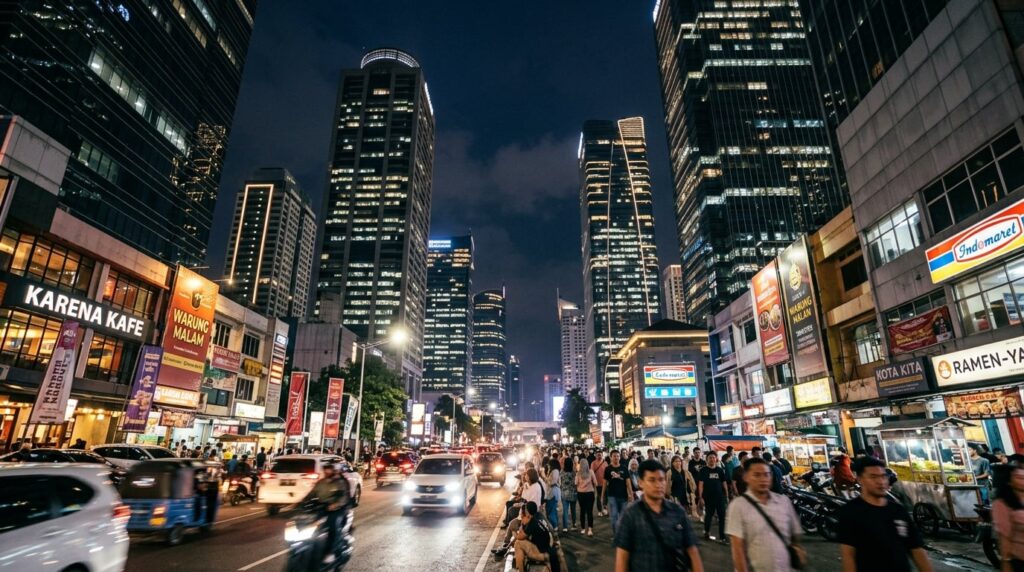
Jakarta doesn't really sleep — it just changes outfits. By day it's gridlocked traffic, glass towers and street vendors; by 9 pm the same city turns into one of Southeast Asia's most electric after-dark destinations. With more than 11 million residents in the city proper and a metro area pushing past 30 million, Indonesia's capital has the density, the money and the cultural mix to support a jakarta nightlife scene that genuinely rivals Bangkok or Kuala Lumpur, yet still feels distinctly its own.
This jakarta nightlife guide breaks down the five things that define an evening out in the city, updated for 2025 with current venues, realistic price expectations and practical advice for getting the timing right. Anyone researching jakarta after dark things to do, hunting for the best nightclub in Jakarta, or trying to map out the best nightlife in Jakarta before a trip should find enough here to build a full itinerary — rooftop views, a proper dance floor, live music, cultural performances, or just the best late-night bowl of soto.
If you're weighing up top things to do in Jakarta at night more broadly, treat the five categories below as building blocks rather than a strict checklist. Most good nights in this city combine two or three of them.
1. Rooftop Bars and High-End Lounges
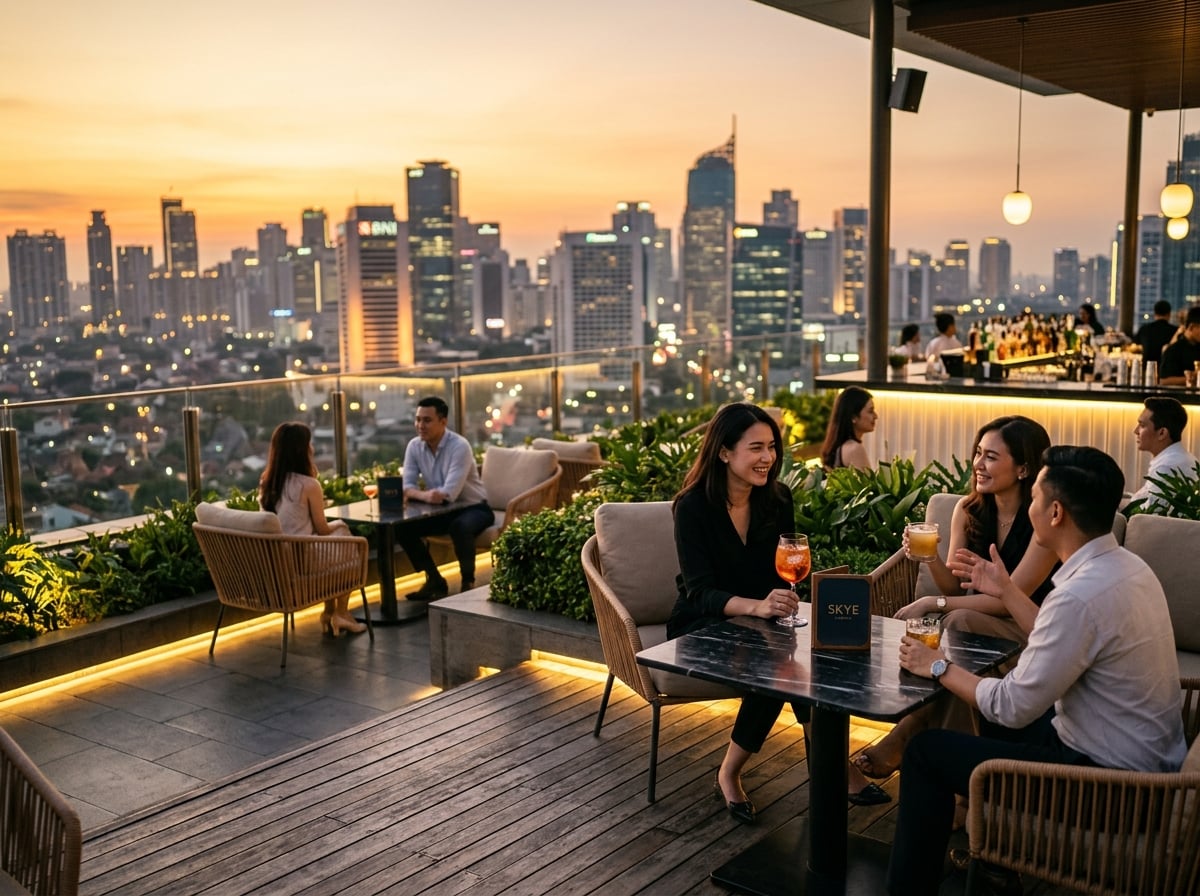
Jakarta's skyline is arguably its best nightlife asset, and the city has leaned into it hard over the past few years. Dozens of towers in the Thamrin–Sudirman corridor now have a bar, lounge or restaurant on their upper floors, and competition has pushed quality up noticeably since 2022 — this is one of the fastest-growing corners of jakarta nightlife clubs and bars 2025 has to offer.
Where to drink: SKYE Bar & Restaurant, on the 56th floor of BCA Tower, is still the reference point — panoramic views over Monas and the CBD, a strong international menu, and a cocktail programme that gets refreshed seasonally. Cloud Lounge & Living Room, on the 49th floor of The Plaza Tower, leans into old-school glamour and one of the deepest whisky lists in the region. For something a little less polished and more design-led, Lantai 25 and the speakeasy-style Union Brasserie, Bakery & Bar in Senopati draw a younger, creative crowd. Newer entrants like AONE Rooftop and the bars along the Sudirman strip have also picked up steady followings among expats and local professionals.
What to expect: Most of these venues run an after-work happy hour from around 5 or 6 pm, then shift gears with resident or guest DJs after 9 or 10 pm on Thursdays through Saturdays. Smart-casual dress is standard — flip-flops and tank tops will get you turned away at the better places. Expect to pay anywhere from 120,000 to 250,000 rupiah for a signature cocktail at the top-tier spots.
Tip: Book ahead for Friday and Saturday nights, and get there before sunset if you want a rail-side table. Golden hour over Jakarta's haze-softened skyline is genuinely one of the city's underrated sights, and it's part of why so many visitors search for things to do in Jakarta at night before anything else.
2. Nightclubs and the Party Scene
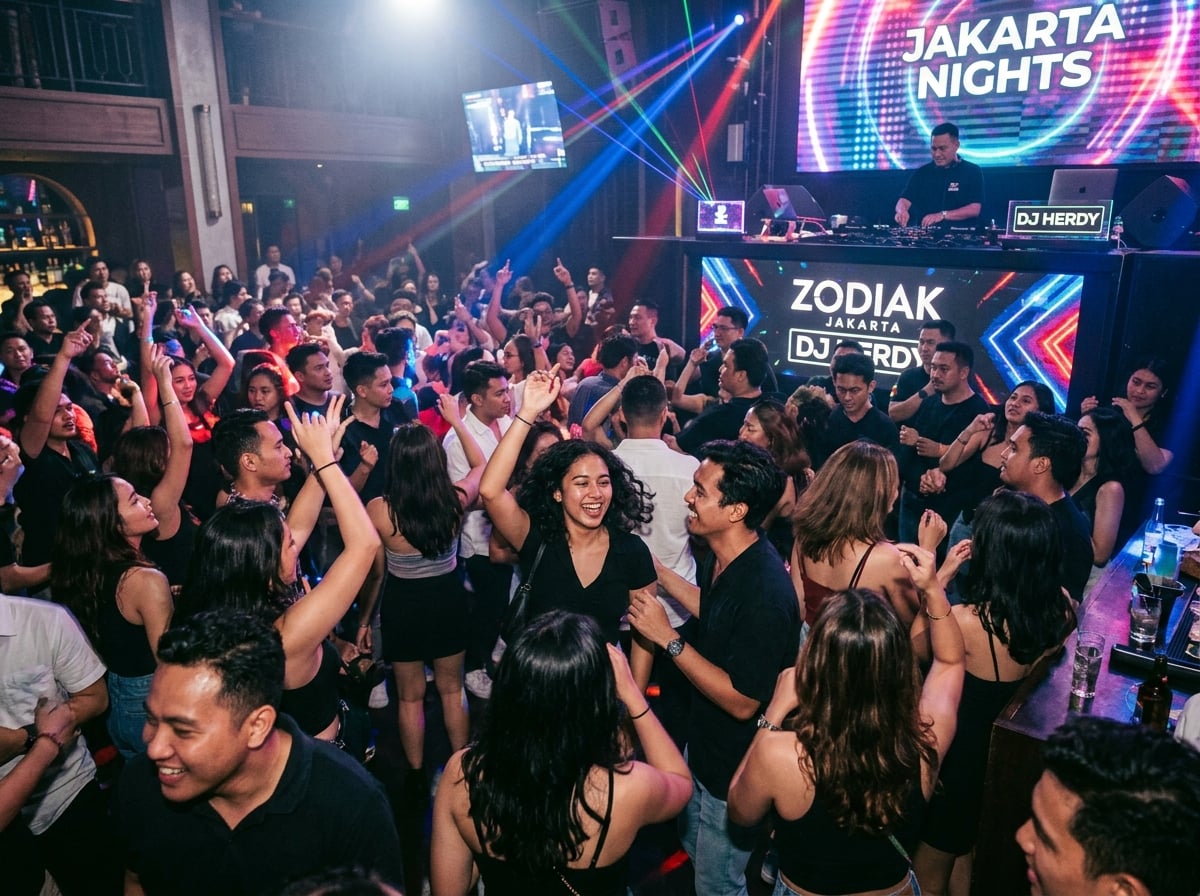
For people who came to dance, Jakarta delivers. The clubbing scene here has real depth — this isn't a city with two or three tourist-trap venues; it's a proper circuit with its own local celebrities, resident DJs and loyal regulars. If you've searched for clubs in Jakarta or the single famous club in Jakarta everyone name-drops, this is the section to read closely.
Top nightclubs: Dragonfly, Blowfish and Colosseum remain the heavyweight names, each running serious sound systems, elaborate lighting rigs and a steady rotation of international guest DJs. Jakarta has become a legitimate stop on the Asian touring circuit for house, techno and hip-hop acts, and the bigger festivals — think large-scale EDM weekenders and hip-hop showcases — now pull crowds from Singapore, Kuala Lumpur and Manila as much as from within Indonesia. Ask five different locals which is the best nightclub in Jakarta and you'll likely get three different answers, which says a lot about how deep the bench actually is.
Musical range: Expect everything from commercial EDM and hip-hop rooms to more underground house and techno nights in smaller venues around Kemang and SCBD. Each club has carved out its own identity, so it's worth checking a venue's lineup before committing to a cover charge.
Good to know: Doors generally open around 10 pm, but nothing really gets going until after midnight, with venues running until 3 or 4 am on weekends. Cover charges range from free entry (with a drink minimum) to around 300,000–500,000 rupiah for bigger international acts, and table service at the top clubs can run into the millions. Bring a physical ID — passports for foreigners — since security checks are strict and non-negotiable. If you're specifically after jakarta night clubs with international-standard production values rather than a low-key bar with a DJ in the corner, stick to the three names above and check their social pages for that week's lineup before you commit to a cover charge.
3. Live Music Venues and Concerts
Not everyone wants a DJ booth. Jakarta's live-music culture is deep and increasingly well-supported by proper venues rather than just bar corners. Motion Blue Jakarta, inside the Fairmont hotel, remains the city's best room for jazz and soul, hosting both respected local acts and touring international names. Around Kemang and Senopati, a rotating cast of bars book nightly sets from indie, rock and acoustic acts, and the quality has improved a lot as more musicians who trained abroad have come home to build careers locally.
For bigger shows, Jakarta now has genuine arena-level infrastructure. Indonesia Arena at GBK, the Jakarta International Stadium and Beach City International Stadium have all hosted major international tours in the past couple of years, putting Jakarta on the same circuit as Manila and Singapore for K-pop, pop and rock acts. The city's annual events calendar is packed too — the long-running Java Jazz Festival each March remains the anchor event, drawing serious jazz and soul fans from across Asia, alongside a growing number of boutique festivals focused on electronic music and Indonesian indie acts. Anyone weighing up broader jakarta entertainment options beyond bars and clubs should keep an eye on this calendar — it shifts year to year and often decides when hotel rates spike.
If you're planning a trip around a specific show, book accommodation early — hotel rates near GBK and SCBD spike noticeably during major concert weekends.
4. Cultural Nightlife Experiences
Loud isn't the only mode Jakarta offers after dark, and this is where the city separates itself from purely party-driven destinations. Taman Ismail Marzuki, the capital's leading arts centre, runs a rotating programme of traditional gamelan performances, wayang kulit (shadow puppet) shows, contemporary theatre and dance well into the evening, often for a fraction of what you'd pay for a club cover charge.
The historic Kota Tua (Old Town) district is worth building an evening around on its own. Once the sun goes down, colonial-era buildings light up, street performers set up in the main square, and cafés inside restored Dutch-era architecture serve coffee and cocktails with a completely different atmosphere from the glass towers uptown. It's slower, more photogenic, and a good reset if you've spent a night or two in the clubs already. For travelers who want to understand the layers behind these venues, it's worth reading up on the rich cultural heritage of Jakarta before heading out, since a lot of the city's evening performances draw directly on centuries-old Javanese and Betawi traditions.
5. Street Food and Culinary Adventures After Dark
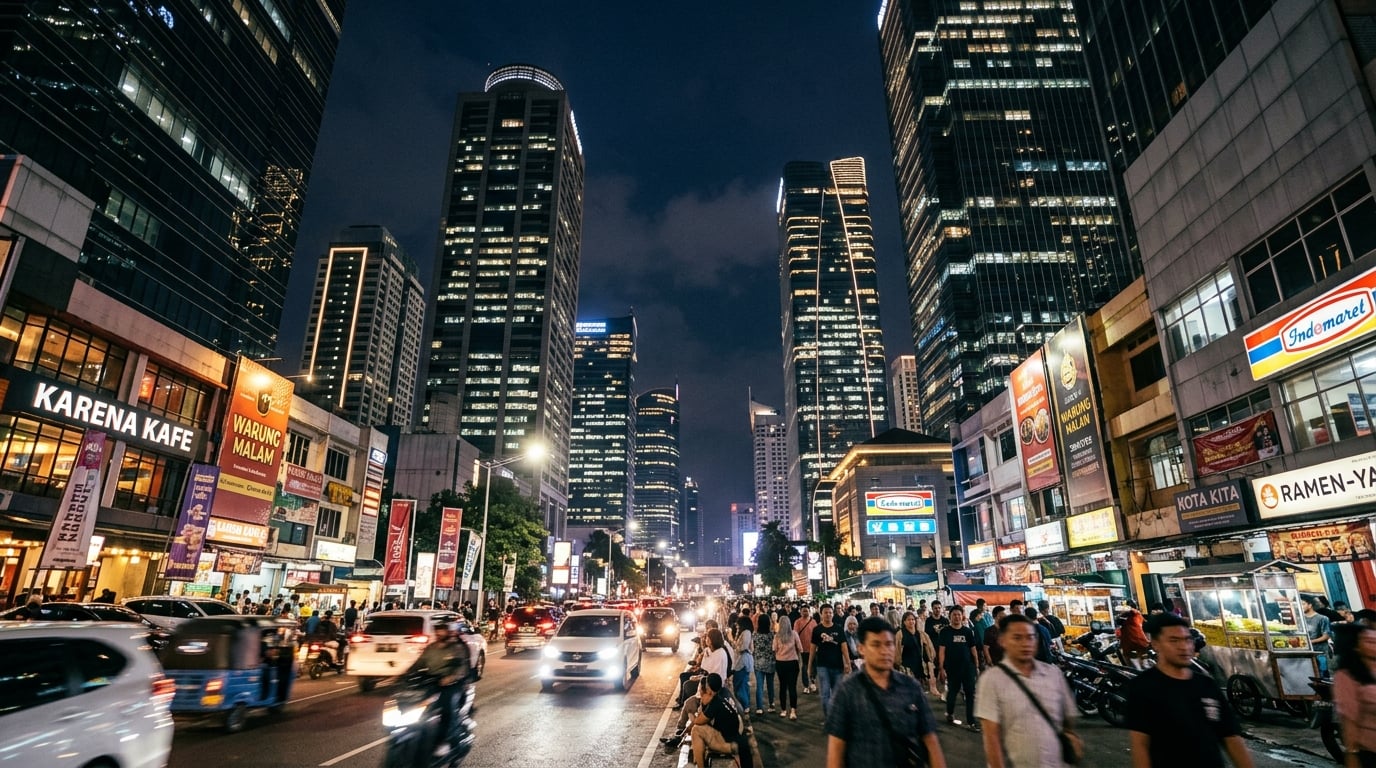
You cannot talk about Jakarta after dark without talking about food — it's arguably as central to the city's nightlife identity as any bar or club. Street-food culture here runs on its own late-night clock. Jalan Sabang, Pecenongan and the food courts around Blok M stay busy well past midnight, serving satay, nasi goreng, martabak and grilled seafood to crowds that include everyone from office workers to clubbers refueling at 2 am.
For something more polished, Menteng, SCBD and Senopati are full of late-night bistros, natural wine bars, dessert spots and specialty coffee shops that keep serving long after dinner service technically ends elsewhere. This scene has grown fast over the last two or three years, with a wave of small, chef-driven spots opening specifically to catch the post-club and post-concert crowd. If you want a fuller sense of where to eat before or after a night out, the guide to the culinary paradise of Jakarta covers the city's food scene in more depth, and there's a solid rundown of specific standout restaurants in this list of top-rated restaurants to dine at in Jakarta.
Planning a Night Out: Practical Advice
A few things make a real difference to how enjoyable your evening turns out, and most first-time visitors get at least one of these wrong on their first night.
Getting around. Traffic in Jakarta is famously bad, and it doesn't really let up until fairly late at night. Grab and Gojek are the standard ride-hailing apps, and both are reliable, cheap and far less stressful than trying to flag a taxi outside a club at 2 am. Build in extra travel time between venues, especially if you're moving between SCBD and somewhere like Kemang.
Money and costs. A night out here can be as cheap or as expensive as you want it to be. Street food and local bars are genuinely affordable — a full meal from a Sabang street stall might cost less than a single rooftop cocktail. Premium clubs and lounges, on the other hand, sit comfortably in line with Bangkok or Kuala Lumpur pricing once you factor in cover charges and table minimums. Speaking of Bangkok, if your trip spans both cities it's worth checking a guide to the best place to stay in Bangkok so your nightlife base there is just as well chosen as it is here.
Timing. Jakarta's nightlife runs later than a lot of Western cities expect. Bars fill up from 9 pm, clubs peak after midnight, and street-food stalls are often at their busiest between 11 pm and 1 am. Showing up to a club at 10 pm expecting a full dance floor is a rookie mistake — you'll likely have the place mostly to yourself.
Neighbourhoods to base yourself in. SCBD, Senopati, Kemang and the Thamrin–Sudirman corridor offer the highest concentration of bars, clubs and restaurants within a short ride of each other, which makes them the most convenient areas to book a hotel if nightlife is a priority. If you're combining a night-focused trip with sightseeing, it's also worth checking a broader rundown of the top must-visit attractions in Jakarta so your days aren't wasted recovering from your nights.
The Bottom Line
Jakarta's after-dark scene rewards a bit of planning but punishes rigidity — the best nights here tend to mix at least two of these five elements rather than sticking to just one. Start with rooftop drinks and skyline views, drop into a club or a live-music venue depending on your mood, and always leave room for street food at the end. Few cities in the region pack this much range into a single evening, and that range is exactly why Jakarta keeps climbing lists of the top reasons to visit Jakarta in the first place. Treat this as a working jakarta nightlife guide rather than a fixed itinerary, and adjust it to whatever mood you're in that night.
Frequently Asked Questions
Is Jakarta safe for nightlife? Yes, generally. The main nightlife districts — SCBD, Kemang, Senopati and the Thamrin corridor — are well-patrolled and heavily used by both locals and tourists. Stick to established venues, use Grab or Gojek rather than hailing random taxis, and keep valuables close in crowded street-food areas.
What are the best areas for nightlife in Jakarta? SCBD, Senopati, Kemang and the Thamrin–Sudirman corridor have the densest concentration of bars, clubs and restaurants, and are the easiest bases if you want to bar-hop without long rides between stops.
How much does a night out in Jakarta cost? It varies enormously. Street food and neighbourhood bars are very cheap — you can eat and drink well for under $10. Rooftop lounges and premium clubs run closer to Bangkok or Kuala Lumpur prices, with cocktails around $8–15 and cover charges or table minimums common at the busier clubs.
What time does nightlife really start in Jakarta? Later than most first-time visitors expect. Bars fill from around 9 pm, but clubs don't peak until after midnight, and street-food stalls often see their busiest hours between 11 pm and 1 am.
Is Jakarta's nightlife good compared to Bali or Bangkok? It's different rather than better or worse. Jakarta's scene is more corporate-city and less beach-party than Bali's, with a stronger live-music and rooftop-bar culture, and a clubbing circuit that's arguably more sophisticated in terms of production and international bookings than most of what you'll find outside Bangkok.
What's considered the best nightclub in Jakarta right now? Dragonfly and Blowfish are the two names that come up most often among regulars, largely because of their sound systems and consistent international bookings, but Colosseum still pulls the biggest crowds on marquee weekends. Which one counts as the single famous club in Jakarta really depends on what night you show up.
What's the single best thing to do in Jakarta at night for a first-timer? Rooftop drinks at sunset followed by a proper dinner at a street-food strip like Jalan Sabang. It covers the skyline views everyone comes for and the food scene that locals actually rate, without requiring a late-night club commitment you might regret the next morning.





2 thoughts on “Jakarta Nightlife Guide 2025: Best Clubs, Bars & Things to Do After Dark”
Comments are closed.