

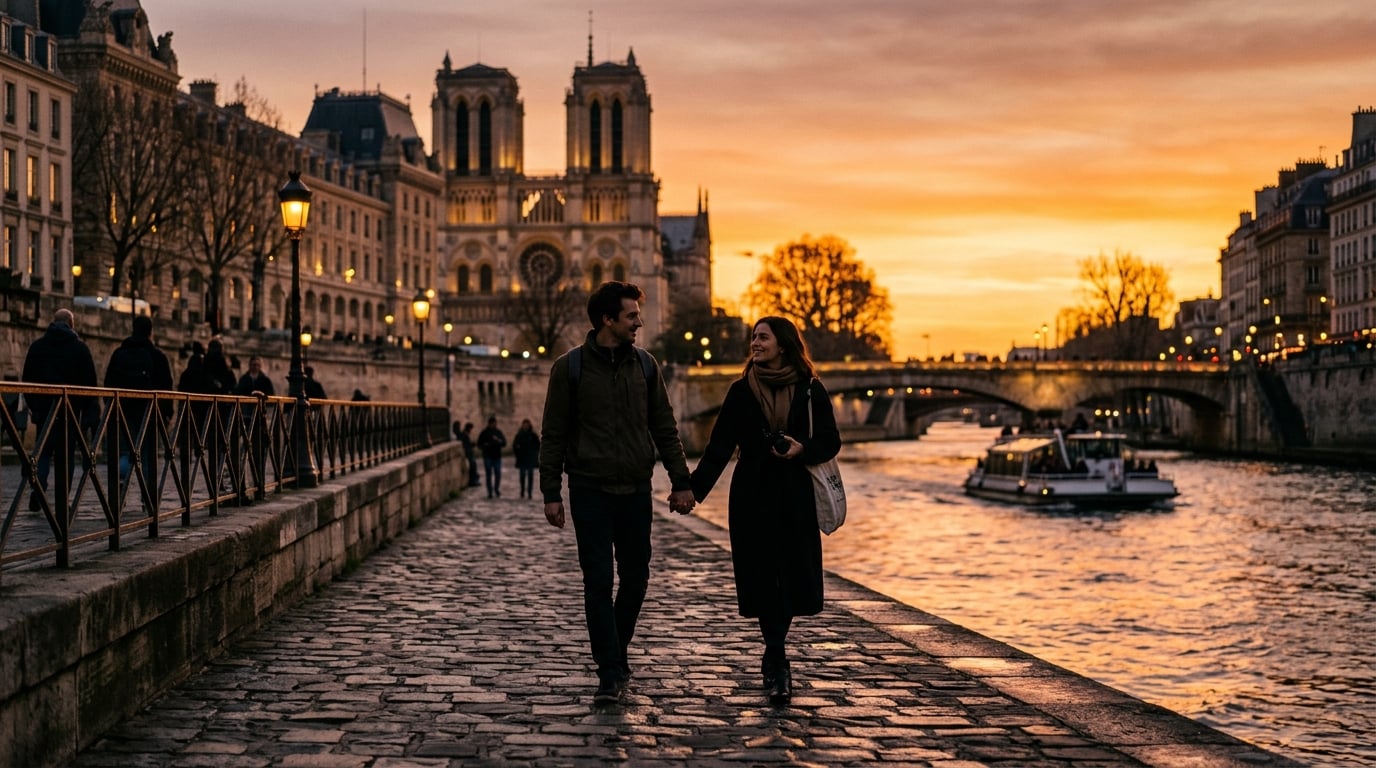
Best Neighborhoods To Stay In Paris (2025 Guide)
I've stayed in six different Paris neighborhoods across a dozen trips, and my answer to "where should I stay" still changes depending on who's asking. A couple celebrating an anniversary needs something different than a family hauling a stroller up five flights of a walk-up with no elevator — common in older Haussmannian buildings, so always check before you book. Paris has 20 arrondissements spiraling out from the Louvre like a snail shell, and picking the wrong one won't ruin your trip, but it will cost you time and money you hadn't planned on spending on Métro fares and taxi rides back to your hotel at midnight.
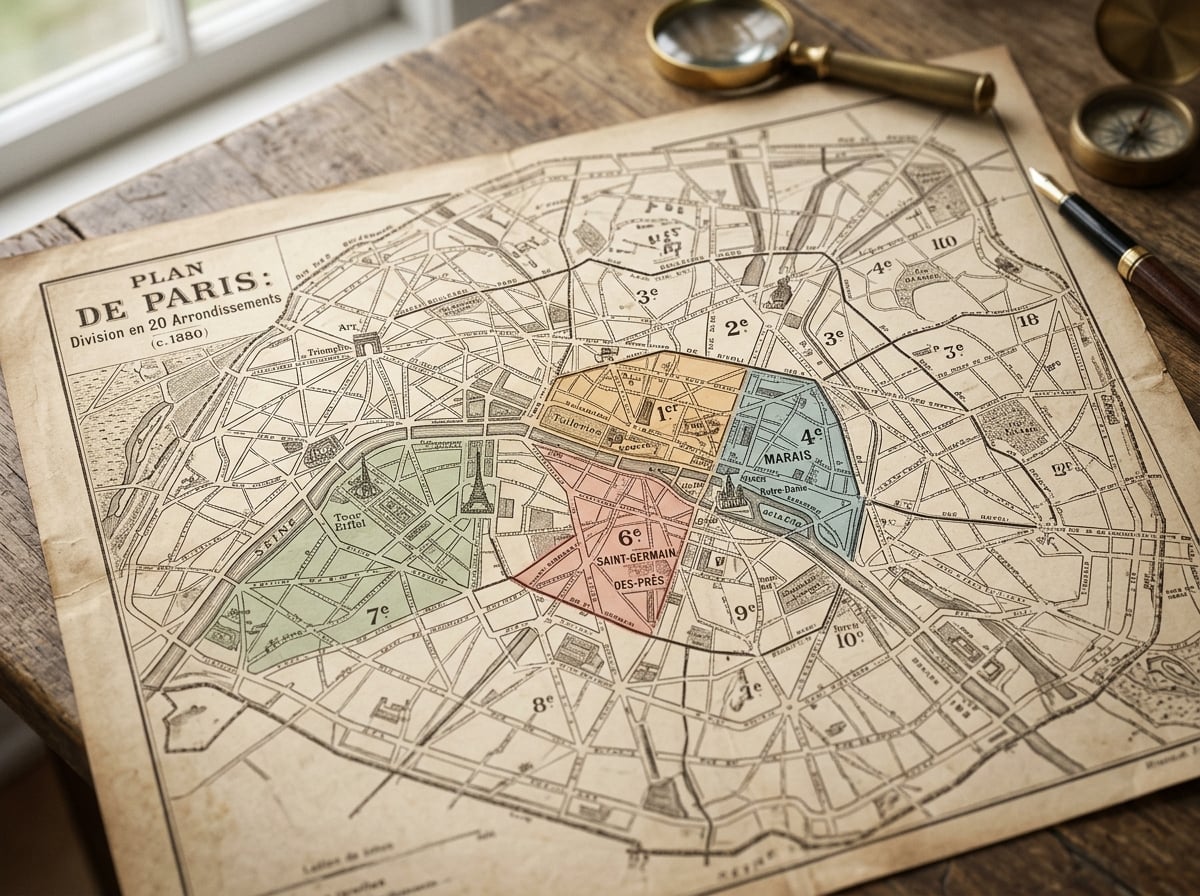
This guide covers the five neighborhoods that consistently deliver the best experience for visitors in 2025, based on walkability, safety, proximity to major sights, and — frankly — how much I'd want to stay there myself. If you're trying to figure out the best neighborhoods to stay in Paris for a first visit, start with the comparison table below, then jump to the section that matches your priorities. This is also one of the most common questions we get about the best areas to stay in Paris in general, whether you're coming for a long weekend or a two-week trip through France. And if you're weighing where to stay in Paris against other trips on your calendar this year, it helps to know upfront: none of these five neighborhoods require a car, a rental agreement, or much advance planning beyond booking your hotel early.
Quick Comparison: Where to Stay in Paris
| Neighborhood | Arrondissement | Best For | Vibe |
|---|---|---|---|
| Le Marais | 3rd & 4th | Shopping, culture, LGBTQ+ travelers | Trendy & historic |
| Montmartre | 18th | Romance, artists, views | Bohemian |
| Saint-Germain-des-Prés | 6th | Cafés, literature, luxury | Elegant & classic |
| Canal Saint-Martin | 10th | Young travelers, locals' Paris | Hip & relaxed |
| Latin Quarter | 5th | Budget travelers, students | Lively & academic |
1. Le Marais
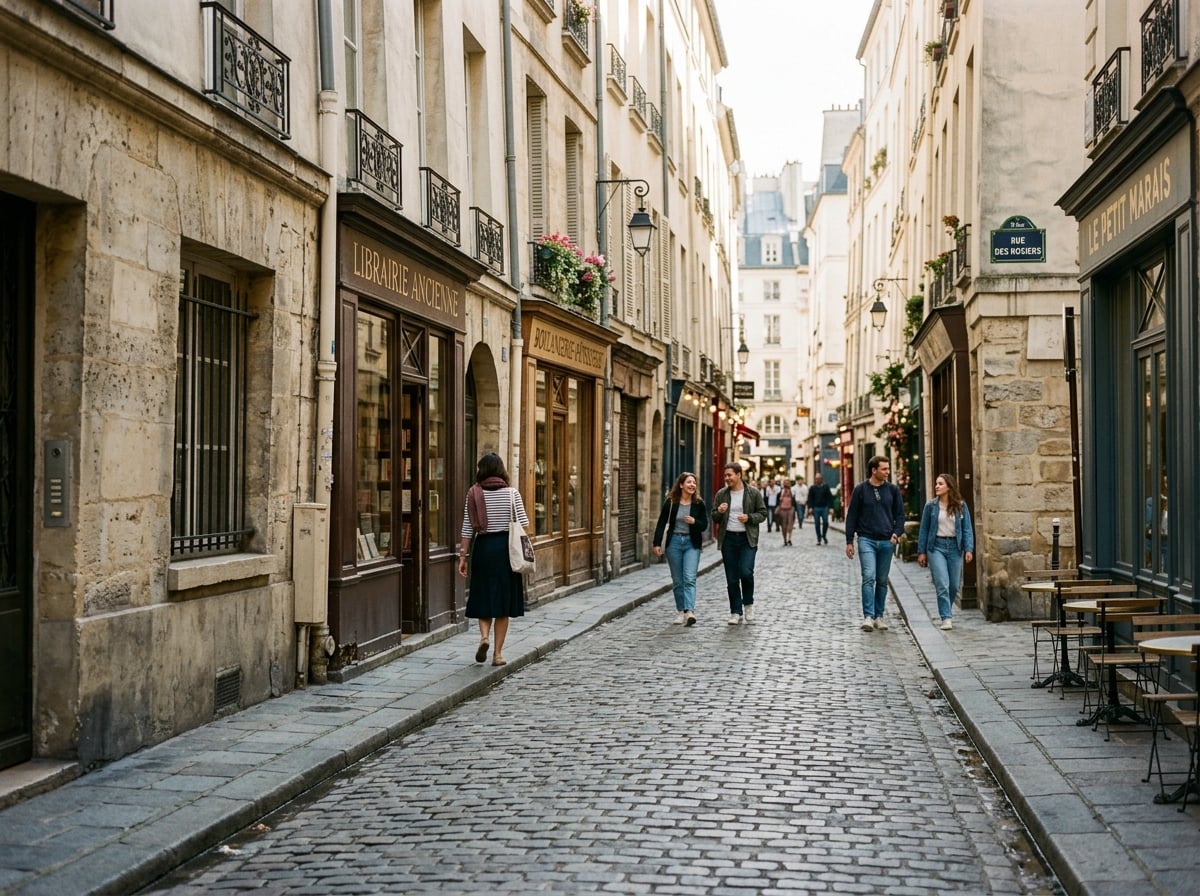
Le Marais, straddling the 3rd and 4th arrondissements, is the neighborhood I recommend most often to first-timers, for one simple reason: you can walk to almost everything from here. The streets are narrow and mostly car-free, the buildings date back to the 1600s, and the whole district somehow dodged the wide Haussmann boulevards that reshaped the rest of Paris in the 1860s. That's why it still feels like a medieval village dropped into the middle of a modern city.
Start at Place des Vosges, the oldest planned square in the city, built in 1612 and still framed by matching red-brick pavilions. Victor Hugo lived at number 6 for sixteen years; his old apartment is now a free museum. A short walk away, the Musée Picasso occupies a restored 17th-century mansion and holds more than 5,000 works spanning the artist's entire career — go on a weekday morning to dodge the tour groups.
The shopping here is genuinely good, not just souvenir-shop good. Rue des Francs-Bourgeois is lined with concept stores and small French labels you won't find in the department stores near the Opéra. For food, skip the line-wrapped-around-the-block spot if you're short on time and try Miznon instead — but if you've got twenty minutes to spare, L'As du Falafel on rue des Rosiers still earns its reputation. Le Marais has also been the center of Parisian LGBTQ+ life since the 1980s, and the bars and cafés around rue Vieille du Temple stay lively well past midnight, especially during Paris Pride each June.
For anyone weighing the best neighborhoods to stay in Paris purely on walkability, this is the district to beat — you can cross most of it end to end in twenty-five minutes on foot.
Best for: first-time visitors who want to walk everywhere, shoppers, food lovers, and LGBTQ+ travelers.
2. Montmartre
Montmartre sits on the highest hill in Paris, and that elevation is both its charm and its catch. The views from the steps below Sacré-Cœur are among the best in the city — free, unobstructed, and packed with locals drinking wine on the grass at sunset. But you're climbing real hills every day here, so this isn't the easiest base if mobility is a concern or if you're hauling heavy luggage between hotels and Métro stations.
The area still trades on its artistic past, and rightly so. Picasso, Van Gogh, and Toulouse-Lautrec all lived and worked here before it got fashionable. Place du Tertre is touristy now, full of portrait artists charging tourist prices, but wander two streets in any direction and you'll find quiet cobblestone lanes, the city's last working windmill at Moulin de la Galette, and the small Clos Montmartre vineyard that still produces a few hundred bottles a year. The Musée de Montmartre, set in the oldest house on the hill, remains one of the more underrated small museums in Paris.
One honest caveat: the streets right around Pigalle and Barbès, at the bottom of the hill, get seedy and crowded at night, and pickpocketing around the Sacré-Cœur steps is a real, ongoing problem — keep bags zipped and phones in front pockets. Book higher up, around rue Lepic or rue des Abbesses, and you'll get the charm without the hassle.
Best for: couples, photographers, and travelers who'll trade a little convenience for atmosphere and views.
3. Saint-Germain-des-Prés
On the Left Bank, in the 6th arrondissement, Saint-Germain-des-Prés is where intellectual Paris used to argue over coffee. Sartre and de Beauvoir had their regular table at Café de Flore; Hemingway wrote nearby. Both cafés still operate today, charging tourist prices for the privilege of sitting where they sat — worth doing once, not every morning.
What makes this area worth the premium is the location. The Musée d'Orsay, the Jardin du Luxembourg, Notre-Dame, and the Louvre are all within a 20-minute walk, and the streets themselves — antique galleries, tailored boutiques, quiet courtyards — feel like old-money Paris rather than tourist Paris. If you want a genuinely luxurious base and don't mind paying for it, this is one of the safest and most polished areas of the city; hotel security here tends to be tighter, and the streets stay well-lit and well-patrolled well into the evening. It's a similar logic to why travelers looking for a refined mountain base gravitate toward the best hotels in Courchevel rather than a cheaper village further down the valley — you're paying for polish and peace of mind as much as the room itself.
Best for: travelers who want a refined, central base and are comfortable paying a premium for it.
4. Canal Saint-Martin
If you want to see how Parisians who aren't tour guides or shopkeepers actually spend a Saturday, head to the 10th arrondissement and sit by the canal. Canal Saint-Martin runs through a stretch of iron footbridges and locks that Amélie fans will recognize, and on any mild evening the banks fill with people drinking wine straight from the bottle, no white tablecloth required.
This is the neighborhood I'd point a repeat visitor toward — someone who's already done the Louvre and the Eiffel Tower and wants to feel like they live here for a few days instead of just visiting. Du Pain et des Idées, a few blocks from the water, bakes some of the best pastries in the city and rarely has the queues you'll find at the famous bakeries near the Champs-Élysées. The surrounding streets are full of natural wine bars, vintage shops, and restaurants that haven't adjusted their prices for tourists yet. It's also one of the better-value areas to stay in Paris — hotel rates here typically run 20 to 30 percent lower than equivalent options in the Marais or Saint-Germain.
Best for: younger travelers, repeat visitors, and anyone who wants a hip, local-feeling base without giving up decent Métro access.
5. Latin Quarter
The Latin Quarter takes its name from the Latin once spoken by students at the Sorbonne, founded here in 1257. Centuries later, it's still a student neighborhood — cheap crêpe stands, secondhand bookshops, and a noise level that picks up considerably after dark.
Shakespeare and Company, the English-language bookstore across from Notre-Dame, is worth the visit even if you don't buy anything. Climb to the Panthéon, where Voltaire, Rousseau, Marie Curie, and Victor Hugo are all buried, and don't skip rue Mouffetard, a market street that's been selling food since medieval times. Prices here run noticeably lower than in Saint-Germain or the Marais, and you're still a 15-minute walk from Notre-Dame and the Seine, which makes the Latin Quarter one of the better picks for where to stay in Paris for tourists near attractions who don't want to sacrifice location for budget.
Best for: budget travelers, students, and anyone who'd rather spend the savings on food and museum tickets.
Practical Tips for Choosing Where to Stay
A few things I've learned the hard way, after booking wrong more than once:
- Stay central for a first visit. The 1st through 7th arrondissements keep the major sights within walking distance, which matters more than it sounds like it should — Paris taxis are expensive and rush-hour Métro cars get uncomfortably packed.
- Prioritize Métro access over landmark proximity. A hotel two blocks from a station beats one that's technically closer to the Eiffel Tower but a fifteen-minute walk from the nearest train line.
- Book three to four months out for spring and September. Those remain the busiest, priciest months, and good three-star hotels in central arrondissements sell out well before the Fashion Week and major event calendars fill up. The 2025 Olympics aftermath has kept demand for central Paris hotels elevated even outside peak season, so don't assume shoulder months are automatically cheap anymore.
- Ask for a courtyard-facing room in lively areas. The Latin Quarter and parts of the Marais get loud past midnight, and Haussmannian buildings don't have great soundproofing.
- Think about what you're packing. Whether you're checking a bag or carrying on affects how far you can comfortably walk from the Métro to your hotel door — worth reviewing before you fly, and our airline carry-on luggage size restrictions guide breaks down current limits by carrier.
- Don't underestimate elevators, or the lack of them. Many boutique hotels in 17th-century buildings simply can't fit one in. If stairs are a dealbreaker, confirm elevator access before booking rather than after you arrive with suitcases.
All five neighborhoods above are genuinely safe by any major-city standard, and violent crime against tourists is rare. The real risk in Paris is pickpocketing, concentrated around the Eiffel Tower, the Louvre pyramid, and crowded Métro lines 1 and 4. If safety is your top priority, Saint-Germain-des-Prés and the western half of Le Marais report the lowest incident rates and the most consistent street lighting at night, making them arguably the safest neighborhoods to stay in Paris for solo travelers or families with kids.
Frequently Asked Questions
What's the best neighborhood to stay in Paris for a first-time visitor? Le Marais or Saint-Germain-des-Prés. Both put you within walking distance of the Louvre, Notre-Dame, and the Seine, and both have dense Métro coverage if your feet give out. If you're weighing the best Paris neighborhoods for first time visitors specifically, these two consistently top the list because they minimize the guesswork.
Where should I stay in Paris if I'm on a tight budget? The Latin Quarter or Canal Saint-Martin. You'll pay noticeably less than in the Marais or Saint-Germain without giving up much in the way of location or atmosphere.
Is Montmartre too far from the main attractions? It's farther than the other four, yes — expect a 20 to 30 minute Métro ride to the Louvre. Stay there for the views and the atmosphere, not the convenience.
What are the safest neighborhoods to stay in Paris? Saint-Germain-des-Prés and Le Marais consistently rank as the safest, thanks to steady foot traffic, good lighting, and a heavier police presence than you'll find in outlying arrondissements. That said, no central Paris neighborhood carries meaningful risk of violent crime — the thing to actually guard against everywhere is pickpocketing in crowds.
What is the best area to stay in Paris near the main attractions? If staying close to the Louvre, Notre-Dame, and the Seine matters more than anything else, Le Marais and the Latin Quarter both put you within a 15-minute walk of at least two or three major sights, which is hard to beat for tourists trying to minimize commute time.
Conclusion
There's no single best neighborhood to stay in Paris, only the one that fits how you actually travel. Pick Le Marais if you want to walk to everything, Montmartre if the view matters more than the commute, Saint-Germain-des-Prés if you're willing to pay for polish, Canal Saint-Martin if you want to feel like a local, and the Latin Quarter if your budget needs to stretch further. Any of the five will put you within reach of what makes Paris worth the trip in the first place — and for planning the rest of the logistics, a quick read through 10 travel tips you must know before your next trip will save you some hassle before you land. And if the Left Bank's elegance has you thinking about upgrading the stay itself, it's worth browsing some of the most beautiful hotels in the world for inspiration before you book.







1 thought on “Best Neighborhoods To Stay In Paris (2025 Guide)”