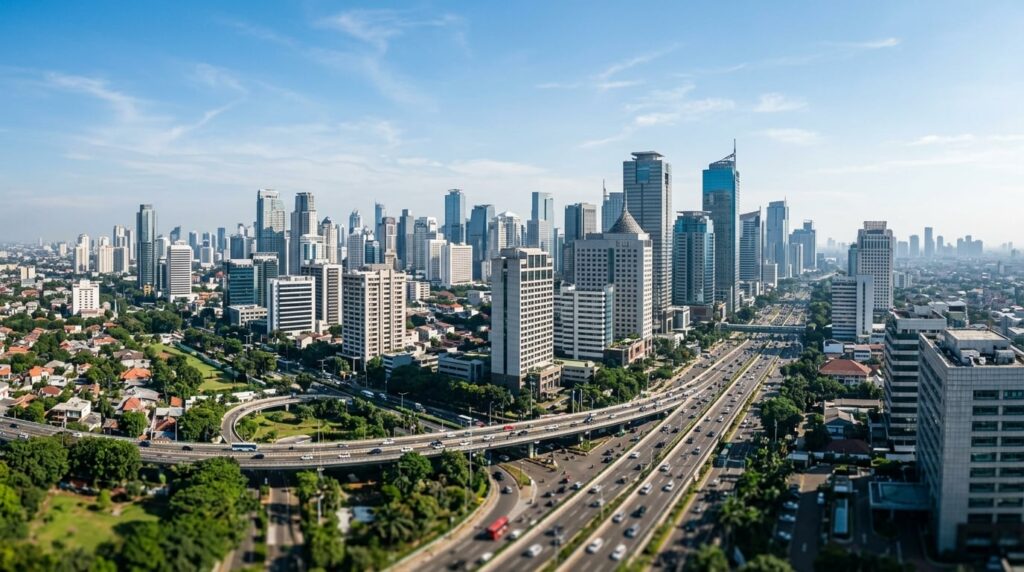
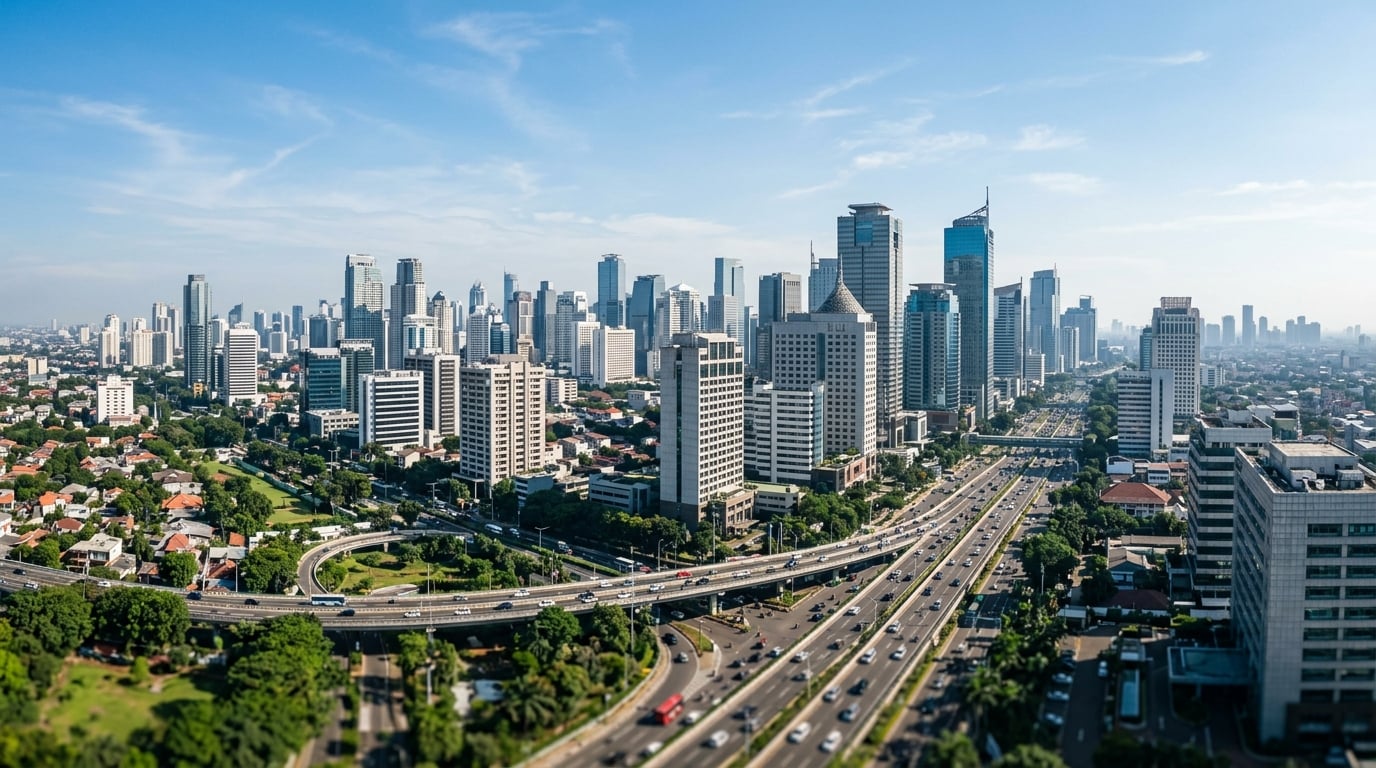
Jakarta rewards patience more than almost any other capital in Southeast Asia. Beneath the traffic and the heat sits a city of more than 11 million people within its official limits, and north of 30 million across Greater Jakarta (Jabodetabek), layered with Dutch colonial relics, independence-era monuments, glass-tower malls, and a street food scene that genuinely holds its own against Bangkok or Hanoi. If you’re putting together a 2025 itinerary, these ten attractions remain the best entry points into what makes Jakarta worth your time. We’ve updated the prices, renovation notes, and practical details below so they reflect where things actually stand right now, not where they stood three years ago.
Quick note: Indonesia has been shifting its administrative capital functions to Nusantara in East Kalimantan since 2024, and that relocation is expected to stretch well into the 2030s before it’s anywhere near complete. Jakarta remains the country’s commercial and cultural centre in the meantime, and for travellers, practically nothing about that has changed. For a broader sense of why the city keeps pulling visitors back year after year, our guide on why you should visit Jakarta covers the bigger picture beyond this attractions list.
1. National Monument (Monas)
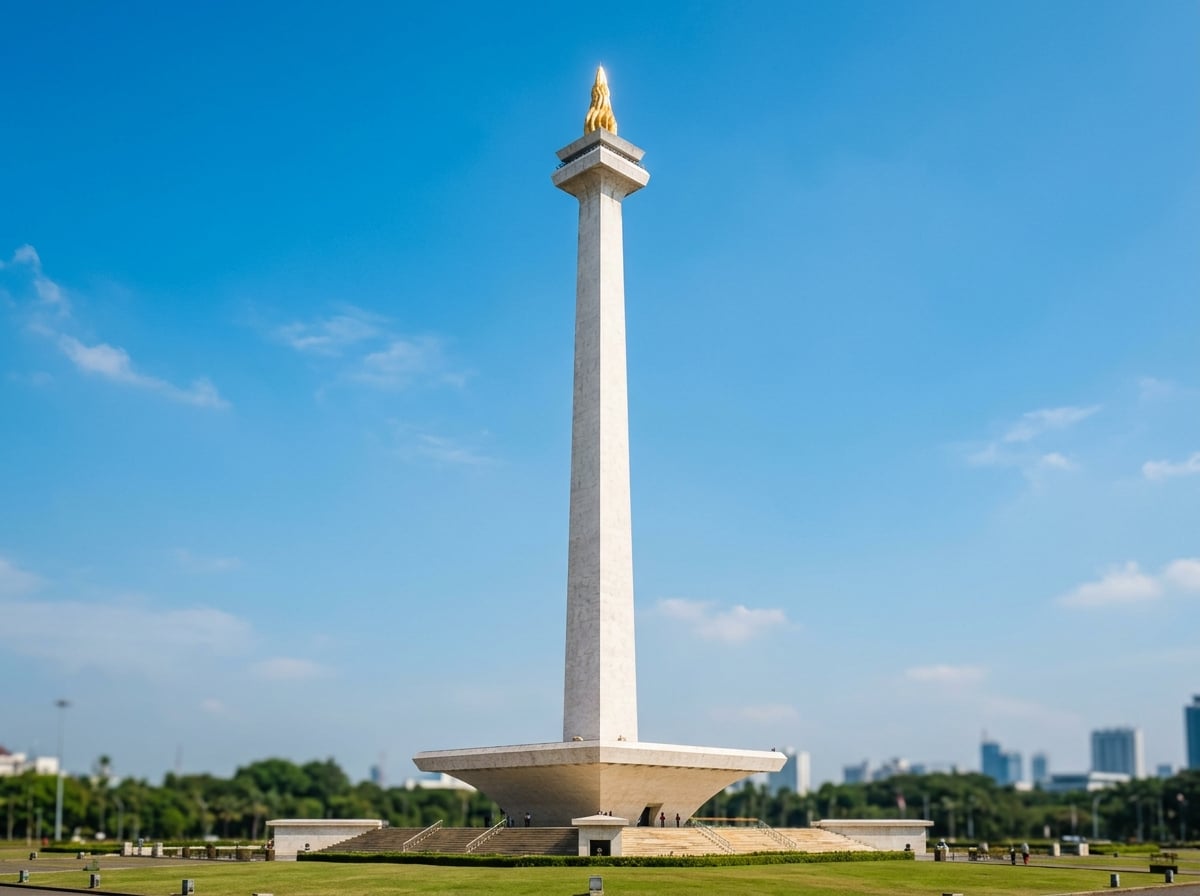
Why go: It’s the single most recognisable symbol of Indonesian independence, and the views from the top still beat anywhere else in the city.
Monas dominates Merdeka Square with its 132-metre marble obelisk, capped by a bronze flame gilded in gold leaf. Built to commemorate the fight for independence, it now anchors one of the largest and best-maintained public parks in central Jakarta — a genuine green lung in a city that badly needs them.
Down at ground level, the National History Museum runs beneath the monument, tracing the country’s path to sovereignty through detailed dioramas. An elevator (expect a queue) takes visitors up to the observation deck, where on a clear morning you can pick out the Istiqlal Mosque, the skyline of the CBD, and, on the best days, Jakarta Bay in the distance. Entry to the grounds and museum runs around IDR 20,000, with a small additional charge for the lift to the top. Go early — by 9am on weekends the queue for the elevator alone can eat an hour, and by midday the marble plaza gets brutally hot underfoot.
2. Kota Tua (Jakarta Old Town)
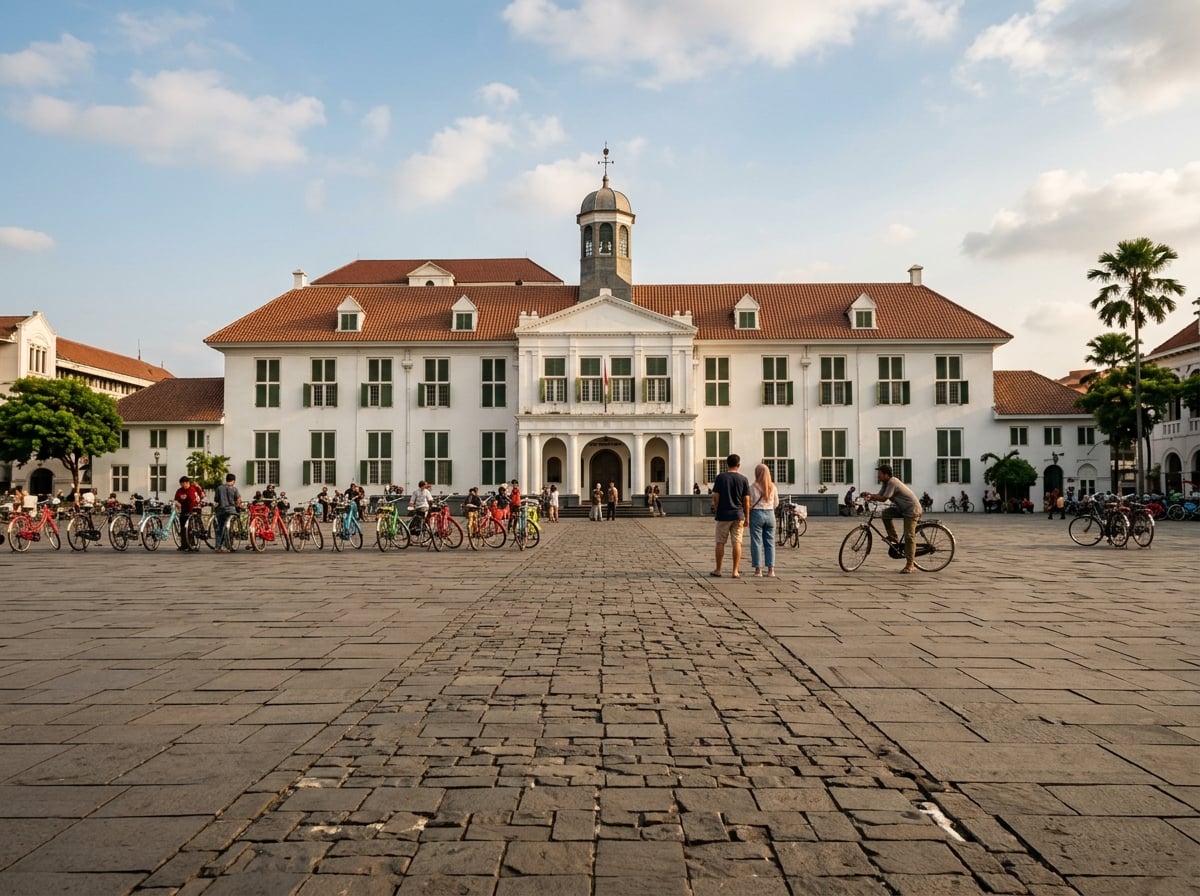
Why go: Dutch colonial architecture, cobblestone squares, and a genuinely walkable slice of history.
Kota Tua is what remains of old Batavia, the fortified Dutch trading post that eventually grew into modern Jakarta. Fatahillah Square sits at its centre, ringed by heritage buildings that now house the Jakarta History Museum, the Wayang Museum (dedicated to Indonesia’s puppet traditions), and the Fine Arts and Ceramics Museum. Rent one of the brightly painted vintage bicycles that locals hire out by the hour, grab a coffee at the century-old Café Batavia, and watch the street performers who gather here most evenings.
The area connects easily on foot to Sunda Kelapa, the old harbour where wooden Bugis schooners still dock and load cargo much as they have for generations. Recent pedestrianisation work has made the square more comfortable to explore than it was a few years back, though weekends get crowded fast — arrive before 10am if you want photos without a dozen strangers in the frame. For a deeper sense of how this history threads through the rest of the city, the piece on Jakarta’s rich cultural heritage is worth reading alongside this stop.
3. Taman Mini Indonesia Indah (TMII)
Why go: All of Indonesia’s cultural diversity condensed into one 250-acre park.
TMII presents the archipelago in miniature, with a pavilion for each of Indonesia’s provinces, complete with traditional houses, regional costumes, and local crafts on display. A major renovation completed ahead of recent international events left the park with upgraded museums, refreshed landscaping, and a cable car that glides over the artificial lake shaped like a map of Indonesia. It’s genuinely one of the better family outings in the city and probably the fastest way to grasp just how culturally varied the country actually is without booking a domestic flight. Budget at least half a day — the grounds are far larger than they look on a map, and walking between pavilions in the heat adds up quickly.
4. Grand Indonesia Mall
Why go: Flagship shopping, air conditioning, and Jakarta’s consumer culture on full display.
Grand Indonesia, in the Thamrin district, is as close as Jakarta gets to a shopping cathedral — international luxury houses, homegrown Indonesian designers, a sprawling multi-floor food hall, and multiplex cinemas all under one roof. The adjacent Selamat Datang (Welcome) Monument roundabout is a landmark in its own right and a good photo stop, particularly around sunset when the fountains light up.
This part of the city is also where Jakarta’s retail identity really shows itself, and if shopping is a priority on your trip, it’s worth reading our rundown of the shopping haven of Jakarta before you map out a route between malls, markets, and boutique districts. Beyond retail, this is also prime territory for people-watching and for retreating from the tropical heat between other stops on this list.
5. Ancol Dreamland (Taman Impian Jaya Ancol)
Why go: The city’s largest waterfront recreation complex, built for a full day out.
This North Jakarta coastal hub packs in a beach, the Dunia Fantasi (Dufan) theme park, Atlantis Water Adventure, SeaWorld Ancol, and a working marina. It’s a genuine family favourite and one of the few places in the city where you’ll catch a proper sea breeze off Jakarta Bay. Buy combination tickets online ahead of time — it saves money and cuts down queue time considerably on weekends, when local families turn out in force and the parking lots fill by mid-morning.
6. Istiqlal Mosque
Why go: Southeast Asia’s largest mosque, and a genuinely moving symbol of religious tolerance.
Istiqlal Mosque holds more than 200,000 worshippers and remains the largest mosque in Southeast Asia by capacity. Completed in 1978 and given a thorough renovation finished in 2020, it’s a striking piece of modernist architecture with a soaring central dome. What makes it remarkable, though, is its location: directly across from the neo-Gothic Jakarta Cathedral, with the two buildings now connected by a pedestrian passage nicknamed the “Tunnel of Friendship,” built specifically to symbolise interfaith coexistence. Visitors of any faith are welcome outside prayer times; modest dress is required, and robes are provided at the entrance if needed.
7. Jakarta Cathedral
Why go: Elegant neo-Gothic architecture standing in quiet dialogue with the mosque across the street.
Officially the Cathedral of Saint Mary of the Assumption, this Roman Catholic cathedral was consecrated in 1901 and remains one of the most photogenic buildings in the city, with twin spires, detailed stained glass, and a small museum tucked into the upper level. Paired with Istiqlal Mosque next door, it forms one of the most visually direct statements of religious coexistence anywhere in the world — a detail that consistently surprises first-time visitors to Jakarta, and one worth building fifteen or twenty quiet minutes into your schedule for.
8. Thousand Islands (Kepulauan Seribu)
Why go: Beaches, snorkelling, and a proper island escape less than two hours from the city centre.
Despite the name, this archipelago north of Jakarta actually comprises roughly 110 islands, of which a modest number are set up for tourism. Speedboats from Ancol or Muara Angke reach islands like Pramuka, Tidung, and Harapan in under two hours, delivering white sand, coral reefs decent enough for a half-day of snorkelling, and simple homestay accommodation. It’s the easiest way to get an actual tropical break without leaving the greater metro area, and honestly one of the more underrated day trips in the region — book the earliest boat you can, since afternoon swells can make the return crossing rougher than it needs to be.
9. Gelora Bung Karno Sports Complex
Why go: An iconic stadium, jogging tracks, and a real window into how Jakartans spend their downtime.
Named for Indonesia’s founding president, GBK underwent a substantial upgrade for the 2018 Asian Games and has stayed a hub for major sporting events, concerts, and everyday community life ever since. Its landscaped grounds and jogging paths fill up every morning and weekend with locals exercising, socialising, and generally living their normal lives — arguably a better slice of authentic Jakarta than most curated attractions can offer, and free to walk around at any hour.
10. Ragunan Zoo
Why go: A vast, shaded green space with a genuinely strong wildlife collection.
One of the oldest and largest zoos in the world by land area, Ragunan Zoo in South Jakarta houses hundreds of species, including a number of animals endemic to Indonesia and a dedicated primate centre focused on orangutan conservation. It’s a low-cost, shaded, park-like outing that works particularly well with kids in tow, and it rarely feels as crowded as the city’s other big attractions, even on a Sunday afternoon.
Where Jakarta Fits Into a Wider Indonesia Trip
Jakarta sits on Java, and most travellers who spend more than a few days in the capital end up extending their trip further across the island — to Yogyakarta’s temples, Bandung’s cooler hill air, or Bromo’s sunrise crater views. If that’s on your radar, it’s worth pairing this guide with a look at things to do on Java Island before you finalise your route, since a lot of the logistics — trains, domestic flights, driver hire — are easiest to arrange from Jakarta itself. Travellers chasing temples and volcanic sunrises specifically should also check must-visit places on Java Island for a route that connects well with a Jakarta start point. If your Java leg needs a place to sleep once you’re out of the capital, our roundup of top hotels to stay on Java Island covers the mid-range and boutique options that tend to fill up fastest in peak season.
Food and nightlife also deserve their own planning time. Jakarta’s dining scene ranges from Padang restaurants slinging rendang by the plate to Michelin-recognised fine dining in the CBD, and the after-dark scene has grown into something genuinely competitive with Bangkok or Singapore on a given weekend — rooftop bars, live music venues, and late-night warungs all included. Our deeper dives into the culinary paradise of Jakarta and the city’s nightlife and entertainment scene both go into far more detail than a single attractions list can cover, and pair naturally with the sit-down recommendations in our guide to top-rated restaurants to dine at in Jakarta.
Practical Tips for Visiting Jakarta in 2025
- Getting around: The MRT and TransJakarta bus network have both expanded significantly in recent years — the MRT’s north-south line now reaches further into the CBD, and a new east-west line is under construction, with the first phase targeted to open in stages through the late 2020s. Public transit remains by far the fastest way to dodge Jakarta’s infamous traffic. For door-to-door trips, Gojek and Grab remain cheap, reliable, and far less stressful than hailing a taxi on the street.
- Best time to visit: The dry season, roughly May through September, offers the most comfortable weather for walking around outdoor sites like Kota Tua and Monas. The wet season (November to March) brings sudden downpours and occasional flash flooding in low-lying areas, but rarely disrupts a trip for more than an afternoon.
- Payments: QRIS digital payments and cards are accepted almost everywhere now, including small cafes, but keep some cash on hand for street food stalls and the smaller ferry operators heading to the Thousand Islands, many of whom still work cash-only.
- Etiquette: Dress modestly at religious sites, remove shoes where indicated, and expect security checks (bags and metal detectors) at malls and major attractions — standard practice across the city, not a sign of anything unusual.
- Timing your day: Traffic peaks hard between 7–9am and 5–8pm, and the odd-even licence plate restrictions on some main roads can catch first-time renters off guard. Scheduling museum visits or mall trips outside those windows saves real time.
- Where to base yourself: Menteng and the Golden Triangle (SCBD/Sudirman) put you closest to Monas, Kota Tua transport links, and the bulk of the CBD’s restaurants, while staying near Kemang gives easier access to nightlife and a quieter residential feel in the evenings.
Final Thoughts
From the flame atop Monas to the quiet dialogue between Istiqlal Mosque and Jakarta Cathedral, and from the colonial streets of Kota Tua to the salt air of the Thousand Islands, Jakarta delivers a far more layered experience than most first-time visitors expect. Give it two or three full days, get comfortable with the MRT, and you’ll understand quickly why Indonesia’s capital earns a spot on any serious Southeast Asia itinerary — not as a quick layover stop, but as a destination in its own right.

1 thought on “Top 10 Must-Visit Attractions in Jakarta (2025 Guide)”
Comments are closed.