Exploring Lake Tuba: Top 5 Must-See Destinations (2025 Guide)
Most visitors headed into the Cordillera fly straight past Tuba on their way to Baguio City, which is a shame, because Lake Tuba (also written by some travelers as “Tuba Lake”) is one of those places locals still treat like a bit of a secret. Tucked into the Benguet highlands just south of Baguio, it’s a cool-climate escape with pine ridgelines, still water, and none of the crowds you’ll find in the city center on a long weekend. If you’ve already covered Baguio’s usual rounds — Burnham Park, Mines View, the strawberry taho stalls — and want something quieter, this is where to go next.
This updated 2025 guide covers the five destinations worth building a Lake Tuba trip around, along with current transport options, packing advice, and a realistic sense of what each stop costs and how long it actually takes to reach. Search interest in both “Lake Tuba” and “Tuba Lake” has been ticking up over the past year as more travelers look past Baguio’s city center for something quieter, and this piece is written for exactly that reader — someone who’s already done the Mines View selfie and wants to know what’s actually worth the extra 30-minute drive. If you’re stitching together a longer Philippines-plus-Southeast-Asia itinerary, it’s also worth comparing how a highland escape like this stacks up against volcanic lake destinations elsewhere in the region — Indonesia’s Lake Toba offers a similar cool-air, off-the-beaten-path appeal on a much larger scale.
Quick Facts About Lake Tuba
- Location: Municipality of Tuba, Benguet, Cordillera Administrative Region, Philippines
- Elevation: Roughly 1,000–1,500 meters above sea level — expect daytime temperatures in the high teens to low 20s Celsius, dropping further after dark
- Nearest hub: Baguio City, about 25–45 minutes away depending on traffic along Marcos Highway
- Best time to visit: November through February for dry, crisp weather; avoid June through September if you’d rather not deal with landslides and closed trails during typhoon season
- Good for: Kayaking, day hikes, birdwatching, photography, and genuinely unplugging for a weekend
- Entry costs: Most attractions charge modest fees (₱20–₱150 per site as of 2025), payable almost exclusively in cash
- Also spelled: “Tuba Lake” — same location, used interchangeably by locals and search engines alike
1. Lake Tuba Itself
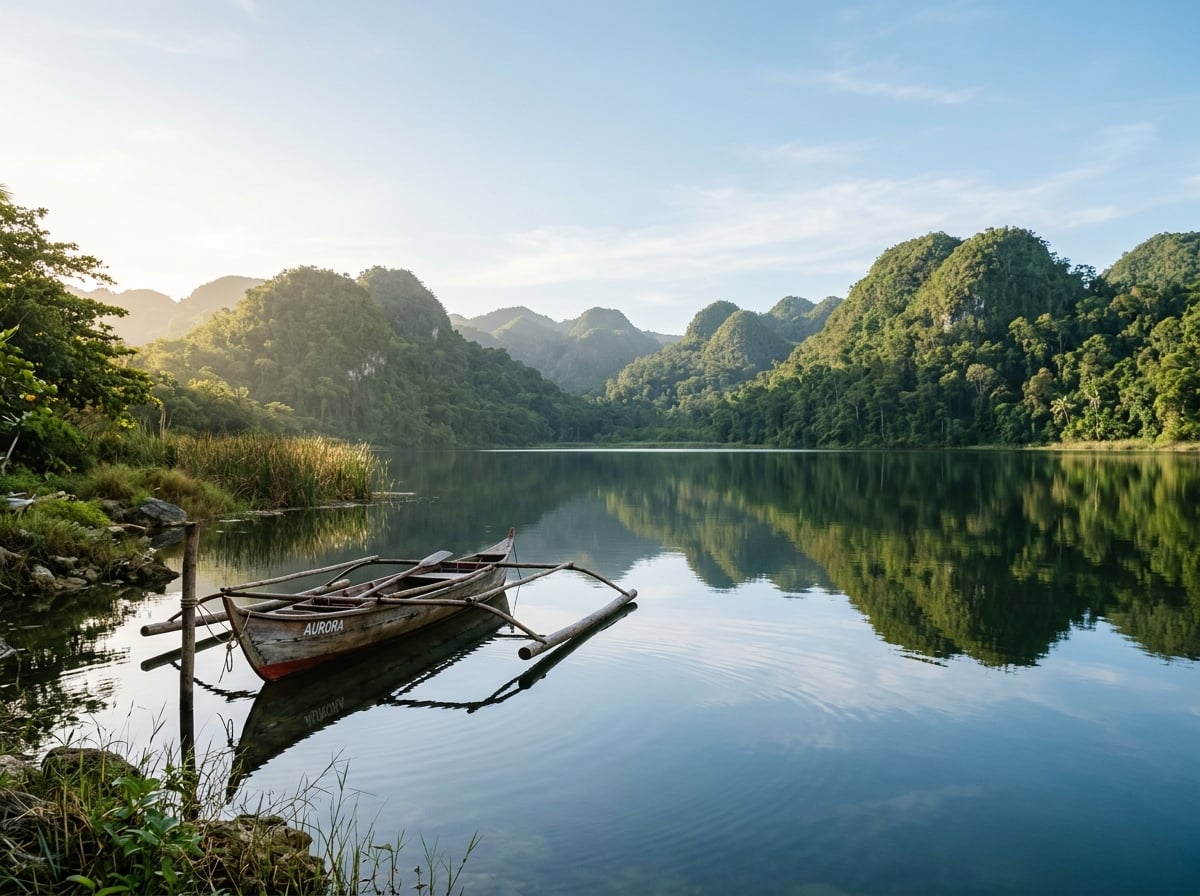
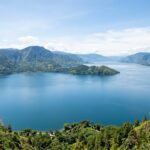
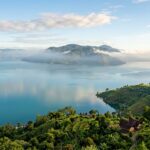
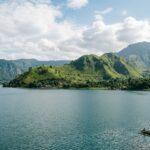
The lake is still the main draw, and for good reason. Ringed by forested hills, it sits still enough most mornings to throw near-perfect reflections of the surrounding ridgelines — the kind of shot that looks staged but isn’t. Locals rent out kayaks and small bancas by the hour near the main access point, and prices remain reasonable, generally somewhere between ₱150 and ₱350 depending on the season and how busy the weekend crowd happens to be.
Fishing is popular here too, mostly for tilapia, and a few families along the shoreline will cook your catch for a small fee if you ask nicely. Early morning and late afternoon are the two windows worth prioritizing — midday sun flattens the light and the water loses that glassy quality that makes photos here stand out.
What separates this lake from more developed lakes elsewhere in the Philippines is the absence of resort sprawl. There’s no boardwalk lined with souvenir stalls, no jet skis churning up the water. It’s quieter than that, and that’s precisely the appeal for anyone tired of overbuilt tourist spots. People searching for “Lake Tuba” or “Tuba Lake” online are usually hoping for exactly this — a highland lake that hasn’t been paved over yet, and as of this year, it still hasn’t.
Practical note: Bring cash in small bills. Boat operators and food vendors around the lake still don’t accept GCash or cards reliably as of this year, and the nearest ATM is back toward Tuba town proper, not near the water.
2. Mount Kalugong
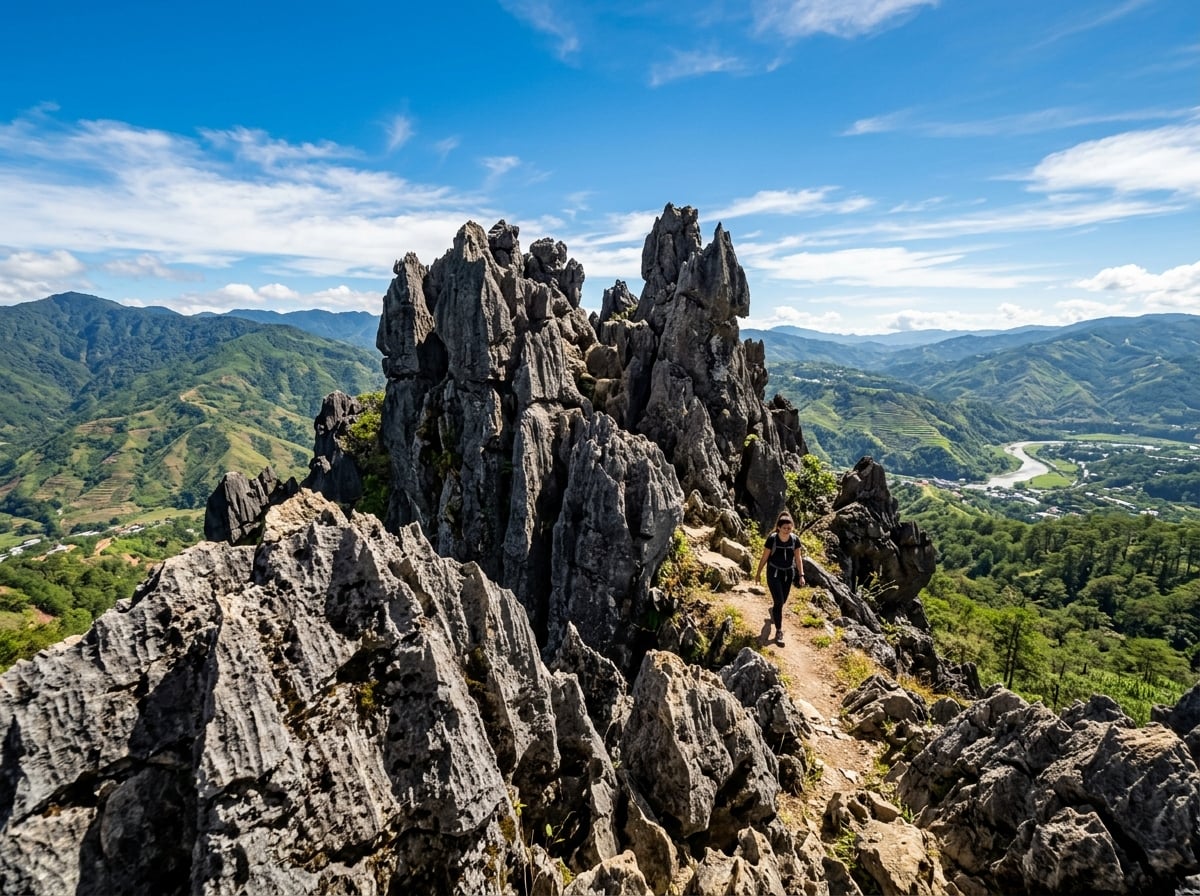
For a bit more physical activity without committing to a full-day trek, Mount Kalugong is the move. It sits within the Mount Kalugong Cultural and Ecological Park in La Trinidad, a short drive from Lake Tuba, and it’s become one of the more Instagrammed hikes in the province thanks to its limestone formations and open ridge views.
The climb itself is manageable — most people finish the loop in two to three hours, including stops for photos, which makes it realistic for families with older kids or hikers who aren’t looking for a grueling day. The summit view stretches across the La Trinidad valley, and on a clear morning you can pick out the strawberry terraces below.
Entrance fees run around ₱50–₱120 depending on whether a guide is included, and that money goes toward trail maintenance and the local community managing the park. Go early if you can — by midmorning on weekends, the parking area fills up and the trailhead gets genuinely crowded.
3. The Hanging Bridge of Tuba
A few minutes from the lake, the Hanging Bridge of Tuba spans a river gorge thick with greenery on both sides. It’s not a long crossing, but it sways enough underfoot to give you that small jolt of adrenaline, and it photographs beautifully against the surrounding jungle.
Beyond the bridge itself, the area functions as a jumping-off point for smaller trails leading into farming villages where locals still grow vegetables on terraced plots the way their families have for generations. It’s worth walking further than the bridge alone — the surrounding barangay gives a more honest look at daily life in rural Benguet than most curated tourist stops manage.
4. Benguet’s Strawberry Fields (La Trinidad)
Skipping the Strawberry Fields on a Benguet trip would be a mistake. La Trinidad still holds its title as the country’s strawberry capital, and the picking season runs roughly November through May, peaking around January and February. You pay by the container, pick your own, and can expect prices somewhere around ₱350–₱550 per kilo depending on how the season’s going — prices fluctuate more than most first-time visitors expect from one year to the next.
While you’re there, don’t skip the strawberry taho or the soft-serve strawberry ice cream sold by roadside stalls; both remain local staples worth the short line. The terraced fields are worth photographing even outside picking season, when the rows of green still make for a striking contrast against the pine-covered hills behind them.
It’s an easy half-day add-on to a Lake Tuba itinerary and works well as a lower-effort stop if you’ve already spent the morning hiking Kalugong.
5. Mount Kalapis and the Tuba Hot Springs
Save this for hikers who want a longer, more demanding day. Mount Kalapis has rougher trails than Kalugong, with steeper sections and less signage, so a local guide is worth hiring here rather than merely optional — expect to pay somewhere around ₱600–₱900 for a half-day guide, split easily among a small group.
Why It’s Worth It
The payoff is the hot springs waiting at the base once you’re done. They’re still largely undeveloped — no resort infrastructure, no entrance gates with turnstiles, just naturally warm, mineral-rich pools tucked into the landscape. After a few hours on Kalapis’s trails, sinking into warm water surrounded by forest is exactly the reward you’d hope for.
Because the springs aren’t commercialized, there’s more responsibility on visitors to keep them that way. Pack out everything you bring in, and resist the urge to leave anything behind, even biodegradable food scraps.
How to Get to Lake Tuba
Most people route through Baguio City first. From Manila, buses (Victory Liner, Genesis, and a few smaller operators) run to Baguio regularly, with the trip taking anywhere from 4 to 6 hours depending on traffic out of Metro Manila — somewhat improved since recent NLEx-SCTEx upgrades, though weekend departures still vary widely.
From Baguio, Grab is now reliably available for the short hop into Tuba, a meaningful upgrade from a few years ago when hailing a ride meant flagging down jeepneys or negotiating directly with taxi drivers. That said, hiring a local driver or guide for the day still makes sense if you’re planning to hit multiple stops — the roads into Tuba are narrow and wind through mountainside curves that are easier left to someone who drives them daily.
If you’re driving yourself, a sedan handles the main roads fine, but anything beyond the paved sections toward Kalapis benefits from higher clearance.
Where to Stay
Tuba itself has limited lodging, so most travelers base themselves in Baguio and day-trip into the area. Baguio’s accommodation range has only grown since pandemic-era recovery, from budget hostels near Session Road to mid-range boutique inns around Camp John Hay. Booking ahead during peak season (December holidays, Holy Week, and the February Panagbenga flower festival) is non-negotiable — rooms fill fast and prices can roughly double during those windows.
For travelers who’d rather stay closer to the lake itself, a handful of small homestays and guesthouses have opened in Tuba over the past couple of years, though options remain limited compared to Baguio proper. If your Philippines trip is part of a broader Southeast Asia loop, it’s worth noting how differently accommodation is structured elsewhere — in Bali, for example, travelers planning a stay around Ubud’s villas and boutique guesthouses will find a far more built-out lodging scene than anything currently available around Lake Tuba, and the same goes for the resort-heavy stretch you’d find if you compared notes with Ubud’s luxury and all-inclusive resorts.
What to Pack
- Light layers plus a proper jacket — temperatures swing more than first-time visitors expect, especially after sunset
- Sturdy, broken-in hiking shoes rather than brand-new ones
- A reusable water bottle and sun protection, since UV exposure at elevation is stronger than it feels
- Cash in small denominations — this cannot be overstated given how few places accept digital payment
- A rain jacket if you’re visiting outside the November–February dry window
- A change of clothes for the hot springs, plus a small dry bag for wet items on the way back
Frequently Asked Questions
Is Lake Tuba safe for solo travelers?
Generally yes. The area is low-crime and locals are used to hikers passing through. The main risks are trail-related — slippery paths after rain and steep drop-offs near Kalapis — rather than personal safety concerns.
Do I need a guide for every hike?
No. Mount Kalugong is well-marked enough for independent hikers. Mount Kalapis is a different story; hire a guide there.
Can I visit Lake Tuba as a day trip from Baguio?
Easily. Most of the five stops above can be combined into a single long day if you start early, though splitting them across two days gives you more breathing room, especially if you want to hit both Kalugong and Kalapis.
Is it spelled “Lake Tuba” or “Tuba Lake”?
Both phrasings point to the same place, and you’ll see locals and search results use them interchangeably. “Lake Tuba” follows the more common English naming convention and is what most maps and signage use, but don’t be thrown off if you see “Tuba Lake” referenced elsewhere — it’s the same body of water in Benguet.
Is Lake Tuba comparable to other lake destinations in Southeast Asia?
Not really in scale — it’s a fraction of the size of somewhere like Lake Toba in Sumatra — but the appeal is similar: cool air, minimal development, and a slower pace than nearby cities offer. If you’re weighing both destinations for an itinerary, it helps to read up on what to keep in mind while visiting Lake Toba before deciding which fits your trip better.
How far is Tuba Lake from Manila?
Count on roughly 5 to 7 hours door-to-door once you factor in the bus ride to Baguio and the final stretch into Tuba. It’s not a quick weekend hop from the capital, but it’s a manageable one if you leave early on a Friday and beat the worst of the traffic out of Metro Manila.
Final Thoughts
What makes Lake Tuba worth the detour isn’t any single attraction — it’s how much variety sits within such a compact stretch of highland terrain. You’ve got a genuinely peaceful lake, a beginner-friendly hike with real payoff views, an adrenaline-lite bridge crossing, strawberry fields that double as a family outing, and a proper backcountry trek ending in natural hot springs. Few destinations this close to a major city like Baguio manage to stay this uncrowded, and if your travel planning tends to sprawl across a whole region, it’s worth pairing this guide with broader trip research — even something like a general travel tips checklist can save you from the small logistical headaches that trip up first-time visitors to the Cordillera. Go before Lake Tuba, or Tuba Lake, whichever you want to call it, changes.