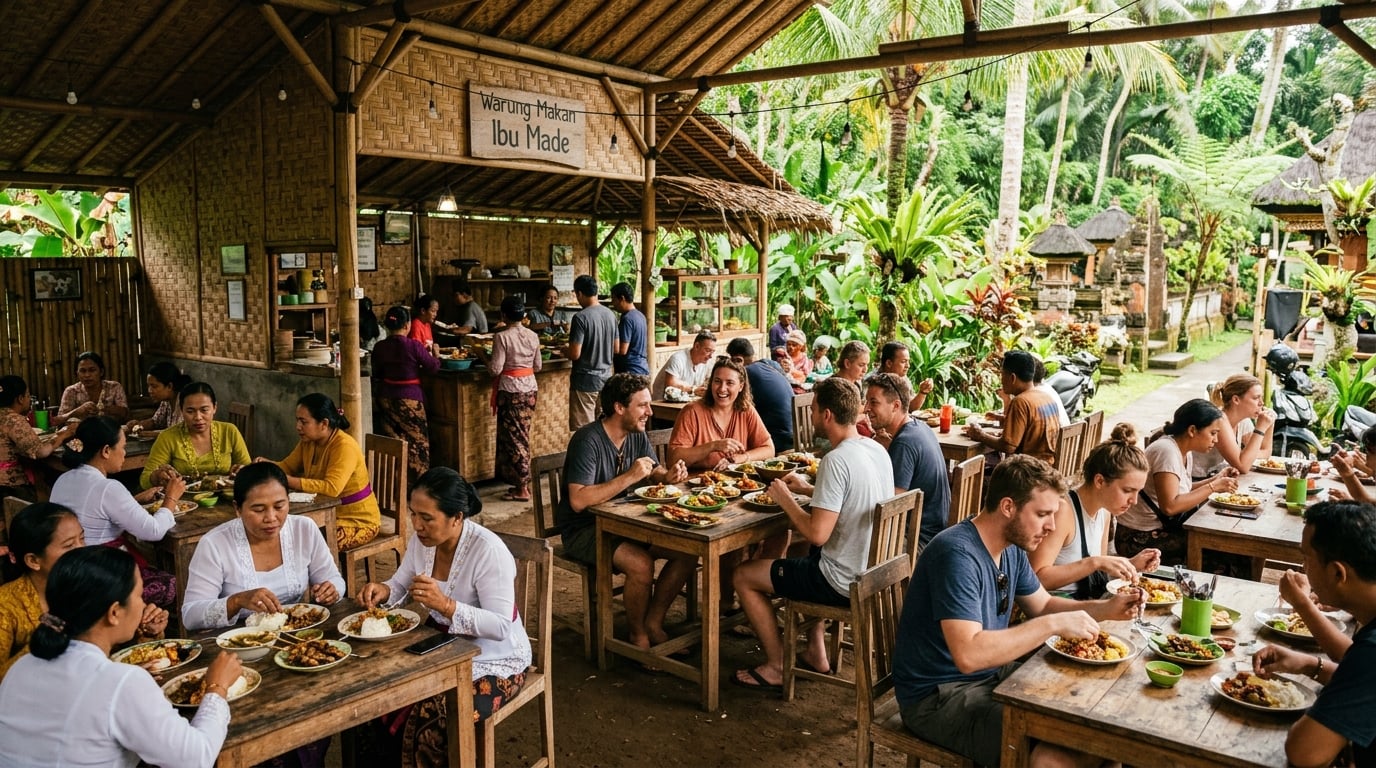
Best Food in Ubud 2026: Top Restaurants, Warungs & Cafes
Ubud has earned its reputation as Bali's culinary capital through decades of layered influence: traditional Balinese ceremonial cooking, Dutch colonial holdovers, a wave of health-conscious expats, and now a generation of globally trained chefs who've returned to reinvent local ingredients. The result is a town where you can savor a five-dollar plate of babi guling at a roadside warung at noon, and then indulge in a twelve-course tasting menu by dinner, both experiences equally worth the trip. Finding the best food in Ubud isn't about picking just one restaurant—it's about matching the right meal to the right moment. This guide breaks down exactly where to go by category, what to order, and how to avoid the common tourist traps found on popular streets like Monkey Forest Road and Jalan Raya.
Quick Guide to Ubud's Culinary Scene
Here's a snapshot of what to expect when exploring the best food in Ubud:
- Warungs Offer Unbeatable Value: A satisfying local meal can cost as little as 25,000–50,000 IDR ($1.50–$3.20 USD). The most authentic ones are often unmarked family kitchens, not those overtly catering to tourists with English menus out front.
- Ubud's Fine Dining Has Matured: The town now boasts several exceptional farm-to-table restaurants sourcing directly from nearby Tegallalang and Sidemen farms, with tasting menus typically ranging from 500,000–1,500,000 IDR per person.
- Vegan Cuisine is a Highlight: Driven by its wellness tourism, Ubud features one of Southeast Asia's highest concentrations of dedicated vegan restaurants.
- Reservations are Often Essential: Popular dining spots like Locavore, Hujan Locale, and Room4Dessert can be fully booked 1–3 weeks in advance during peak season (July–August, December–January).
Top Warungs and Authentic Balinese Eateries in Ubud
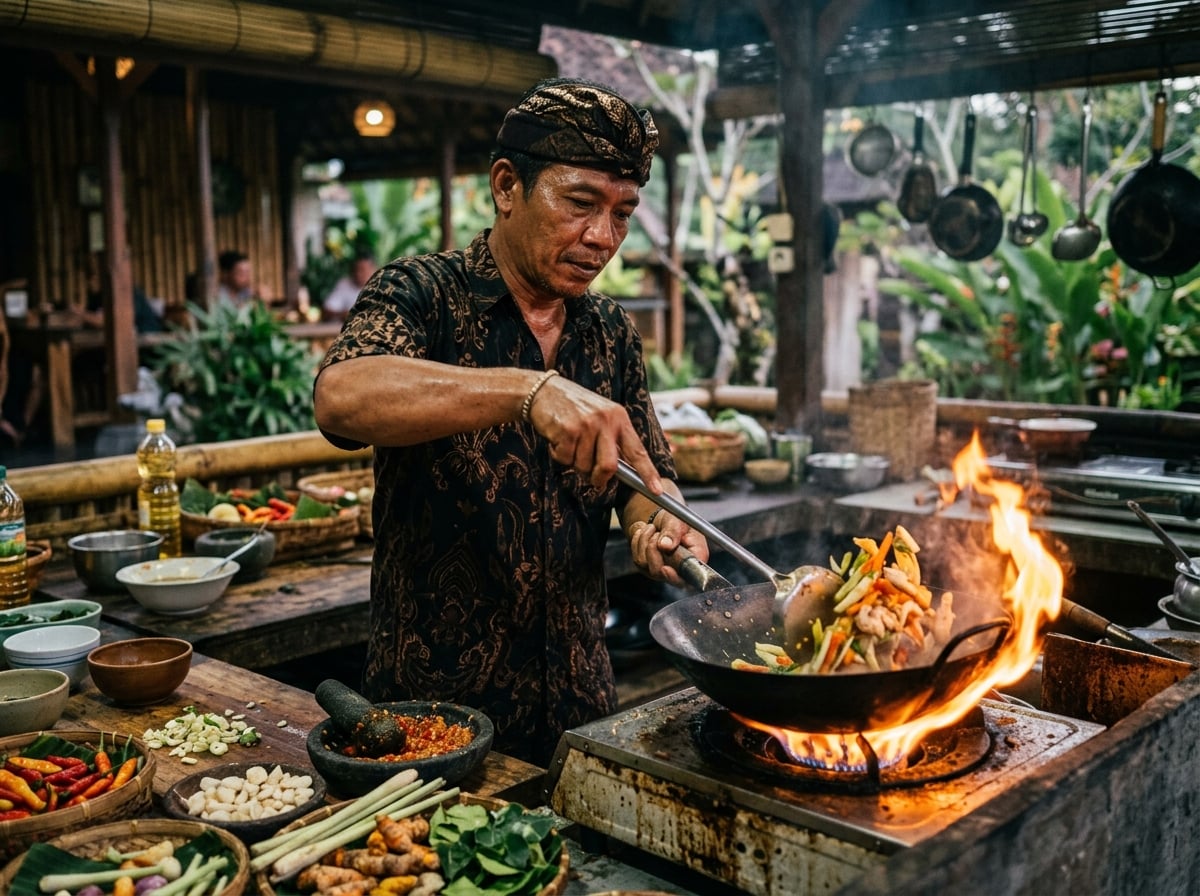
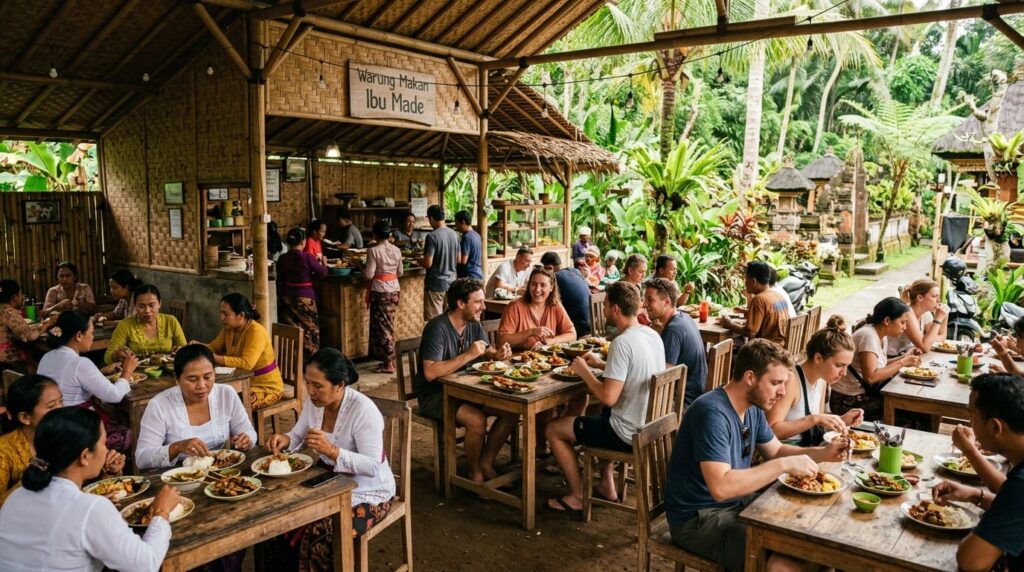
Warungs are small, family-run kitchens serving traditional Balinese and Indonesian home cooking. These are where you'll find the most authentic Ubud food experiences. Expect simple settings with plastic chairs, no air conditioning, and flavors that fine-dining establishments often can't replicate.
While Warung Sopa and Warung Ibu Oka attract a lot of tourist traffic, Ibu Oka's babi guling (spit-roasted suckling pig) is genuinely good. However, arrive before 12:30 pm to avoid queues that can last 30 minutes or more. For a quieter, equally delicious version of this iconic dish, locals often recommend Warung Babi Guling Pak Malen near the Ubud Palace, which typically sells out by early afternoon—a testament to its freshness.
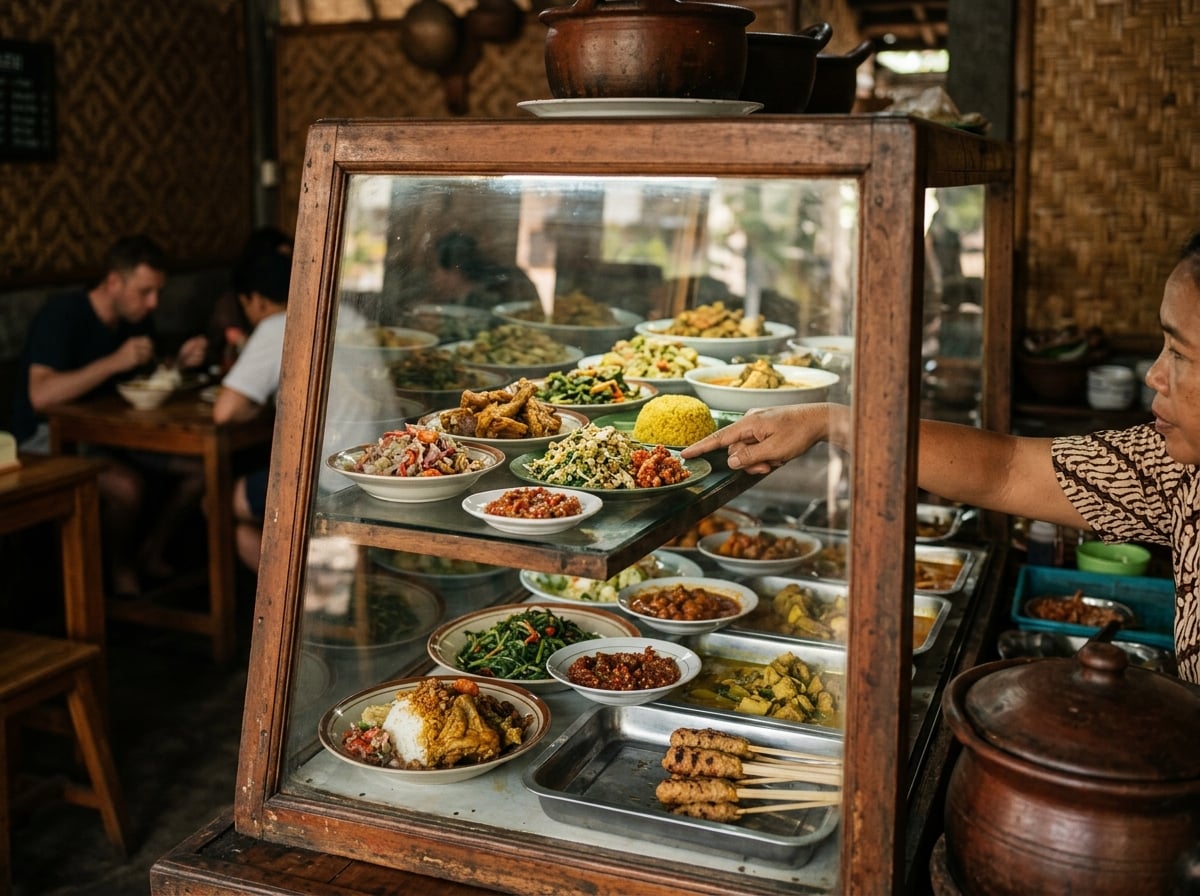
For authentic nasi campur (mixed rice with a rotating selection of vegetables, meat, and sambal), bypass the menu-driven places. Instead, look for warungs with a glass display case where you can point to your desired items. This is often a sign of authenticity. Warung Enak near Penestanan and Warung Bu Mangku in the scenic rice-field area both operate this way, with prices rarely exceeding 35,000 IDR per plate.
Common Mistakes When Dining at Warungs
Many tourists unknowingly pay inflated prices by ordering à la carte from laminated English menus; pointing at the display case can typically reduce costs by 2–3 times. Another common oversight is treating spicy sambal as an optional garnish; Balinese sambal matah (raw shallot-lemongrass-chili) is meant to be thoroughly mixed through the rice for the full flavor experience. Additionally, try to avoid warungs directly on Monkey Forest Road during peak lunch hours. The truly good ones are almost always found one or two streets back, where rent is more affordable, and the owners focus on fresh cooking rather than just reheating.
Best Fine Dining and Farm-to-Table Restaurants in Ubud
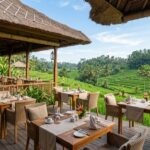
Ubud's fine-dining scene largely thrives on a farm-to-table model, leveraging its proximity to Bali's central highlands and rich volcanic soil. These establishments don't merely mimic European fine dining; the best ones skillfully apply French or Nordic techniques to hyper-local Balinese produce.
Locavore remains the standard-bearer, consistently recognized on Asia's 50 Best Restaurants list. Its tasting menu evolves seasonally, dictated by what local farmers harvest. Reservations are crucial and should be made at least two weeks out during high season via Locavore's official booking system. Expect to pay 1,200,000–1,800,000 IDR per person, with additional costs for wine pairings.
Hujan Locale offers a more relaxed yet sophisticated take on Indonesian cuisine, featuring elevated rendang and betutu dishes at roughly half of Locavore's price point, all served in a beautiful open-air colonial-style building. Room4Dessert, Chef Will Goldfarb's unique dessert-only tasting counter, stands in a category of its own. It's one of the few restaurants globally dedicated entirely to a multi-course dessert progression and often sells out weeks in advance.
For mid-range farm-to-table options without the full fine-dining price, both Sayuri Healing Food and Copper Kitchen + Bar source produce from their own or partner farms, with main courses typically ranging from 150,000–300,000 IDR.
| Restaurant | Style | Price Range (per person) | Reservation Needed? |
|---|---|---|---|
| Locavore | Modern Indonesian tasting menu | 1,200,000–1,800,000 IDR | Yes, 2–3 weeks ahead |
| Hujan Locale | Indonesian fine dining | 300,000–500,000 IDR | Recommended, 2–3 days |
| Room4Dessert | Dessert tasting counter | 400,000–600,000 IDR | Yes, 1–2 weeks ahead |
| Copper Kitchen + Bar | Farm-to-table casual | 150,000–300,000 IDR | Walk-in usually fine |
| Sayuri Healing Food | Health-focused farm-to-table | 100,000–200,000 IDR | Walk-in usually fine |
Must-Try Dishes and the Best Cafes for Brunch or Coffee
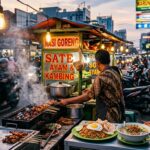
If your time in Ubud is limited, make sure to try these five essential dishes: babi guling, bebek betutu (slow-cooked spiced duck), sate lilit (minced fish satay wrapped on lemongrass stalks), lawar (vegetable and meat salad with grated coconut), and nasi campur. Each dish showcases a different traditional cooking method—roasting, steaming, grilling, and raw preparation—that defines the rich tapestry of Balinese cuisine.
Ubud's vibrant brunch and café culture has flourished alongside its yoga and wellness boom over the past 15 years. It's now genuinely world-class. Clear Café offers excellent Buddha bowls and fresh juices in a multi-level, open-air setting with river gorge views. Seniman Coffee Studio is a must-visit for coffee aficionados, roasting its own single-origin Indonesian beans; the coffee alone is worth the trip. Alchemy established its reputation on raw vegan brunch options and has since expanded its menu considerably.
For a distinctly Balinese coffee experience, seek out a local warung serving kopi tubruk. This coarsely ground coffee, brewed directly in the cup with sugar and unfiltered, offers a glimpse into how Balinese people truly enjoy their coffee at home, costing a fraction of a café flat white.
A Note on Luwak Coffee Ethics
Many Ubud coffee plantations market kopi luwak (civet coffee) tours. However, it's crucial to approach these with caution. The vast majority of commercially produced luwak coffee in Bali comes from civets kept in cages, a practice widely condemned by animal welfare organizations like World Animal Protection. If you're determined to try it, inquire specifically whether the operation uses wild-collected droppings rather than farmed animals, and be wary of evasive answers.
Vegan and Vegetarian-Friendly Restaurants in Ubud
Ubud boasts one of the highest concentrations of dedicated vegan restaurants in Southeast Asia, a direct result of two decades of wellness tourism. Here, you'll find entire restaurants that are vegan-only or vegan-first, rather than just offering a few plant-based dishes.
Zest Ubud presents raw and cooked vegan dishes with beautiful plating, all enjoyed from a jungle-view terrace. Moksa stands out by growing much of its produce on-site in a permaculture garden, often pairing meals with an engaging farm tour. Sage elevates plant-based cuisine to a fine-dining level, with dishes that rival the presentation and complexity of places like Locavore, but are entirely vegan. For quick, affordable plant-based meals, Down to Earth functions as both a health food store and a café, offering a rotating buffet-style lunch.
Traditional Balinese cuisine is also quite accommodating for vegetarians, featuring dishes like lawar sayur (vegetable-only lawar), gado-gado, and various tempeh/tofu preparations. Just remember to confirm that shrimp paste (terasi) isn't used in the sambal if you're strictly vegetarian, as it's a nearly universal base ingredient in many Balinese dishes.
Essential Tips for Dining in Ubud: Booking and Best Times to Visit
To secure a table at fine-dining establishments in Ubud, such as Locavore, Room4Dessert, or Hujan Locale, make reservations 1–3 weeks in advance during peak season (July, August, December, and around Nyepi in March). During shoulder months, booking 2–5 days ahead should suffice. Warungs never require reservations, but remember that the best ones often sell out of popular dishes by early afternoon, so aiming for lunch before 1 pm is advisable.
Ubud's dining rhythm is influenced by both tourist and local schedules, which often don't overlap. Warungs serving babi guling and other slow-cooked dishes typically prepare one batch in the morning and close once it's sold out, sometimes as early as 2 pm. Fine-dining restaurants, conversely, usually open for dinner around 6:30 or 7 pm and are busiest between 8 and 9 pm. If you're hoping to snag a table at Locavore or Hujan Locale without a long lead time, consider trying on a Monday or Tuesday when the weekly tourist turnover has usually cleared out.
While rainy season (November–March) doesn't significantly impact indoor dining, it can affect open-air café seating. Many of Ubud's charming spots, including Clear Café, have limited covered seating during downpours, so it's wise to have a backup plan. For broader travel planning that includes dining, be aware that ride-hailing apps like Grab and Gojek work well within central Ubud but coverage can become sparse towards areas like Tegallalang and Sidemen. When considering your overall stay in the area, you might also be interested in exploring a luxury hotel in Ubud or perhaps the best hotel in Ubud for your preferences.
Frequently Asked Questions About Dining in Ubud
What is the most famous food to try in Ubud?
Babi guling (Balinese spit-roasted suckling pig) is arguably Ubud's signature dish, typically served with rice, vegetables, and a blood sausage known as lawar. Warung Ibu Oka and Warung Babi Guling Pak Malen are two highly recommended establishments, though both tend to sell out by early afternoon.
Is Ubud good for vegan or vegetarian travelers?
Yes, Ubud is exceptionally welcoming for vegan and vegetarian travelers, boasting one of the highest concentrations of dedicated plant-based restaurants in Southeast Asia. Places like Moksa, Sage, and Zest offer comprehensive vegan menus. Additionally, traditional Balinese cuisine includes many naturally vegetarian-friendly options such as gado-gado and tempeh dishes.
Do I need reservations for restaurants in Ubud?
While warungs generally do not require reservations, it is highly recommended to book fine-dining restaurants like Locavore, Room4Dessert, and Hujan Locale well in advance—1 to 3 weeks during peak season, and at least 2 to 5 days during shoulder months—to ensure availability.
How much does a typical meal cost in Ubud?
A meal at a local warung typically ranges from 25,000–50,000 IDR ($1.50–$3.20 USD). Mid-range café meals usually cost between 80,000–200,000 IDR. For fine-dining tasting menus at establishments like Locavore, expect to pay 1,200,000–1,800,000 IDR per person, often including wine pairings.
What's the best time of day to eat at Ubud's warungs?
It's ideal to have lunch at warungs before 1 pm. Many warungs prepare a single batch of popular roasted or slow-cooked dishes in the morning and will close once they sell out. Arriving after 2 pm often means that the most sought-after dishes, like babi guling, will no longer be available.
Is Kopi Luwak in Ubud an ethical choice to try?
Most commercial kopi luwak (civet coffee) offered in Ubud comes from civets kept in cages, a practice widely criticized for animal cruelty by organizations such as World Animal Protection. If you choose to try it, specifically ask if the beans are wild-sourced and avoid any establishments that display caged animals.