Culinary Paradise of Jakarta: 5 Reasons It’s a Food Lover’s Dream
Jakarta still doesn’t get the culinary reputation it deserves, and honestly it hasn’t for years. Mention “Indonesian food” to most travelers and they’ll picture Bali’s beach cafés or Yogyakarta’s gudeg stalls — rarely the sprawling, 11-million-strong capital that actually anchors the country’s entire food culture. That’s a mistake worth correcting before you book your next Southeast Asia trip. Jakarta is where Indonesia’s regional cuisines collide, where third-generation Peranakan recipes sit two blocks from tasting menus that rival anything in Singapore, and where a bowl of soto costing less than a dollar can taste just as memorable as a $150 degustation across town.
Locals sometimes describe a truly excellent meal here as a genuine “taste of paradise,” and it’s not just a throwaway compliment. After a few days of eating your way through the city, you start to understand exactly why the phrase sticks. This is a city built by centuries of migration — Javanese, Sundanese, Betawi, Chinese, Arab, Indian, and Dutch influences have layered on top of one another for four hundred years, and every single layer still shows up on a plate somewhere in Jakarta today.
Below are five reasons the culinary paradise of Jakarta keeps pulling in serious food travelers heading into 2026, along with the specific dishes, neighborhoods, and etiquette worth knowing before you land.
1. A Genuine Fusion of Diverse Flavors
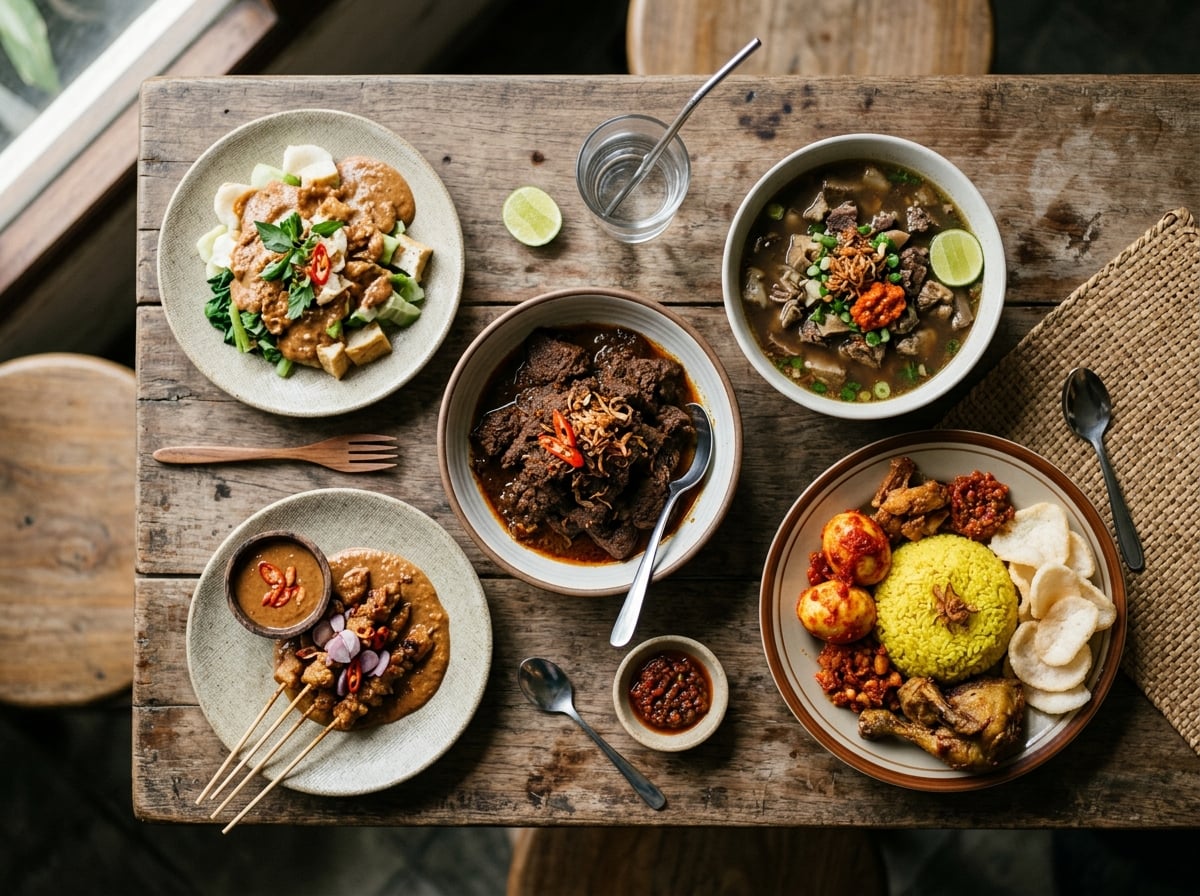
Jakarta’s food scene works like a shortcut through the entire Indonesian archipelago. You don’t need to fly to Sumatra, Sulawesi, or the Moluccas to taste their signature dishes — migrants from those regions brought the recipes with them decades ago, and Jakarta’s restaurants have kept them alive and largely unchanged ever since.
Traditional Indonesian cooking dominates the everyday menu. Nasi goreng (fried rice cooked with kecap manis and usually topped with a fried egg), soto Betawi (a rich, coconut-milk beef soup unique to old Jakarta), and rendang — the slow-braised, spice-crusted beef stew that international food polls keep ranking among the best dishes on earth — form the backbone of the local diet. What separates these from the versions you’ll find abroad is the bumbu, the spice paste, ground fresh daily rather than pulled from a jar. That difference is obvious within the first bite.
Chinese-Indonesian and Peranakan heritage runs just as deep. Glodok, Jakarta’s historic Chinatown, has been serving bakmi ayam (chicken noodles), siomay with peanut sauce, and kwetiau goreng since well before Indonesian independence. The renovated Petak Enam food hall, tucked inside the old Chandra department store building, remains the easiest one-stop introduction to this cuisine — dozens of stalls, most run by families cooking the same recipes for decades, all under one roof with proper air conditioning.
Middle Eastern, Indian, and Mediterranean kitchens round out the picture. Long-running names like Al Jazeerah and Queen’s Tandoor still draw loyal crowds for biryani and tandoori, while a newer wave of restaurants in Menteng and Kemang serves everything from Lebanese mezze to Hyderabadi curries. If you’re coming from Bali and wondering how Jakarta’s scene compares, it’s worth reading up on the restaurant culture in Ubud first — Jakarta’s version is bigger, faster-moving, and far less built around Western-friendly cafés.
For a wider look at why this level of diversity exists in the first place, it helps to understand Jakarta’s back story — the cultural heritage of Jakarta explains how centuries of trade and migration shaped both the city and everything that ends up on its plates.
2. Street Food That Rewards the Adventurous
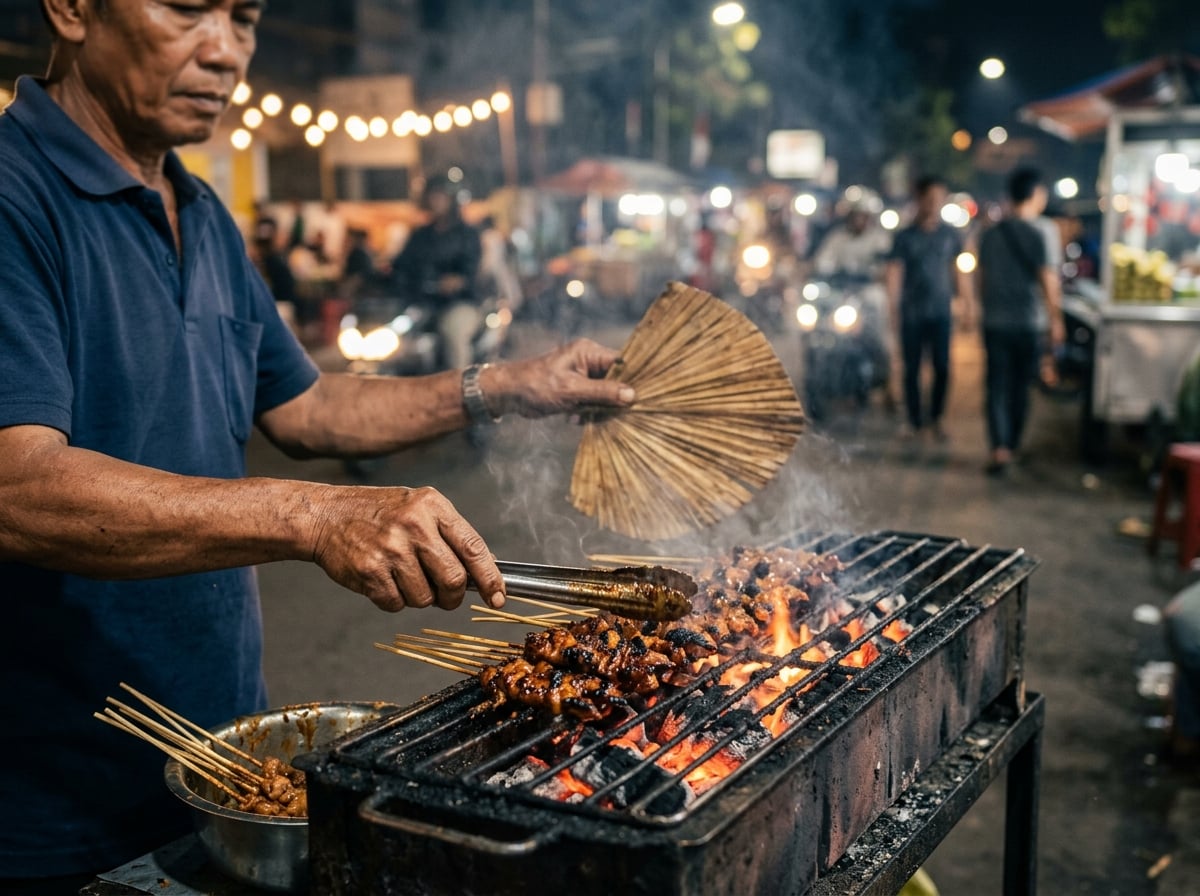
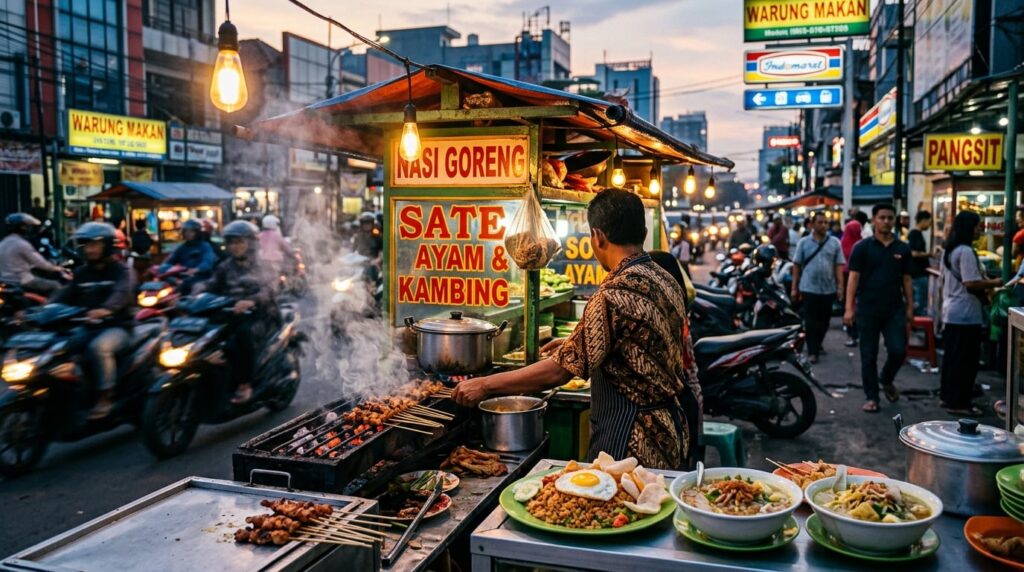
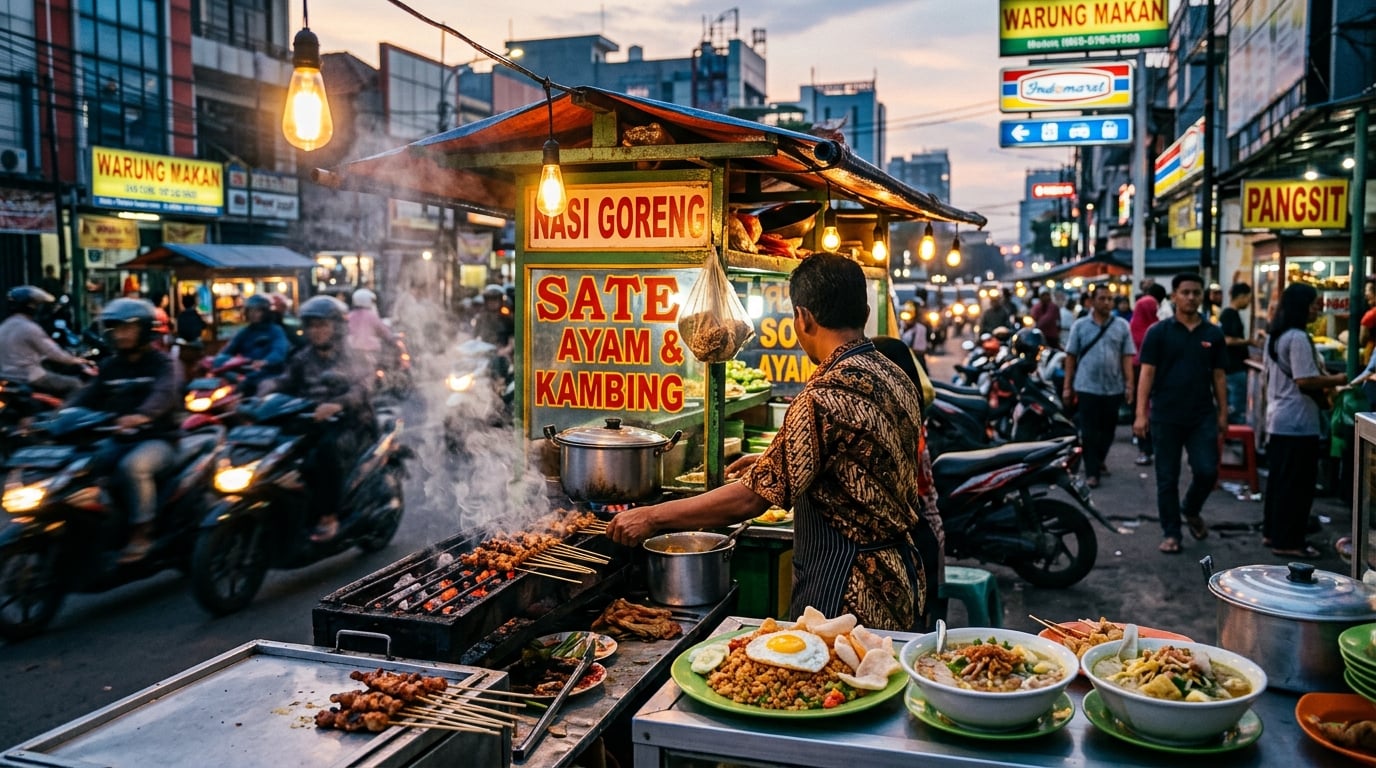
Jakarta’s street food isn’t a sideshow to the “real” restaurants. For most residents, it is the real dining scene. Nearly every neighborhood has its own kaki lima (five-legged carts, named for two wheels plus the vendor’s two legs plus the stand) serving food that’s often better than what you’d get in a sit-down restaurant, at a fraction of the price.
Pecenongan and Jalan Sabang remain the two most reliable after-dark food streets, and neither has lost its edge in recent years. Expect sate ayam grilled over coconut-husk charcoal, nasi uduk (coconut rice fragrant with pandan and lemongrass), kerak telor (a Betawi specialty of glutinous rice, egg, and dried shrimp cooked in a wok until crisp), and martabak — the thick stuffed pancake that comes savory (egg and minced meat) or sweet (chocolate, cheese, and condensed milk piled absurdly high).
Warungs — tiny, usually family-run stalls with a handful of plastic stools — are where you’ll find the most honest version of Indonesian home cooking. Don’t be put off by the lack of an English menu; pointing at whatever looks good works perfectly well, and prices rarely climb above 30,000–50,000 rupiah (roughly $2–3) for a full plate.
A few practical notes worth knowing before diving in: stick to stalls with visible turnover and a queue of locals, since that’s the best guarantee of freshness, and carry your phone rather than cash. QRIS, Indonesia’s nationwide QR payment system, is now accepted at the overwhelming majority of street vendors, even the smallest ones tucked down a side alley. If you’re building out a broader itinerary, pairing a street food crawl with an evening exploring the nightlife and entertainment scene in Jakarta makes for one of the better nights out the city has to offer.
3. Fine Dining That Has Genuinely Come of Age
Ten years ago, “fine dining in Jakarta” mostly meant imported European concepts with little local character. That’s changed substantially. Districts like SCBD, Senopati, and parts of Menteng now host a serious contemporary dining scene, much of it built around Indonesian ingredients rather than in spite of them.
Modern Indonesian cuisine is the strongest trend to watch right now. Chefs trained abroad are returning home and reworking rendang, gulai, and regional seafood dishes with tasting-menu plating, foraged herbs, and locally sourced produce, treating heritage recipes with the same seriousness a European kitchen would give its own classics. It’s a far cry from the tourist-facing “Indonesian buffet” format that dominated for so long, and a handful of these restaurants have started picking up regional recognition on Asia’s fine-dining award circuits — a sign the rest of the industry is finally paying attention.
Rooftop and sky-high dining has also expanded rapidly as Jakarta’s skyline has climbed higher year after year. A number of towers in the CBD now house restaurants and bars with genuinely impressive views over the city, pairing international tasting menus or extensive wine lists with sunset skylines that are hard to replicate anywhere else in Southeast Asia. These make solid choices for anniversaries, proposals, or simply a splurge night after a few days of street food. For a curated shortlist of where to book, the guide to top-rated restaurants in Jakarta is worth checking before you land.
4. A Coffee Culture With Real Depth
Indonesia remains one of the world’s largest coffee producers, and Jakarta’s café scene finally reflects that legacy properly. Specialty coffee shops roasting single-origin beans from Sumatra (Mandheling, Gayo), Java, and Toraja have multiplied across Kemang, Senopati, and Cikini over the past several years, and the quality bar has risen sharply — baristas here compete in national and international brewing competitions, and it genuinely shows in the cup.
The homegrown drink to try is es kopi susu — iced coffee sweetened with palm sugar and topped with milk — which went from a local specialty to a nationwide phenomenon once chains like Kopi Kenangan and Fore Coffee scaled it across the country. Independent roasters are pushing back against that chain-dominated market with more experimental single-origin pour-overs and natural-process beans, so it’s worth splitting your café time between a big-name chain outlet and a small independent roastery to taste the full range. Café-hopping through Jakarta’s better neighborhoods is now as legitimate a way to spend an afternoon as visiting a museum.
5. A Calendar Packed With Food Festivals and Markets
Jakarta’s culinary events run practically year-round, and timing a trip around one is a smart way to sample a huge range of food in a short visit. During Ramadan, takjil markets spring up on nearly every major street, selling seasonal sweets, fried snacks, and cold drinks specifically meant for breaking the fast at sunset. Even non-Muslim visitors are welcome to browse and buy, and the atmosphere is genuinely festive rather than solemn.
Outside of Ramadan, large-scale food festivals and mall-based culinary events pop up regularly, often spotlighting a mix of emerging chefs, specific regional Indonesian cuisines (Padang, Manadonese, and Balinese pop-ups are common), and international guest vendors. These events are usually well-publicized on local listing sites and Instagram, so it’s worth checking what’s on before finalizing your travel dates. If Jakarta is one stop on a longer Indonesia itinerary, it also pairs naturally with a deeper look at food elsewhere on the island — the guide to top restaurants to eat on Java Island covers how the flavors shift once you head out of the capital toward Bandung, Yogyakarta, or Surabaya.
Practical Tips Before You Eat Your Way Through Jakarta
A few things make the experience smoother. Traffic is genuinely bad at peak hours, so plan food crawls around a single neighborhood rather than hopping across the city in one evening — Kemang, Senopati, or Glodok each offer enough variety on their own to fill a full night. Spice levels can be intense even in dishes that don’t look it, so ask for “tidak pedas” (not spicy) if you’re unsure how a dish will land. Tipping isn’t expected at street stalls or warungs, though 10% is appreciated at sit-down restaurants that don’t already add a service charge.
Ride-hailing apps like Gojek and Grab are the easiest way to reach food destinations spread across the city, and both now have in-app food delivery arms if you’d rather eat in after a long day of sightseeing. Bottled or filtered water is the safer default everywhere, including at otherwise reputable restaurants, and it’s worth packing basic stomach medication just in case — even seasoned Southeast Asia travelers occasionally get caught out by unfamiliar bacteria, not spice.
If food is your main reason for visiting, it’s worth reading up on the wider case for the destination — the rundown of reasons to visit Jakarta covers how the food scene fits alongside the city’s culture, shopping, and nightlife into one very full itinerary. And if the sheer number of attractions across the city feels overwhelming to plan around, the roundup of must-visit attractions in Jakarta is a useful companion for mapping out where to eat between sightseeing stops.
The Bottom Line
Jakarta doesn’t announce itself as a food destination the way Bangkok or Singapore does, and that’s part of its appeal. You have to actually go looking — wander into the warungs, chase down the night markets, and book the rooftop table before you understand the full range on offer. Between the street food, the fine dining, the coffee, and the festivals, few Southeast Asian capitals pack this much genuine culinary depth into one city. For anyone who takes food seriously, Jakarta isn’t a stopover on the way to Bali. It’s a destination in its own right, and still one of the more rewarding “taste of paradise” experiences left in the region.