The Ultimate Family Holiday Guide to Greece for 2025
Every parent asks the same question right before hitting "book now": will this trip actually work for everyone, not just the kids or just the adults? Greece answers that better than almost anywhere else in the Mediterranean. Toddlers get calm, shallow water and short transfers from the airport. Teenagers get watersports, ruins that feel like an adventure rather than a history lesson, and enough Wi-Fi to stay tolerable at dinner. Parents get long lunches, decent local wine, and resorts built around the fairly radical idea that a nine-year-old occupied for twenty straight minutes is worth paying extra for.
That mix of genuine adult relaxation and real kid engagement is exactly why this family holiday guide to Greece gets revisited and updated year after year rather than filed away and forgotten. Family travel here has matured into its own category, with resorts, ferry schedules, and even restaurant hours now built around it instead of treating children as an afterthought squeezed in beside the honeymoon suites.
Below is a full breakdown of where to go, what to do, when to travel, and how to pick a hotel that actually delivers on its family-friendly promises for your 2025 trip — plus the practical details that tend to get skipped in shorter guides.
Why Greece Works So Well for Families
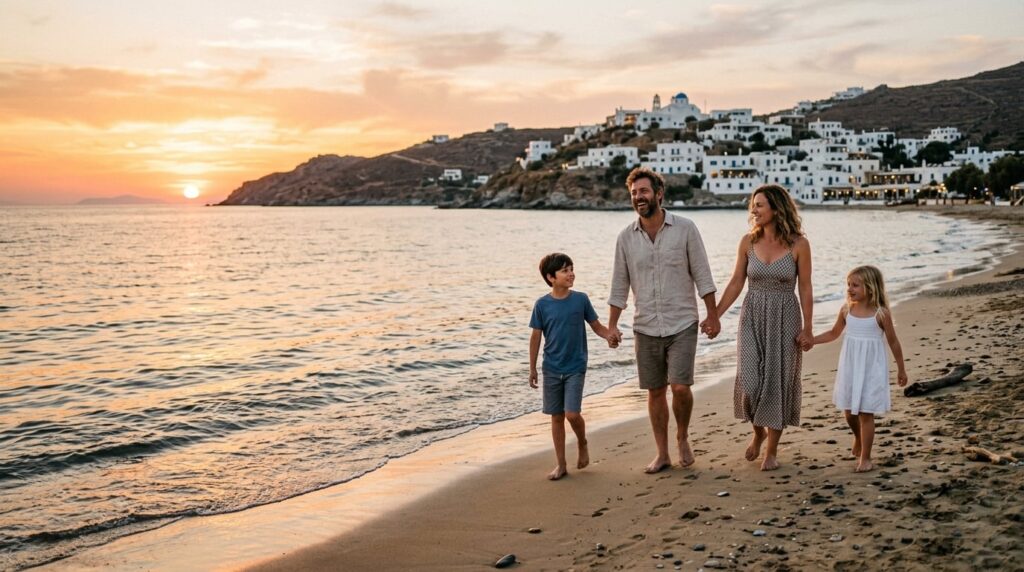
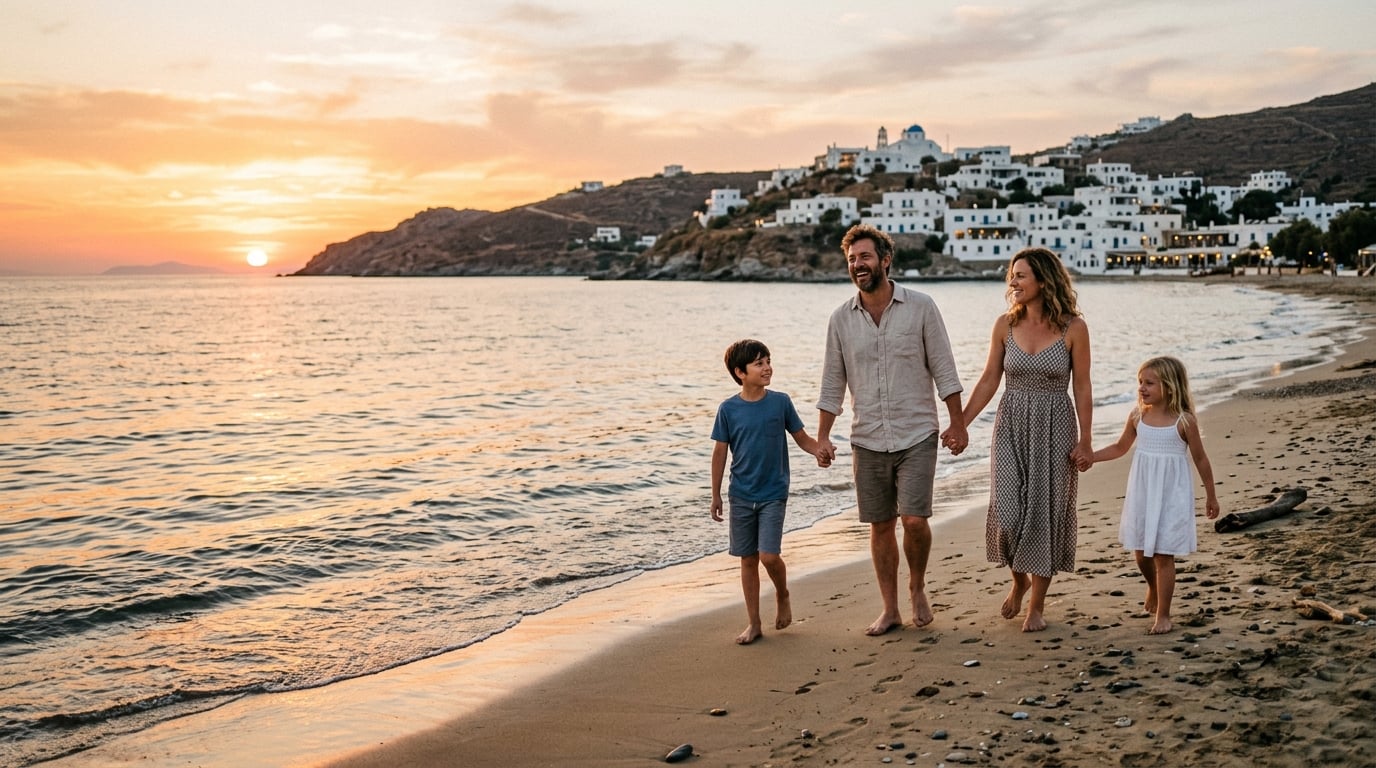
Three things push Greece ahead of other summer destinations for families: geography, infrastructure, and a culture that genuinely likes having children around rather than merely tolerating them.
The geography does a lot of the work. From late May through September, the Aegean and Ionian seas stay warm and unusually calm, with visibility good enough that snorkelling is worthwhile even for a six-year-old. Many beaches slope gently into the water instead of dropping off sharply, which matters enormously if you're supervising a nervous swimmer. Flight times from most of Europe run around three to four hours, so you're not burning an entire travel day before the holiday has even started.
Infrastructure has caught up fast, and it shows. Over the past decade or so, Greece has quietly built one of the most developed family-luxury hospitality scenes in southern Europe. Crete and Rhodes in particular now compete on the strength of their kids' clubs the way they once competed on spa menus alone. It's increasingly common to find supervised programmes running from four months old right through age 17, split into proper age bands rather than one generic playroom for everyone under 12. Several resorts added dedicated family concierge staff in 2024 and 2025, whose entire job is booking excursions and restaurant tables around nap times and kids' club sessions.
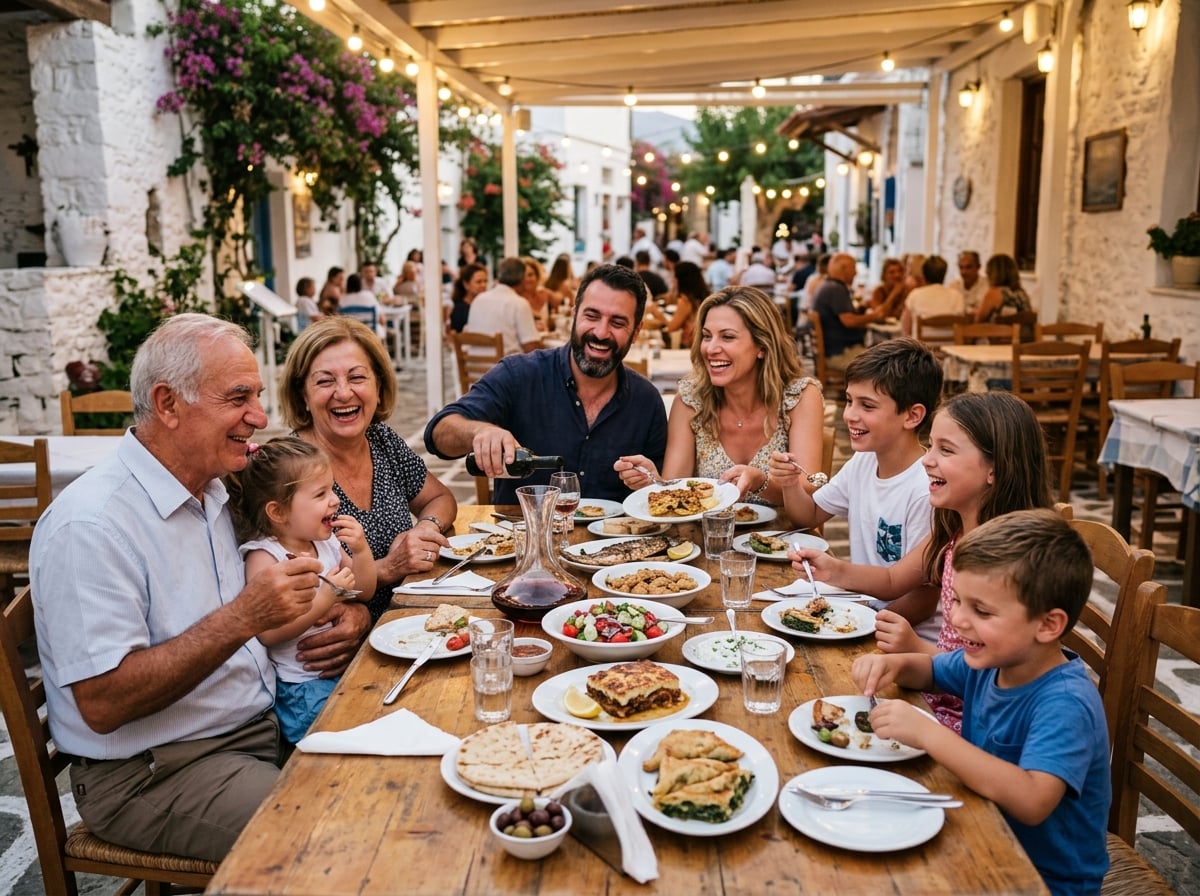
And the culture just works for kids, full stop. Greeks are relaxed about children in a way some neighbouring European destinations simply aren't. Families with toddlers still at tavernas past 9 pm are completely normal, staff tend to fuss over babies rather than sigh at them, and nobody raises an eyebrow over a meltdown about the wrong colour straw. That social ease removes a layer of stress a lot of parents don't even realise they've been carrying until it's gone.
Best Family Destinations in Greece
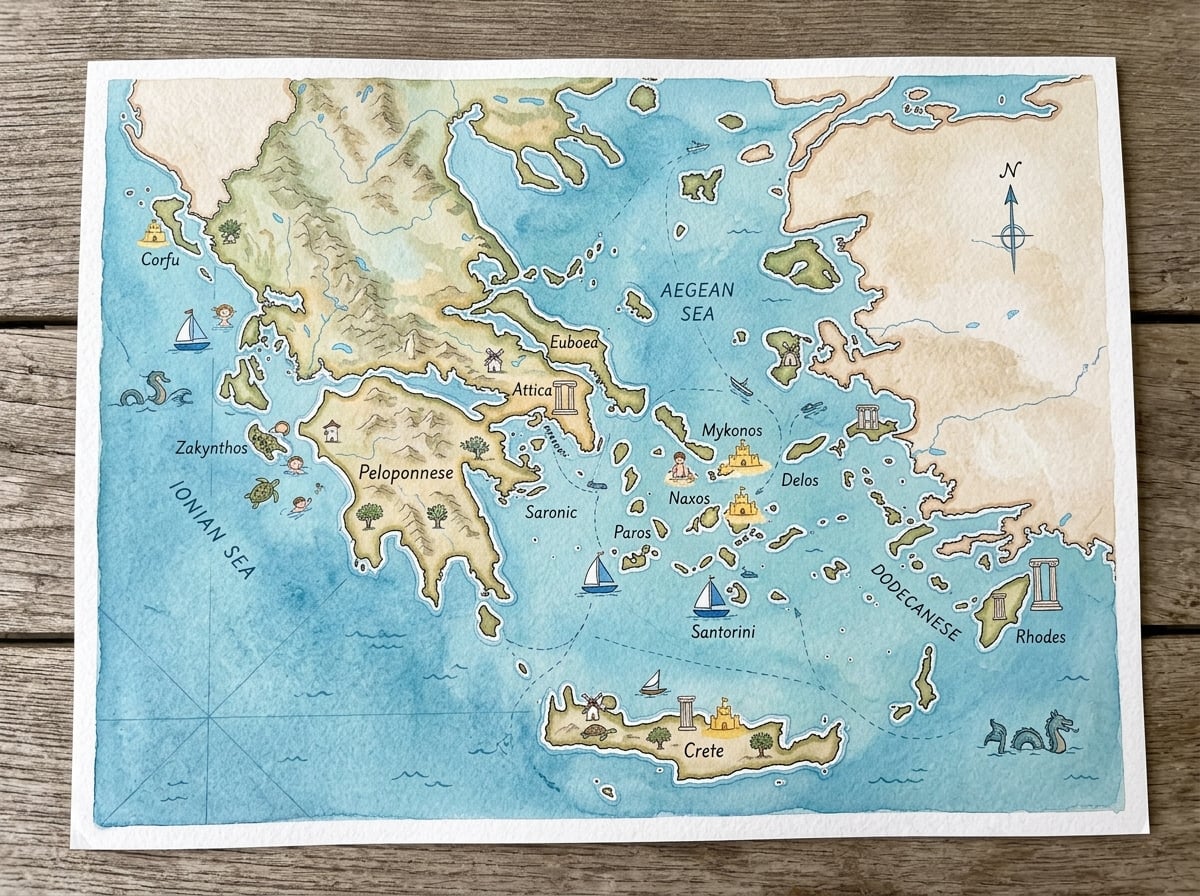
Not every Greek island suits every family, and picking the wrong one is the single most common mistake we see. Here's how the main regions actually compare when you're travelling with kids rather than as a couple chasing a quiet getaway.
Crete: The Safest First Choice
Crete remains the single best all-round pick and, honestly, the island we'd recommend first to almost anyone asking about Greece with kids. Its sheer size means genuine variety — quiet, family-oriented resort stretches near Rethymno, more polished bases around Elounda and Chania, and enough five-star family resorts per square kilometre to make comparison shopping straightforward. Direct flights are plentiful in 2025, transfers from Heraklion or Chania airports are usually under an hour, and there's enough to do (Knossos, dramatic gorges, boat trips to Spinalonga) to fill a nine- or ten-night stay without repeating yourself.
Rhodes: Beaches Plus History, Often All-Inclusive
Rhodes suits families who want a proper beach resort with a historic old town close enough for a day trip. Faliraki and the northern coast have shallow, sandy beaches that work well for younger kids, while Lindos and the medieval Old Town give older children something more substantial than sand to explore. Rhodes also has some of the country's strongest all-inclusive luxury properties, which is a real advantage if you've got picky eaters or simply want the budget locked in before you land.
Corfu: Greener, Quieter, Still Five-Star
Corfu feels different — greener, slightly Italian in pace, more olive grove than whitewashed cliff. It's a strong choice among family friendly Greek islands for parents who want a quieter, less built-up base without giving up luxury amenities. The northeast coast around Kassiopi and Kalami has calmer water that suits younger kids, while the west coast picks up bigger surf that teenagers into bodyboarding will genuinely appreciate.
The Peloponnese: Underrated Mainland Option
The Peloponnese doesn't get nearly enough credit, especially from families who've already done the classic islands and want more space to spread out. There's no ferry involved — you can drive straight there from Athens — and the region packs an extraordinary concentration of ancient sites (Mycenae, Epidaurus, Olympia) alongside excellent beaches, particularly around Costa Navarino. For families weighing up best family destinations in Greece on the mainland, Costa Navarino is arguably the strongest single option right now, with facilities and activity programming that rival anything on the islands.
Best Islands for Young Kids Specifically
If you're narrowing down the best Greek islands for families with young kids under six, prioritise shallow water and short transfers over nightlife or scenery. Crete wins here for infrastructure and medical access; Corfu comes a close second for calmer beaches along its northeast coast. Skip Santorini and Mykonos entirely with a toddler in tow — both islands involve a lot of stairs, cliffside paths, and very little in the way of gentle, sandy entry points into the water. If you want an idea of how a very different island-based trip gets planned around age-appropriate activities, our guide on things to do in Ubud follows a similar logic for choosing activities by traveller type, even though the destination itself is worlds away.
Things to Do in Greece with Children
A good family trip needs more than a nice pool, though a nice pool certainly helps. Here's what actually earns its place in the itinerary when you're planning things to do in Greece with children.
Pick beaches by age, not by Instagram appeal. Toddlers do best in shallow, protected bays — Elafonisi in Crete (pink sand, ankle-deep lagoon) and Voidokilia in the Peloponnese are close to perfect. Teenagers gravitate toward livelier resort beaches in Rhodes or along Corfu's west coast, where beach bars and jet-ski rentals give them something to do that doesn't involve their parents hovering nearby.
Make the ruins a story, not a lecture. Knossos works brilliantly with kids if you tell the Minotaur myth beforehand — suddenly the ruins become a treasure hunt rather than a pile of old stones nobody asked to see. Many sites now offer child-friendly audio guides, and at Olympia, kids can run the length of the original stadium track themselves, which lands far harder than any museum plaque ever could.
Book a boat trip — seriously, it's the single best activity you can plan. A half-day catamaran outing with multiple swim stops and snorkelling keeps every age group genuinely happy at the same time, which is rare in family travel. Look for operators offering shaded seating and properly sized life jackets for small children; not every company bothers, and it's worth asking before you book rather than discovering it on the dock.
Water parks are worth giving up a full day for. Crete's Water City and Rhodes' Water Park are well-run operations, not just rainy-day filler. Arrive by 10 am to beat the queues, and note most parks wind down operations by late September.
Don't ignore the smaller, low-key stuff either. A morning bike ride through olive groves outside Rethymno, a cooking class where kids roll their own dolmades, or an evening at a village panigyri (local festival) with live music and free-flowing lemonade often ends up being the thing kids talk about months later — more than the resort pool ever does.
Best Time to Visit Greece with Kids
Timing changes the whole experience, and it's one of the most common questions we get whenever we update this family holiday guide to Greece.
Late May to early June: Warm but not brutal (low-to-mid 20s°C), noticeably fewer crowds, and prices well below peak season. Sea temperatures can still feel cool for very young kids before mid-June, so pack a wetsuit top if your toddler runs cold.
July to August: Reliable heat and kids' clubs running at full capacity, but rates commonly run 30-40% higher than June, beaches get crowded, and midday sun is genuinely tough on toddlers. Plan beach mornings, then retreat to pool or shade from roughly 1-4 pm. Heatwaves have become more frequent in Greek summers over the past few years, so checking short-range forecasts a few days before travel is worth the five minutes it takes.
September: Our top pick, if school schedules allow it. Sea temperatures often peak above 25°C, crowds thin out noticeably after the first week, prices ease off, and most resort programming — kids' clubs included — keeps running at full strength through the month. If you're building out Greece family vacation tips 2025 around a shoulder-season trip, this is the window to target above all others.
How to Pick a Genuinely Family-Friendly Resort
Not every hotel that markets itself as "family-friendly" actually backs it up once you arrive. Check for these details before booking:
- Kids' club structure: Ask about specific age bands and hours. Strong resorts run separate groups for infants (4-12 months), toddlers (1-3), preschoolers (4-7), juniors (8-12), and teens, often open 9 am to 9 pm or later, including evening sessions so parents can actually finish a dinner without interruption.
- Room layout: Look for genuine two-bedroom family suites or connecting rooms with a shared living area — not just adjoining doors sold at double the price for the same square footage.
- Pool variety: A separate, shallow toddler pool set away from the main pool, plus an adults-only pool for when you need five quiet minutes to yourself.
- Spa and childcare overlap: The best-run properties let you book a treatment while your kids are in a supervised session nearby, with timing that actually lines up instead of leaving a 40-minute gap either side.
- In-room basics: Cots, sterilisers, baby monitors, and blackout blinds. These sound minor until you're dealing with an infant who wakes at 5:45 am because sunlight is pouring through thin curtains.
For a property-by-property breakdown of which resorts genuinely deliver on these points, our guide to the best luxury family hotels in Greece with a pool and spa goes hotel by hotel rather than leaning on brand reputation alone.
Sample 7-Day Family Itinerary (Crete)
- Day 1: Land in Heraklion or Chania, private transfer to your resort, unpack, early dinner.
- Day 2: Beach and pool morning, kids' club in the afternoon while parents grab some spa time.
- Day 3: Morning at Knossos (tell the Minotaur story on the drive over), pool in the afternoon.
- Day 4: Full-day catamaran trip with multiple swim stops and snorkelling.
- Day 5: Water park day — arrive by 10 am to beat the crowds.
- Day 6: Boat trip to Spinalonga for a light history lesson, lunch in Elounda afterward.
- Day 7: Slow morning on the beach, pack up, evening flight or one last taverna dinner.
Practical Tips for a Smooth Trip
Flights and transfers: Book direct wherever you can — connecting through Athens adds two to three hours and raises the odds of lost luggage, which is a much bigger headache with a stroller and car seat in the mix. Pre-book private transfers rather than relying on shared resort shuttles; with young kids, a fixed pickup time beats waiting around for a minibus to fill up. If you're flying budget or regional carriers, it's worth double-checking cabin bag rules before you pack — our guide to airline carry-on luggage size restrictions covers the differences between airlines that catch out a surprising number of families at the gate.
Documents: EU passport holders need at least three months' validity remaining. UK and other non-EU visitors need six months' validity and should factor in the 90/180-day Schengen rule if combining Greece with other European stops. Every child needs their own passport, no exceptions, even for infants who've been alive for six weeks.
Packing smart: Reef-safe sunscreen (some Greek marine areas are getting stricter about this), a wide-brim hat for under-twos, and rehydration sachets — Greek summer heat dehydrates kids faster than most parents expect, even ones who think they've packed for hot weather before. A portable fan for the room is worth the suitcase space in July or August, since not every resort's air conditioning keeps a nursery cool enough for a decent nap. For a broader packing and planning checklist that goes beyond Greece specifically, our travel tips for your next trip rounds up the small things people forget until they're already standing at the airport.
Comparing against other family destinations: If you're weighing Greece against other warm-weather options for the same trip, it's worth looking at how the logistics and costs stack up elsewhere. Our guide to family hotels in Sri Lanka is a useful comparison if you're considering a longer-haul alternative for 2025, and if a Caribbean trip is also on the shortlist, our roundup of Caribbean resorts for families covers similar ground for that region, from kids' club quality to flight times. If SeaWorld-adjacent stays are also on your radar for a different kind of family trip, our guide to hotels near SeaWorld San Antonio for families covers that ground in detail.
Frequently Asked Questions
Is Greece a safe destination for families?
Yes. Greece consistently ranks among the safer European destinations, with low rates of petty crime and a culture that's genuinely warm toward children. Standard precautions — securing valuables, sun safety, supervising kids near water — cover pretty much all of the real, minimal risks.
Is a family holiday in Greece affordable?
It depends almost entirely on timing and location. Rates in June and September commonly run 30-40% lower than peak August pricing at the same resort. Crete and the Peloponnese generally offer better value than more exclusive islands like Mykonos or Santorini, which aren't really built for families anyway and shouldn't be your first stop with young kids.
What are the best Greek islands for toddlers versus teens?
For toddlers, Crete or Corfu win on shallow beaches, short transfers, and strong infant facilities. For teens, Rhodes and Corfu's west coast offer better watersports, livelier towns, and resort layouts that give older kids a bit more room to roam independently.
How many days do you need for a family trip to Greece?
Seven to ten days is the sweet spot for most families — long enough to settle into resort life and fit in two or three excursions, without the trip feeling rushed or overly ambitious for younger kids who need downtime between activities.








1 thought on “Family Holiday Guide to Greece 2025: Best Islands, Tips & Ideas”
Comments are closed.