Best Restaurants in Java Island: A Complete Eating Guide for 2026
Java is where Indonesia eats best, full stop. Nowhere else in the archipelago packs this much culinary range into one landmass — smoky roadside satay carts sit a few kilometers from hillside dining rooms with white tablecloths and valet parking, and both are doing something worth your time. The flavors here lean bold and layered: sweet kecap manis glazing grilled meats, fiery sambal that varies wildly by region, and the deep, patient umami of oxtail or beef that's been simmering since before sunrise.
This guide groups the island's standout restaurants by city, so you can slot them into a route that typically runs Jakarta to Bandung, then east toward Yogyakarta and, if time allows, on to Surabaya. Each place earns its spot for a different reason, and the details below tell you exactly what to order so you're not guessing at the table. Prices have crept up modestly since 2024 across most of these venues, and a few have expanded to new locations, so this update reflects what you'll actually encounter in 2026 rather than a snapshot from a few years back. If you're still mapping out the wider trip, it's worth pairing this with a broader look at things to do on Java Island and a rundown of must-visit places on Java Island, since food routes here tend to follow the same corridors as the major sights.
Sate Khas Senayan (Jakarta)
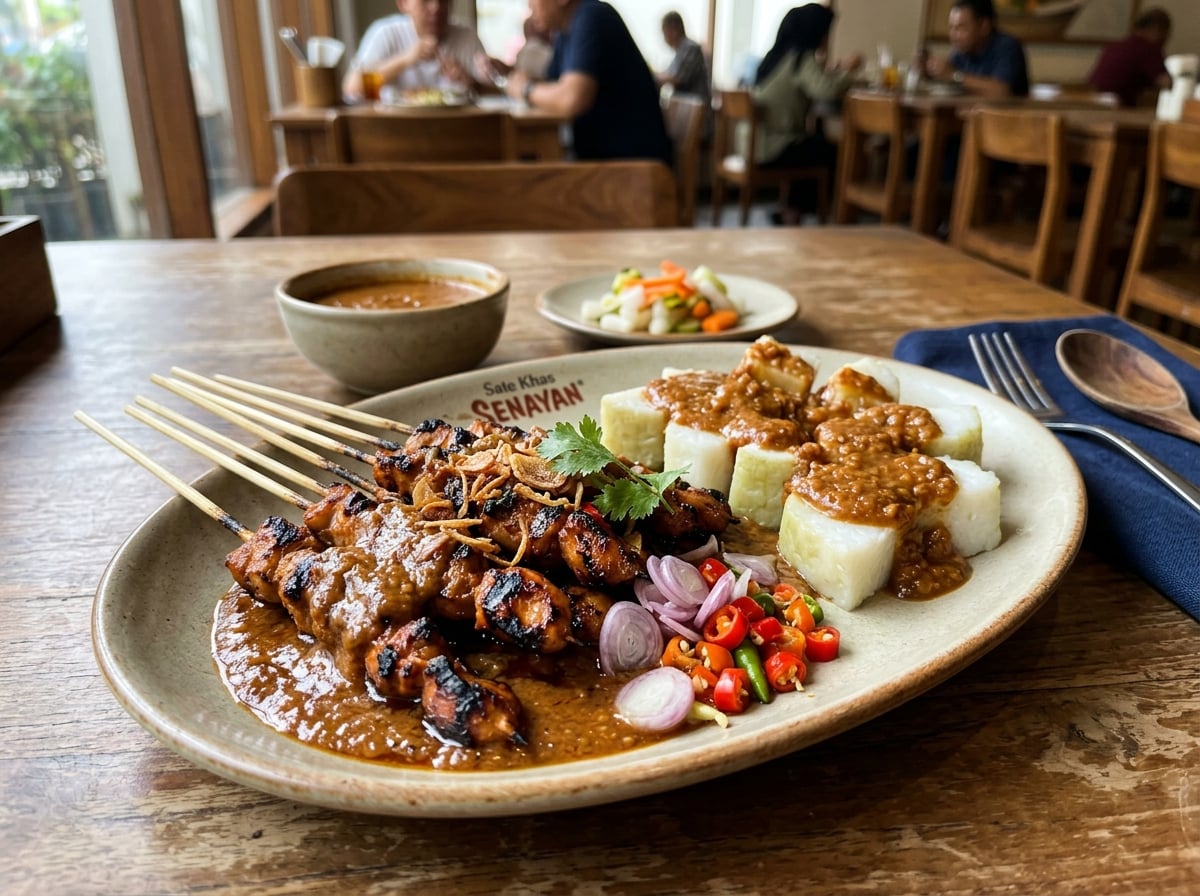
Location: Multiple branches across Jakarta, including Plaza Senayan, Grand Indonesia, and Kemang Cuisine: Classic Indonesian Why it's worth it: Consistency, tradition, and satay done properly
Sate Khas Senayan has been a Jakarta institution since 1974, and it's still one of the safest, most reliable choices for anyone tasting Indonesian food for the first time. The name tells you what to expect: satay is the anchor of the menu. Skewers of chicken, beef, or lamb are marinated overnight, grilled over open charcoal to order, and arrive smoky and tender under a thick, slightly sweet peanut sauce that's become something of a house signature.
Don't stop at the satay, though. The nasi goreng here is a genuine benchmark version — well-charred, not greasy, with a proper hit of shrimp paste in the background. The gado-gado (blanched vegetables and tofu in peanut dressing) is generous enough to share, and the sop buntut — oxtail soup in a clear, beefy broth — is the dish worth ordering on a rainy Jakarta afternoon. With outlets scattered across the city's major malls, it's easy to find no matter where you're staying. Budget roughly IDR 140,000–250,000 per person heading into 2026 — prices have edged up slightly from a couple of years back, but the quality still justifies it. If Jakarta is your first stop, it's also worth reading up on why the city rewards a few extra days — see this list of reasons to visit Jakarta for context.
The Restaurant at Padma Hotel (Bandung)
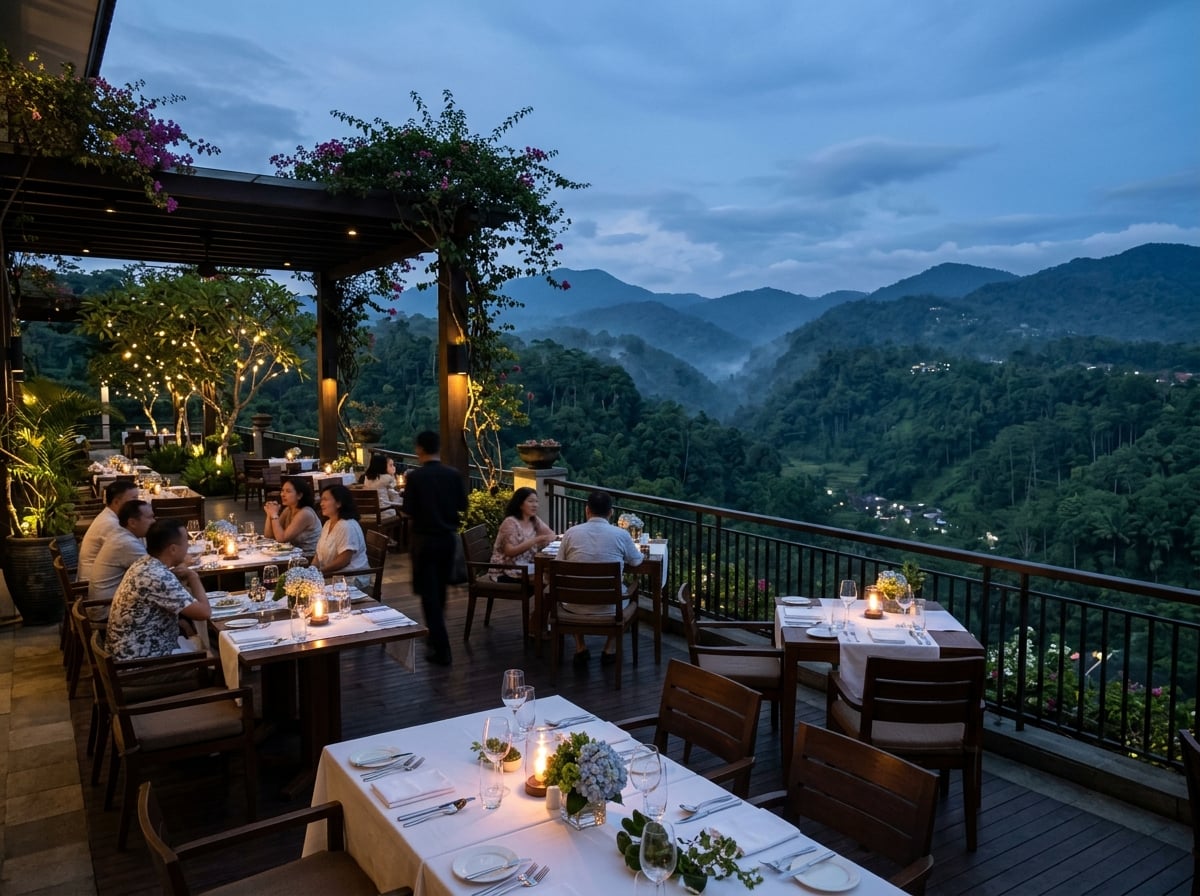
Location: Bandung, on a ridge above the Cikapundung valley Cuisine: Indonesian and international fusion Why it's worth it: Valley views, refined cooking, a genuinely wide menu
Bandung sits in the highlands, several degrees cooler than Jakarta and considerably greener, and The Restaurant at Padma Hotel makes full use of that setting. The dining room and terrace cling to a ridge overlooking the valley, so the view alone justifies booking a table — mist rolling over the hills in the early morning, city lights scattered below at dusk. The kitchen plates Indonesian classics alongside Western dishes, leaning on produce grown in the surrounding highland farms, which shows in how fresh the vegetables and herbs taste.
Afternoon tea has become something of a local ritual here, and it's a smart, lower-commitment way to enjoy the terrace without booking a full dinner. If you do stay for dinner, the grilled fish and the Indonesian rijsttafel-style spreads are the standouts — multiple small dishes arriving together, which suits a table of three or four far better than solo dining. Prices sit at the higher end for Bandung, in the IDR 230,000–440,000 per person range depending on how many courses you order, but you're paying for the vantage point nearly as much as the food. Reserve a window or terrace table in advance, particularly on weekends when Jakarta day-trippers fill the city — Bandung's weekend crowds have only grown with the improved toll roads connecting it to the capital.
Bale Raos (Yogyakarta)
Location: Inside the Kraton complex, Yogyakarta Cuisine: Royal Javanese Why it's worth it: Recipes pulled directly from the Sultan's palace kitchens
This is the restaurant worth crossing the island for. Bale Raos serves dishes drawn from the kitchens of the Yogyakarta Sultanate — food that, until relatively recently, never left the palace walls. Set in a traditional joglo pavilion a short walk from the Kraton itself, it functions as much as a cultural experience as it does a meal.
Look for dishes attributed to specific sultans, listed by name right on the menu. Bebek Suwar-Suwir (spiced duck) and the sweet-spiced beef preparations reflect a Javanese palate that balances sugar and heat quite differently from what you'll find elsewhere in Indonesia — softer, rounder, less about raw chili heat and more about depth. Pair the meal with a glass of wedang uwuh or beer Jawa, a warm ginger-and-spice drink that, despite the name, has nothing to do with alcohol. Combine lunch here with a morning tour of the palace grounds and you've built a genuinely memorable half-day in Yogyakarta. Expect to pay around IDR 170,000–280,000 per person, still modest for what's effectively palace cuisine.
Lara Djonggrang (Jakarta)
Location: Menteng, Jakarta Cuisine: Pan-Indonesian and colonial-era Why it's worth it: Theatrical setting, a menu spanning the whole archipelago
Part of the well-regarded Tugu group, Lara Djonggrang is the most atmospheric restaurant on this list, and it's not particularly close. The dining rooms are packed with antiques, lit mostly by candlelight, and dotted with carved stone statues and heavy wooden doors, so a meal here feels less like a restaurant visit and more like wandering through a private museum after hours. It's a strong choice for a special-occasion dinner or a memorable first date in Jakarta.
The menu ranges across the archipelago — Sumatran rendang, Balinese specialties, and dishes with roots in the Dutch colonial period all appear on the same page. Portions and presentation are both generous, and the staff will happily walk you through the more unfamiliar dishes if you ask. It's priced for a splurge rather than a weeknight dinner, typically IDR 340,000–550,000 per person with drinks, but the setting alone makes it worth the outlay at least once per trip. Reservations are essential, especially Friday and Saturday nights. Diners building a longer Jakarta food itinerary should also look at this guide to Jakarta's culinary scene, which covers several other kitchens worth a detour.
Warung Bu Kris (Surabaya)
Location: Surabaya, multiple branches across the city Cuisine: East Javanese Why it's worth it: Arguably the best penyetan in the city, and it costs almost nothing
To round out the island, head east. Warung Bu Kris in Surabaya is famous for ayam penyet — fried chicken smashed flat and served over an aggressively spicy sambal that longtime regulars judge every other version in the city against. This is loud, casual, unpretentious eating: the kind of place where locals queue out the door at lunch and tourists rarely wander in.
Beyond the chicken, order the tempe and tahu penyet, along with whichever sambal the server recommends that day — options range from merely warm to genuinely punishing, and staff will steer you honestly if you ask which one is manageable. A full meal here runs a fraction of what you'd pay in Jakarta or Bandung, often under IDR 60,000 per person even with 2026 prices factored in. If you want to understand how ordinary Javanese families eat on a Tuesday, this is the table to sit at.
A few more worth the detour
If your itinerary has room to stretch, a couple of other spots deserve mention. Gudeg Yu Djum in Yogyakarta has been serving the city's signature jackfruit stew, simmered for hours in coconut milk and palm sugar until it turns a deep brown, since the 1950s — it's a completely different flavor register from Bale Raos and worth trying on a separate day. In Jakarta, Kafe Batavia in the old town (Kota Tua) trades on colonial-era charm and a solid Indonesian-European menu, and it's a natural stop if you're already spending an afternoon around Fatahillah Square. For a wider spread of standout tables in the capital, the roundup of top-rated restaurants in Jakarta fills in several names not covered here, and Jakarta's broader food identity is also worth understanding through the lens of its rich cultural heritage, which shapes a lot of what ends up on the plate.
Planning your Java food trail
A sensible route runs like this: eat your way through Jakarta first, hitting Sate Khas Senayan for lunch and saving Lara Djonggrang for a proper night out. Bandung is a short 2.5-to-3-hour train ride or drive from Jakarta and pairs naturally with an afternoon or evening at The Restaurant at Padma Hotel. From there, continue on to Yogyakarta for Bale Raos and the Kraton, and if your trip stretches further east, finish in Surabaya with Warung Bu Kris before flying out. For places to stay along that same route, the guide to top hotels to stay in Java Island is a useful companion.
A few practical notes worth keeping in mind for 2026 travel. Ramadan falls in mid-February that year, which means restaurant hours can shift significantly during the fasting month — some daytime service shortens or moves entirely toward evening, so check ahead if your dates overlap. Cash still moves faster at warungs and smaller stalls, though the higher-end restaurants on this list all accept cards, and QRIS mobile payments have become close to universal across urban Java at this point, even at street carts. Tipping isn't expected at casual spots, but a modest 10% is appreciated at the sit-down restaurants if service isn't already included. And leave room for street food between these sit-down meals — some of Java's finest cooking never has a printed menu at all, just a cart, a grill, and a line of regulars who already know what they want.
It's also worth building in a rest day or two if you're eating this ambitiously. Java's traffic, particularly between Jakarta and Bandung on weekends, can eat into a day faster than expected, and a food-focused trip works better when you're not rushing between three heavy meals a day. Spacing things out — a proper Bandung lunch followed by a lighter Yogyakarta dinner the next evening — tends to keep the whole trip more enjoyable than treating every meal as an event.
Frequently asked questions
What's the best city in Java for food overall? Jakarta has the widest range simply because of its size, but Yogyakarta offers the deepest cultural connection between food and history, particularly around the Kraton.
Is Java food very spicy? It varies by region. East Javanese cooking (Surabaya) tends to be sharper and hotter, while Central Javanese food (Yogyakarta, Solo) leans sweeter and milder. You can usually ask for sambal on the side.
Do I need reservations at these restaurants? For Lara Djonggrang and The Restaurant at Padma Hotel, yes, especially on weekends. The warungs and Bale Raos are more flexible with walk-ins.
How many days should I set aside for a Java food trip? A week gives you a realistic run through Jakarta, Bandung, and Yogyakarta without rushing meals. Add three or four more days if Surabaya and the east are on the list too.
Has anything changed noticeably for 2026 travelers? Prices are up modestly across the board, roughly 10–15% versus a couple of years ago, and QRIS payments have essentially replaced cash at most sit-down restaurants. Booking ahead for weekend dinners in Jakarta and Bandung is more necessary now than it used to be, since both cities have seen a steady rise in domestic tourism.
Java rewards curious eaters. These restaurants, taken together, give you the full range of what the island does at the table — from a sultan's private recipes to a smashed-chicken warung with plastic stools — and each one tells you something different about how Java thinks about food.