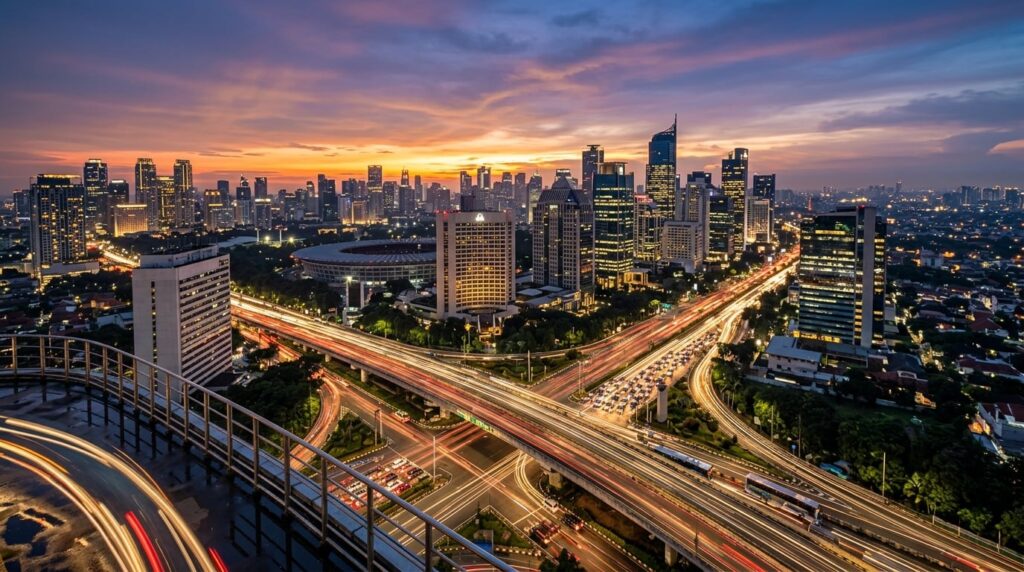
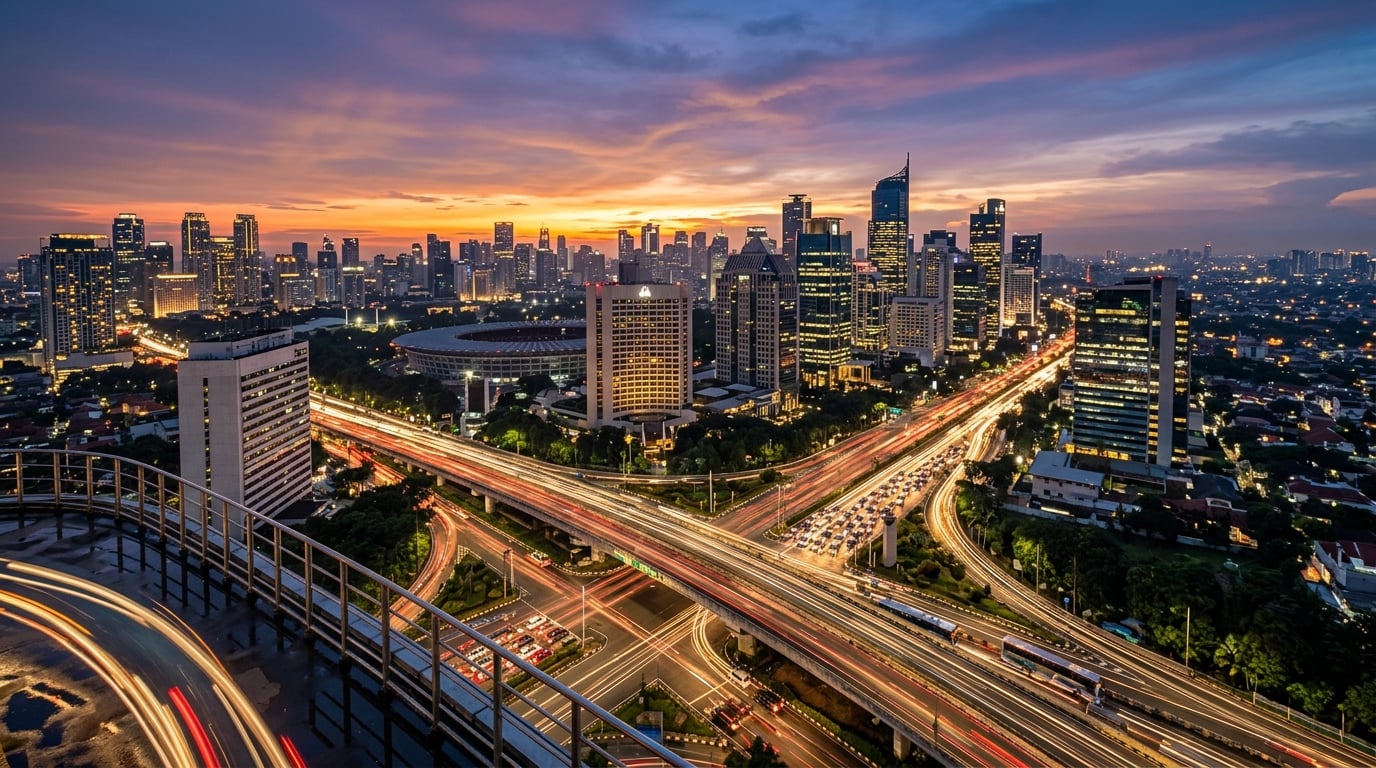
Jakarta doesn’t ease you in. Indonesia’s capital hits you all at once: the traffic, the smell of clove cigarettes and grilled satay drifting from a street cart, glass towers rising behind centuries-old kampung rooftops. It’s home to roughly 11.3 million people within city limits, and closer to 32 million once you count the sprawling Jabodetabek metro area, which still ranks among the largest urban regions on the planet. Jakarta wears its contradictions well. A polished Betawi tasting menu and a Rp 25,000 plate of nasi goreng from a roadside cart can exist on the same block, sometimes the same corner.
Most travelers still treat Jakarta as a layover on the way to Bali or Yogyakarta, something to endure before the “real” Indonesia begins. That’s a mistake, and a common one. Give the city two or three full days and it starts to reward you in ways a quick airport transfer never will. Here’s why Jakarta deserves an actual spot on your itinerary in 2026, not just a stamp in your passport, and how to enjoy it without losing your patience in traffic.
A Cultural Melting Pot Like Nowhere Else in Indonesia
Indonesia counts more than 300 distinct ethnic groups spread across its 17,000-plus islands, and Jakarta is where nearly all of them intersect. You hear it in the mix of languages on the MRT, taste it in the food stalls, and see it in neighborhoods that shift character block by block — Chinatown in Glodok, the old Betawi villages on the city’s fringes, Javanese enclaves near the port, Minang eateries tucked into nearly every commercial strip.
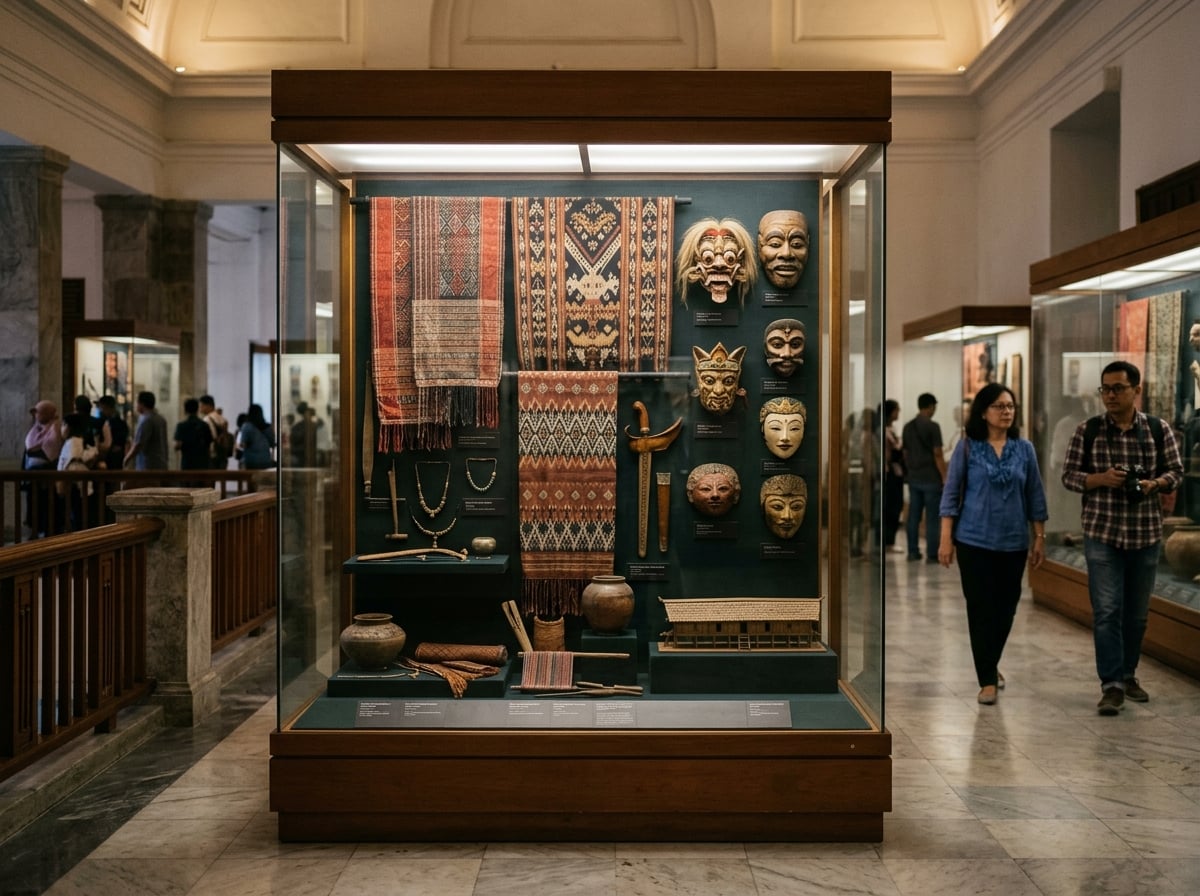
Start at the National Museum of Indonesia (Museum Nasional), just off Merdeka Square. A 2023 fire damaged part of the building, and restoration has continued in phases, with most galleries now reopened as of 2026, though a few sections remain under repair. Check current opening hours and which wings are accessible before you go. What’s open is still one of Southeast Asia’s richest collections: prehistoric bronze drums, Hindu-Buddhist statuary pulled from Central Java, and ethnographic pieces gathered from across the archipelago.
From there, head to Kota Tua (Old Town), the former Dutch colonial quarter that’s been steadily pedestrianized and cleaned up over the past several years as part of the city’s ongoing heritage push. Fatahillah Square anchors the district, ringed by the Jakarta History Museum, the Wayang (puppet) Museum, and a small ceramics museum worth thirty minutes of your time. Rent one of the garishly painted bicycles that locals use for photo ops, grab a kerak telor (spiced omelet with dried shrimp) from a vendor, and sit down at Cafe Batavia — a restored 19th-century building where the coffee is overpriced but the atmosphere earns every rupiah.
For culture that isn’t sitting behind glass, look for a live Wayang Kulit shadow-puppet show or a Betawi music and dance performance; both still turn up at cultural centers and hotel showcases around the city. Taman Mini Indonesia Indah, the sprawling cultural theme park on Jakarta’s eastern edge, went through a major renovation ahead of the 2022 G20 summit and continues to pack pavilions from all 34 of Indonesia’s provinces into one site. It’s a lot to cover in a single visit, so pick a handful of regions rather than trying to see everything. For a deeper dive into the city’s heritage sites and how to sequence them, our guide to the rich cultural heritage of Jakarta breaks down five highlights worth building a day around.
One of Asia’s Great Food Cities
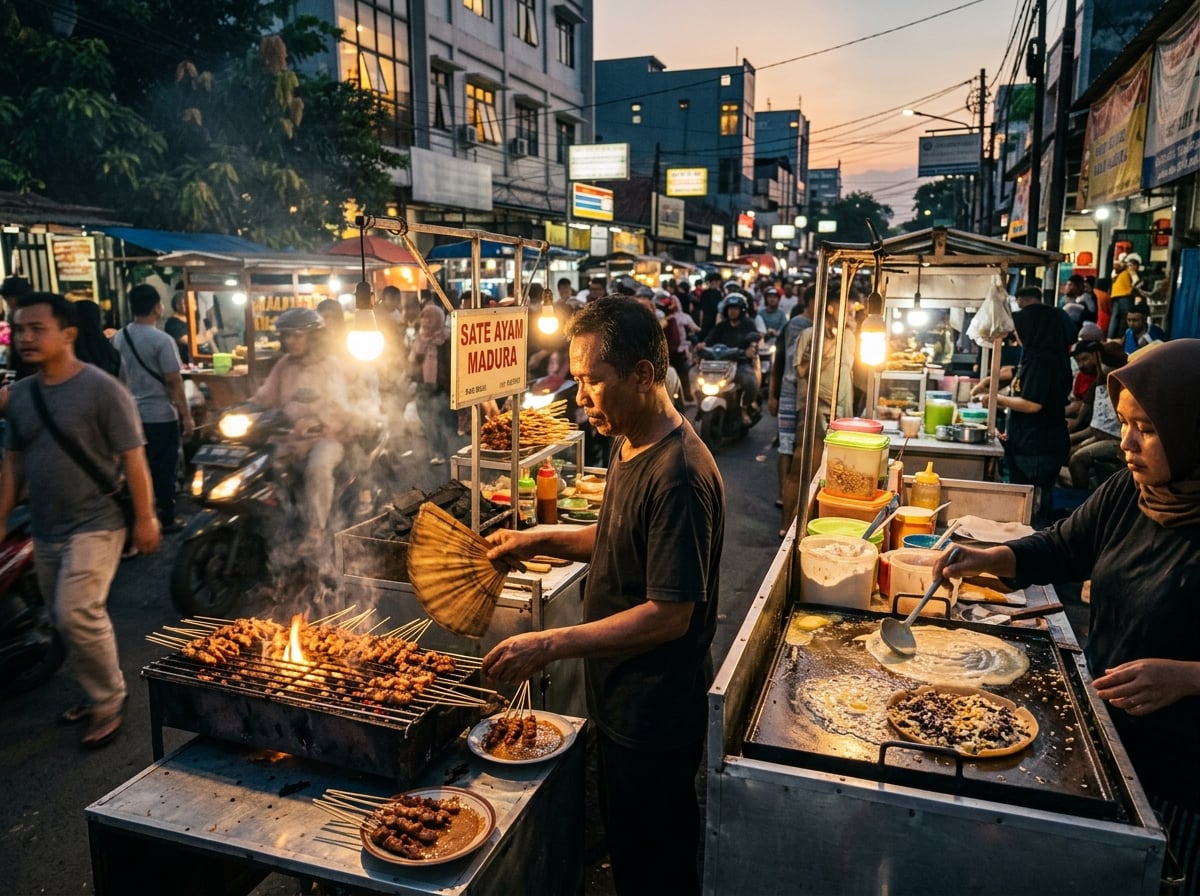
If you eat well nowhere else in Indonesia, eat well here. Jakarta’s street food alone justifies the trip, and prices have stayed remarkably reasonable even as the rest of the city has modernized. Look for nasi goreng (fried rice, usually with a fried egg on top), sate ayam (chicken skewers doused in peanut sauce), gado-gado (a vegetable salad with peanut dressing), and martabak — the sweet chocolate-and-cheese version has become a genuine late-night institution among younger Jakartans.
The food streets around Pecenongan or Jalan Sabang come alive after dark, and the hawker stalls in Old Chinatown (Glodok) serve dishes, including pork-based ones, that you won’t find in Muslim-majority neighborhoods elsewhere in the city. Pantjoran Tea House, on the Glodok corner near the old Chinatown gate, is a reliable landmark to orient yourself from before wandering the surrounding alleys.
For a proper sit-down meal, KAUM has become something of a benchmark for elevated Indonesian regional cooking, plating dishes from Sumatra to Sulawesi with a level of care rarely applied to this cuisine. Bandar Djakarta in Ancol remains the go-to for fresh seafood by the water — you choose your catch from ice-packed displays and they grill or fry it to order. Beyond the classics, Jakarta’s coffee scene has genuinely exploded over the past several years; look past the international chains and find a local roaster serving single-origin beans from Aceh, Toraja, or Flores. The quality rivals anything you’d pay triple for in Melbourne or Seoul. If you want a fuller rundown of where to eat by neighborhood and budget, we cover it in more depth in our guide to Jakarta’s culinary scene and in our roundup of the city’s top-rated restaurants.
Shopping, From Mega-Malls to Street Markets
Jakartans take mall culture seriously, and the city has some of the largest shopping complexes in Southeast Asia. Grand Indonesia and Plaza Indonesia, both in the Thamrin district, run the gamut from international luxury labels to homegrown Indonesian designers, and both double as air-conditioned refuges when the heat and traffic get to be too much.
For something with more character, spend a morning at Pasar Baru, one of the city’s oldest markets, still trading in textiles and household goods much as it has for generations. Thamrin City is a better bet for batik and handicrafts at fairer prices than the tourist-heavy stalls. Bargaining is expected at traditional markets — start around half the quoted price and work toward a number you’re both comfortable with. Nobody takes it personally; it’s just how business gets done. For a closer look at where locals actually shop versus where tourists tend to overpay, see our breakdown of Jakarta’s shopping districts.
Nightlife and Entertainment
After dark, Jakarta shifts gears entirely. SCBD (Sudirman Central Business District) and Kemang are the two epicenters of the going-out scene, packed with rooftop bars, live-music venues, and clubs that run well past sunrise on weekends. A cocktail with a skyline view is worth doing at least once during your stay — SKYE, perched atop the BCA Tower, remains one of the better-known spots for it, though newer rooftop bars have opened across Sudirman in recent years and are worth comparing.
If clubbing isn’t your scene, Jakarta still has plenty on offer: a busy calendar of concerts and touring acts, gallery openings around the Cikini and Kemang art districts, and cheap, modern cinemas showing both Hollywood releases and Indonesian films. Just budget extra time for getting anywhere. Jakarta’s traffic is legendary for a reason, and ride-hailing apps like Gojek and Grab, while cheap and reliable, can’t do much about gridlock during rush hour. Our full guide to the city’s nightlife and entertainment scene goes deeper into specific venues worth the trip.
Where to Stay and How to Get Around
Most first-time visitors gravitate toward the Thamrin-Sudirman corridor, where the big international hotel brands cluster within walking distance of malls, the MRT, and a decent chunk of the nightlife. Kemang and Senopati suit travelers who want a quieter, more residential base with better cafes and less horn-honking at 2am. Menteng, one of the old colonial-era neighborhoods, is worth considering too — leafy streets, older architecture, and a short ride to Kota Tua and Merdeka Square.
Jakarta’s MRT and LRT lines have both expanded meaningfully in the past few years, and the MRT in particular is clean, cheap, and genuinely useful for cutting through the Sudirman-Thamrin corridor without touching a road. Outside those lines, you’re relying on Gojek, Grab, or the Transjakarta bus rapid transit network, which has dedicated lanes that help somewhat during peak hours. Budget extra time regardless — a five-kilometer trip that should take fifteen minutes can easily eat an hour on a bad afternoon.
The Gateway to the Rest of Indonesia
Practically speaking, Jakarta is where most international trips to Indonesia begin and often end. Soekarno-Hatta International Airport connects to dozens of domestic destinations, making the city the natural launching pad for the Thousand Islands (Kepulauan Seribu) just off the coast, the temple complexes around Yogyakarta, or the beaches of Bali and Lombok. The city’s MRT and LRT networks have expanded meaningfully over the past few years, with new lines and extensions easing some of the pressure on the road network, so getting around the city center no longer means sitting in gridlock for every trip.
Many visitors also use Jakarta as a springboard to nearby Java. If temples, volcanoes, and sunrise viewpoints are on your list, our guides to must-visit places on Java Island and things to do on Java Island are worth reading before you book onward travel. Travelers extending further into Indonesia sometimes pair Jakarta with a stretch of Ubud, Bali for a cultural-city-then-jungle-retreat combination that works well over a two-week trip.
One thing worth knowing before you go: Indonesia has been in the process of relocating its official capital to Nusantara, a new city being built in East Kalimantan, with the government aiming for a phased transition through the rest of this decade. Progress has been slower than the original timeline suggested, and as of 2026 Jakarta still houses most government functions and virtually all foreign embassies. The city will remain the country’s commercial, cultural, and culinary center regardless — that shift is administrative, not economic, and it won’t change what makes the city worth visiting for years to come.
When to Go and Practical Tips
The dry season, roughly May through September, is the most comfortable stretch to visit, with fewer downpours and less risk of the flash flooding that can snarl traffic even further during the wet months. Most nationalities can enter Indonesia with a visa on arrival or through the e-visa system, but requirements and fees shift periodically, so confirm the current rules for your passport before you book flights.
Dress light and breathable — humidity sits high year-round — and stay hydrated, especially if you’re walking around Kota Tua or the markets in the middle of the day. Resist the urge to over-plan. Jakarta’s distances and traffic will humble even a modest itinerary, so build in buffer time between activities and treat any extra hours as a chance to sit in a cafe and watch the city move rather than a scheduling failure. If you’re piecing together a broader Indonesia itinerary, our general travel tips guide covers packing and planning basics that apply well beyond Jakarta.
Final Word
Jakarta isn’t polished, and it isn’t easy, and that’s exactly why it’s worth visiting. It’s raw, generous, occasionally chaotic, and endlessly interesting — a city that shows you the working, breathing version of Indonesia before you fly off to the postcard one. Come hungry, keep an open mind about the traffic, and give it more time than you think you need. Most people who do end up wishing they’d budgeted for a fourth day.




5 thoughts on “Why Visit Jakarta: Top Reasons to Explore Indonesia’s Capital (2026)”
Comments are closed.