Jakarta Doesn't Give Up Its Secrets Easily
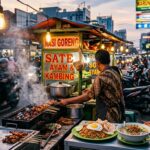
Jakarta doesn't hand over its charm on the first visit. Indonesia's capital is loud, dense, and endlessly layered — a place where a 17th-century Dutch warehouse sits a few blocks from a glass office tower, and a street vendor grilling satay works in the shadow of the largest mosque in Southeast Asia. That friction is the whole point. The cultural heritage of Jakarta was built over five centuries of trade, migration, colonization, and reinvention, and it rewards travelers who slow down long enough to actually notice it rather than just passing through on the way to Bali or Yogyakarta.
Jakarta culture doesn't announce itself the way a temple complex in Yogyakarta does. You have to go looking for it — in old shophouses, in a bowl of soup, in the way a mosque and a cathedral share a parking lot on a Sunday morning. This guide walks through five parts of Jakarta history and culture worth building a trip around, from colonial-era landmarks to the food locals actually eat at home rather than what shows up on tourist menus. If you're planning a wider swing through the region afterward, it's worth reading up on things to do on Java Island, since Jakarta is really just the loudest, busiest entry point into a much bigger cultural landscape that stretches across the whole island.
Historical Landmarks and Colonial Architecture
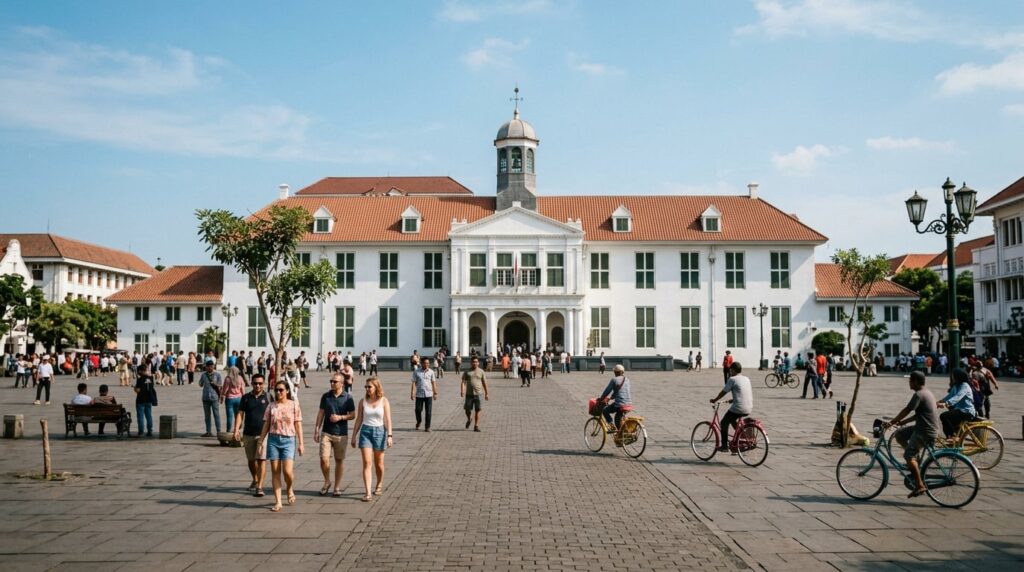
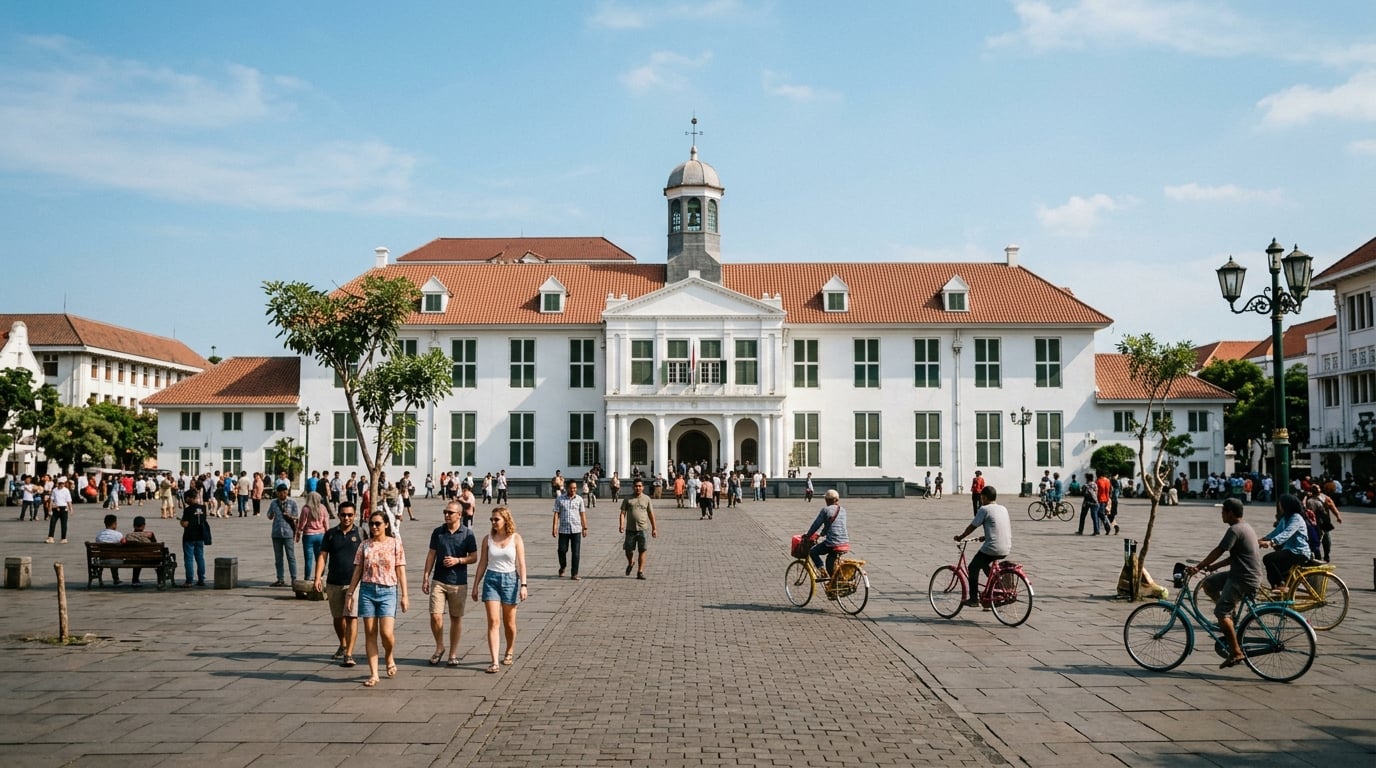
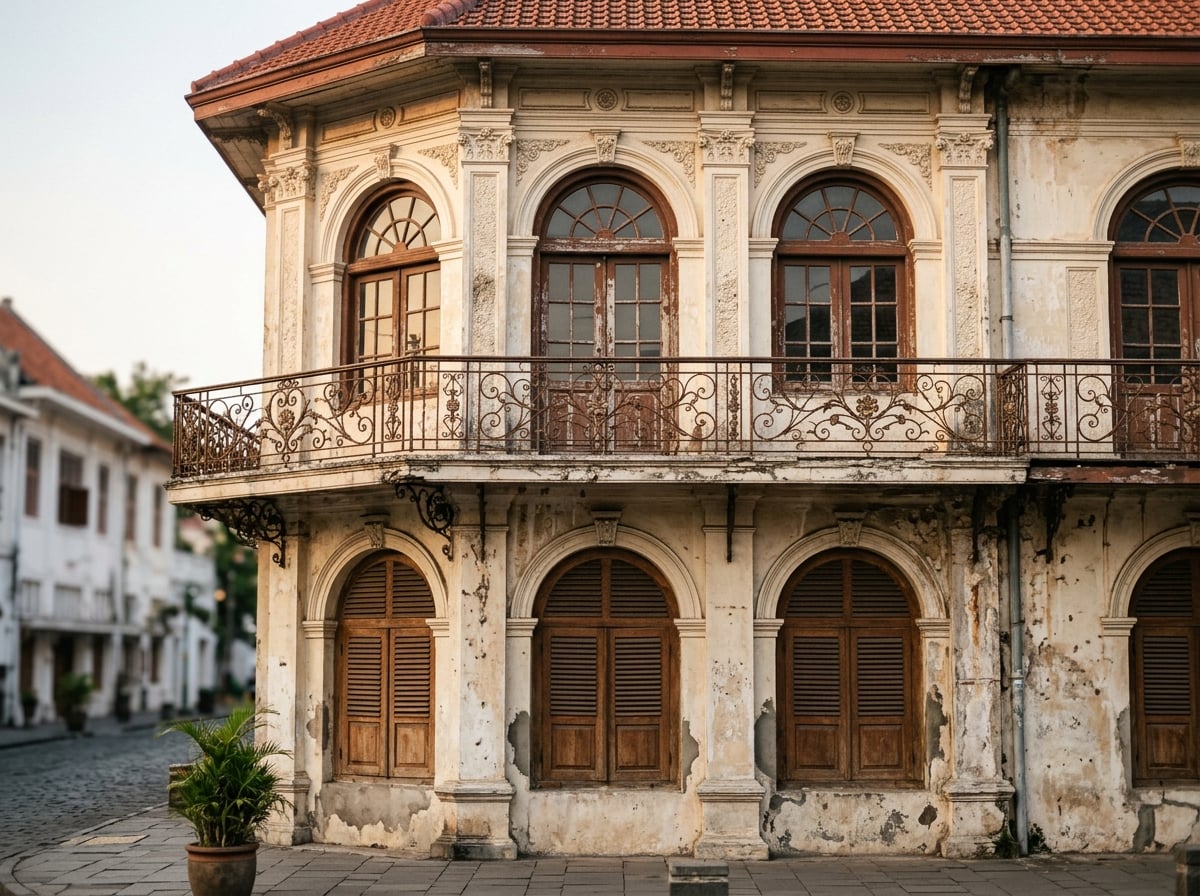
Much of Jakarta's history and culture is written directly into its buildings, and the clearest chapter sits in the old colonial core. Start with Kota Tua, the heart of what the Dutch once called Batavia. The cobbled central square, Taman Fatahillah, is ringed by restored 18th-century facades, and the district remains on Indonesia's tentative UNESCO World Heritage list while restoration and revitalization work continues in phases. City authorities have been pushing to have several more of the surrounding warehouses and offices fully reopened to the public over the next few years, adding new gallery space and small museums to a district that already gets crowded on weekends. Give it a full morning — cyclists renting old-fashioned bicycles, street musicians, and pop-up cafés keep the square lively well into the evening.
The Jakarta History Museum, housed in the former city hall of Batavia, walks visitors through the city's founding, the spice trade era, and the long colonial period that followed. Recent curatorial updates have added more pre-colonial and indigenous Betawi context, rather than framing everything strictly through a Dutch lens, which makes for a noticeably richer visit than it was a decade ago. A short stroll away, the Wayang Museum holds one of the country's best collections of traditional puppets, and the neighboring Fine Arts and Ceramics Museum rounds out the area nicely for anyone who wants a deeper look at Indonesian visual art. Together, these three museums make Kota Tua one of the best cultural sites to visit in Jakarta if you only have one day set aside for history — and among the most reliable jakarta heritage sites and museums for a first-time visitor trying to get oriented fast.
Then there's the pairing that says the most about modern Indonesia: the Istiqlal Mosque and Jakarta Cathedral, standing directly across the street from one another. Istiqlal is the largest mosque in Southeast Asia, with capacity for well over 200,000 worshippers across its main hall and courtyards, and since a major renovation wrapped up in 2020 it now connects to the neo-Gothic Catholic cathedral opposite via an underground passage known as the "Tunnel of Friendship." During Eid and Christmas, the two congregations routinely share parking, security, and goodwill, and joint interfaith events have become something of a fixture around both holidays. It's one of the more genuinely moving sights in the city, and both buildings welcome respectful visitors outside prayer and mass times. For a broader rundown of landmarks beyond this pair, our guide to the top must-visit attractions in Jakarta covers the rest of the city's essential stops, including a few newer additions to the skyline worth working into an itinerary.
Traditional Arts and Crafts
Jakarta's arts scene reflects the ethnic mix that built the city — indigenous Betawi communities alongside Javanese, Sundanese, Chinese, Arab, and Indian traders who settled here over centuries and never really left. This is where traditional culture in Jakarta, Indonesia gets interesting, because none of it is a single, tidy tradition. It's a stack of them, layered on top of each other, and you can see the seams if you look closely.
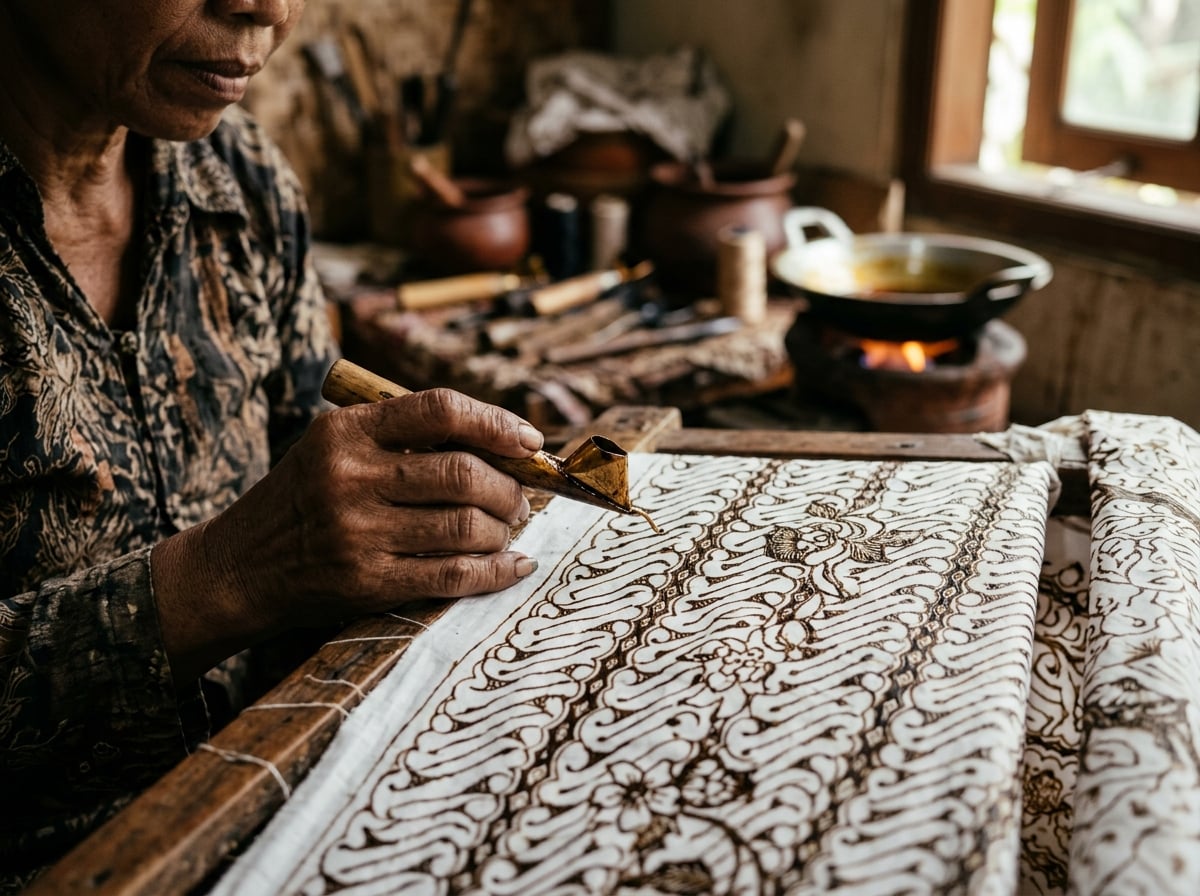
Betawi batik is the local signature: bolder and more colorful than the muted Central Javanese styles, often featuring Ondel-Ondel figures, the Monas monument, or bright tropical flora rather than the restrained geometric patterns you'll see further south in Solo or Yogyakarta. Batik has carried UNESCO Intangible Cultural Heritage status since 2009, and you can watch it being hand-drawn and dyed at workshops in Setu Babakan, Jakarta's dedicated Betawi cultural village on the city's southern edge, or pick up authentic pieces from smaller galleries and batik cooperatives rather than the mass-produced stalls near the airport, which are almost never the real thing.
Wayang kulit, shadow-puppet theater, is the other art form worth planning around. A single performance can run for hours, staged behind a backlit screen with a live gamelan ensemble and a dalang, or puppet master, narrating episodes from the Ramayana and Mahabharata entirely from memory — no script, no notes. Even catching thirty minutes of a performance at a cultural center or during a festival weekend is worth the detour, and it's one of the more underrated jakarta tourist attractions culture has to offer, since most visitors skip straight past it for the mosque and the old town.
And you cannot miss the Ondel-Ondel: giant paired puppet figures, one male and one female, that tower over Betawi weddings, festivals, and store openings across the city. They began as guardian figures meant to ward off bad spirits and have since become the unofficial mascot of Jakarta itself, appearing on murals, souvenirs, and even the city's official logo. Spot a pair being wheeled down a side street with a small drum band in tow and you're watching something that predates the skyscrapers around it by a couple of centuries.
Cultural Festivals and Celebrations
Time a visit right and Jakarta's calendar does a lot of the legwork for you. The Jakarta Anniversary celebrations each June mark the city's founding in 1527, with Betawi arts performances, parades, and food fairs across town, culminating in the long-running Jakarta Fair (Pekan Raya Jakarta) at Kemayoran — a weeks-long event that now regularly draws several million visitors and doubles as a showcase for regional food, music, and small businesses from across Indonesia.
Ramadan and Eid al-Fitr shift the mood of the entire city; expect lively night markets, communal breaking of the fast at neighborhood mosques, and a noticeably quieter, emptier Jakarta during the mudik exodus, when tens of millions of residents nationwide travel back to their hometowns for the holiday. Traffic thins out to a degree that longtime residents still find slightly eerie. The Chinese New Year celebrations in Glodok, Jakarta's historic Chinatown, bring lion dances and packed temples, while Cap Go Meh closes out the festivities roughly two weeks later with lantern processions and street food stalls that spill out well past midnight. If you're specifically chasing Betawi tradition, look for the Lebaran Betawi festival, usually held in the weeks following Eid, complete with traditional games, music, and Ondel-Ondel parades through Setu Babakan and various city parks.
Culinary Heritage
Eating is arguably the fastest way into Jakarta culture, and Betawi cuisine is where to start. Track down soto Betawi, a rich beef soup made with coconut milk or cow's milk and served with rice cakes, and kerak telor, a spiced omelet of glutinous rice, egg, and dried shrimp that street vendors still cook to order over charcoal braziers — a fixture at the Jakarta Fair and increasingly hard to find outside festival season, since fewer vendors are willing to keep the labor-intensive dish on a daily menu.
Because the city pulls in food from across the entire archipelago, one street can offer Padang rendang, Javanese gudeg, and Chinese-Indonesian bakmi within a few steps of each other. Head to Jalan Sabang or the food courts of Pasar Santa for a compact tour, or book a morning street-food walk through Glodok, where century-old stalls sit beside newer ones run by third-generation vendors. Nasi goreng and satay are everywhere, of course, but the real finds are the regional specialties visitors rarely hear about before landing. For a deeper look at where to eat and what to order, our guide to the culinary paradise of Jakarta breaks down the city's best food neighborhoods in detail, and our roundup of top-rated restaurants to dine at in Jakarta is worth bookmarking for dinner reservations.
Religious and Cultural Harmony
What ties all of this together is coexistence. Jakarta is home to sizable Muslim, Christian, Buddhist, Hindu, and Confucian communities, and the city wears that plurality openly rather than tucking it away. The Istiqlal Mosque and Jakarta Cathedral standing face to face is the postcard version of this, but the same pattern shows up everywhere — in the incense-filled temples of Glodok, in the century-old churches of Menteng, in shared public holidays recognized for six official religions. It isn't always frictionless, and it would be dishonest to claim Jakarta has never seen religious tension. But the daily reality for most residents is one of practical, lived tolerance, the kind that doesn't make headlines because it simply works, day after day, in markets and offices and apartment blocks where neighbors of different faiths have lived side by side for generations.
That blend, more than any single monument, is what makes traditional culture in Jakarta, Indonesia worth experiencing firsthand rather than reading about. Give the city three or four days, get past the traffic and the sprawl, and it starts to open up in ways guidebooks rarely capture. Pair it with the shopping districts covered in our shopping haven of Jakarta guide, or simply spend an extra day wandering Kota Tua twice — once in the morning for the museums, once at night for the food stalls and street performers who take over the square after dark. If you're extending the trip beyond the capital, our roundup of must-visit places on Java Island picks up right where Jakarta's heritage trail leaves off. Either way, Jakarta's heritage sites and museums reward a slower pace than most travelers give the city credit for, and the cultural heritage of Jakarta only really reveals itself once you stop treating the city as a layover and start treating it as a destination in its own right.