Tucked into Bali’s misty uplands, Ubud remains the island’s cultural and spiritual anchor — a town where temple bells, terraced rice fields, and a genuinely serious food scene all sit within a short drive of one another. It pulls a different crowd than the beach clubs of Seminyak or the surf breaks of Canggu. Think travelers chasing art, quiet mornings, ceremony, and green hills rather than sunset cocktails and pool parties. If you’re weighing up why visit Ubud for your 2026 trip, or wondering whether it still deserves its reputation after years of Instagram overexposure, here’s an honest, updated look at the best reasons to visit Ubud, Bali, and what actually makes the town worth the drive up from the coast.
Is Ubud Worth Visiting? Short Answer: Yes, If You Slow Down
Ubud gets asked about more than almost any other stop in Bali, largely because first-time visitors aren’t sure if it’s a beach alternative, a wellness retreat, or a cultural pilgrimage. The honest answer is that it’s all three, and none of them work if you try to see Ubud in a single rushed afternoon between airport transfers. Give it three or four nights minimum. That’s roughly the amount of time it takes to stop feeling like a tourist ticking off landmarks and start noticing the rhythms of the place — the morning offerings placed outside every doorway, the sound of gamelan practice drifting from a family compound, the way the light changes over the rice paddies by five in the afternoon.
This is also why Ubud is so popular with tourists in the first place. It isn’t chasing the same crowd as the south coast. It built its reputation on something slower and, frankly, harder to fake: real ceremony, real craftsmanship, and a landscape that still looks the way it did in old photographs from decades ago. Prices have crept up since the pandemic-era lull, and a few once-quiet corners of town now feel distinctly busier by mid-morning in 2025 and 2026, but the core appeal hasn’t diluted much. If anything, the contrast between Ubud’s pace and the rest of Bali’s has sharpened.
1. Immerse Yourself in Rich Balinese Culture
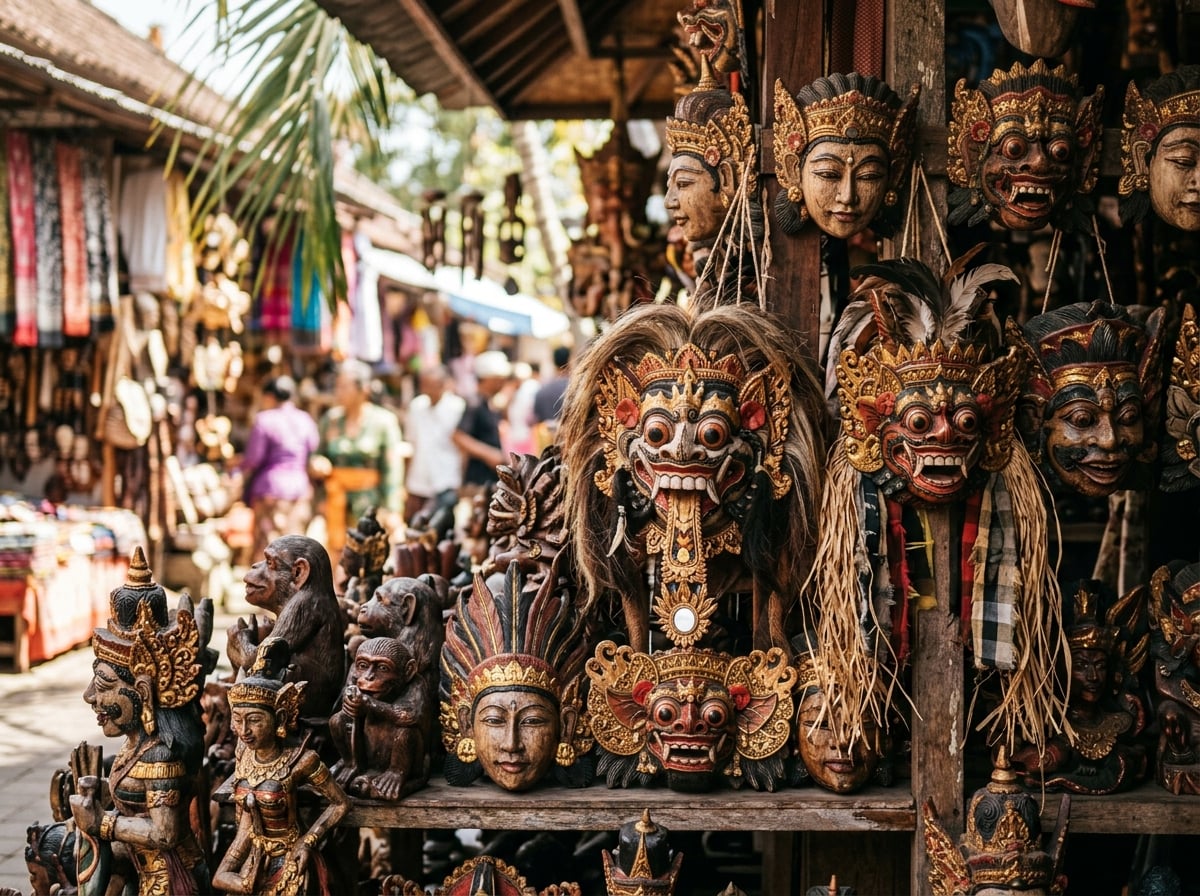
Ubud is the recognized heart of Balinese arts, and the reputation holds up under scrutiny. Galleries and working studios crowd the streets, showing everything from classic Kamasan-style painting to modern canvases, wood carving, and hand-woven textiles. The Ubud Art Market (Pasar Seni Ubud), opposite the Royal Palace, is the obvious first stop for handmade souvenirs — carved masks, rattan bags, sarongs. Prices are negotiable, so haggle politely. Starting around half the asking price is normal, and a genuine smile gets you further than a hard bargain ever will.
Come evening, catch a traditional dance performance. The Kecak fire dance, the graceful Legong, and the Barong are staged nightly around town, with Ubud Palace (Puri Saren Agung) among the most atmospheric venues. Tickets typically run around IDR 100,000–150,000 (roughly $6–9), and shows begin about 7:30 p.m. Buy earlier in the day if you want a decent seat — front rows fill fast during the July–August and Christmas–New Year peaks.
The temples deserve unhurried time too. Saraswati Temple, dedicated to the goddess of learning, sits behind a photogenic lotus pond right in the center of town, and it’s free to view from the walkway. Goa Gajah, the 11th-century “Elephant Cave,” rewards the short drive with carved stonework, ancient bathing pools, and a noticeably calmer crowd than the headline sites. Bring a sarong or rent one at the gate; bare knees won’t get you past the entrance at any temple on the island.
2. Bask in Nature’s Splendor
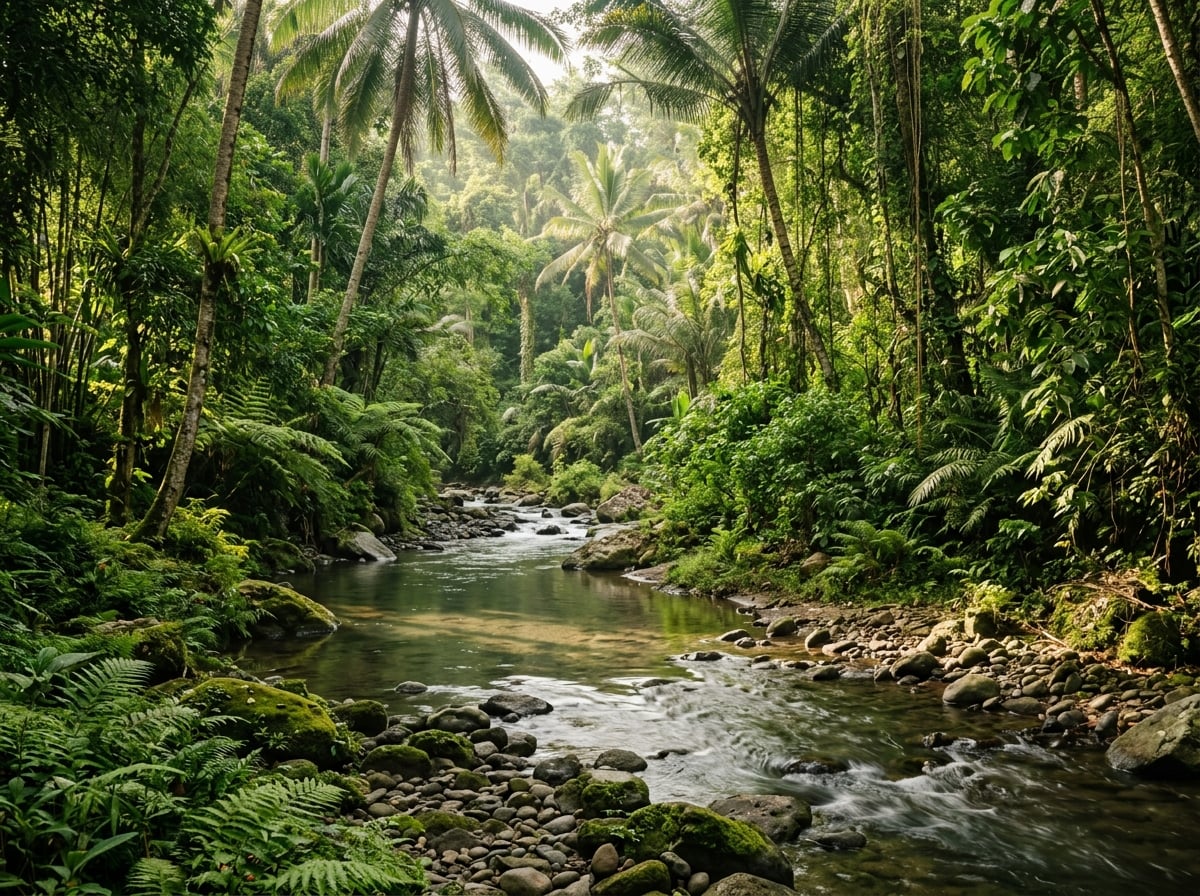
The landscape around Ubud is the reason many people never quite manage to leave on schedule. Rice paddies fold down the hillsides, rivers cut through dense jungle, and the whole town feels several degrees cooler and noticeably greener than the coast, thanks to its elevation in the central foothills.
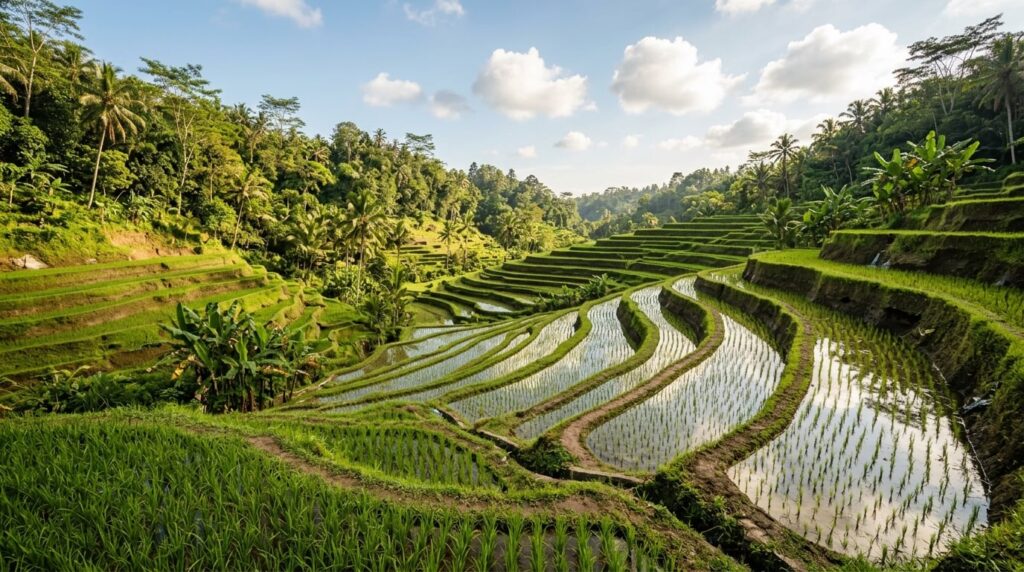
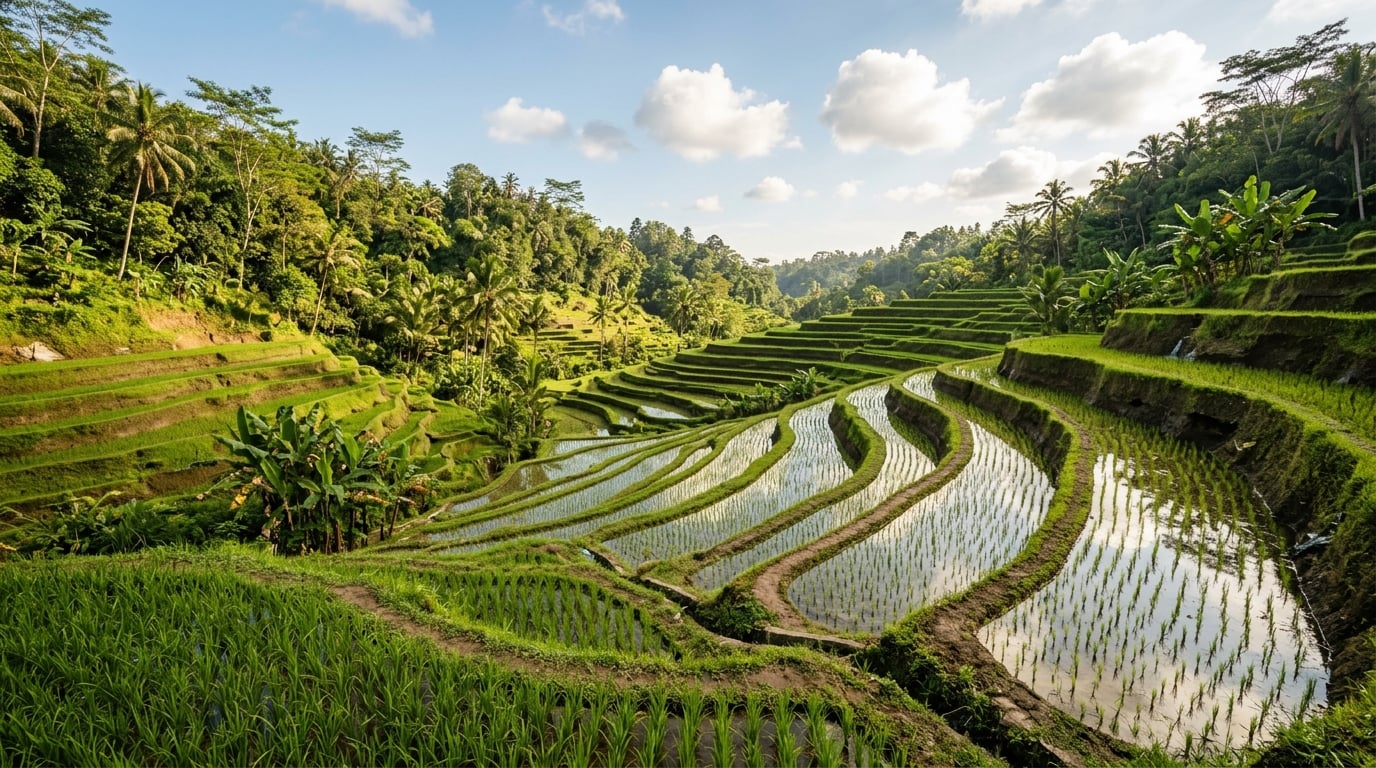
The Tegallalang Rice Terraces, about 20 minutes north, are the postcard shot — sculpted by the centuries-old Subak irrigation system, which UNESCO recognized as part of Bali’s Cultural Landscape back in 2012. Go at sunrise if you possibly can. By mid-morning the tour buses roll in and the famous “Bali Swing” platforms get shoulder-to-shoulder busy. Small entry and donation fees apply at various points along the terraces, so carry cash in smaller denominations.
The Sacred Monkey Forest Sanctuary drops you among several hundred long-tailed macaques roaming ancient, moss-covered temples inside a genuine nature reserve. Adult entry runs around IDR 80,000. One rule the monkeys enforce ruthlessly: leave loose food, sunglasses, and dangling water bottles zipped away. They will take them, and they’re faster than you think.
3. Rejuvenate Your Mind and Body
Ubud built much of its modern fame on wellness, and it still delivers on that promise. This is the yoga capital of Southeast Asia, and studios like The Yoga Barn and Radiantly Alive run daily drop-in classes for everyone from nervous first-timers to visiting teachers building out a certification. Expect to pay roughly IDR 130,000–190,000 per session, with multi-class passes bringing the per-visit cost down further.
Spa treatments remain excellent value. A traditional Balinese massage often costs a fraction of what you’d pay at home, and many of the better spas fold in flower baths, herbal body scrubs, and treatment rooms that open straight onto the jungle canopy. Want something deeper? Several retreat centers around Penestanan and Nyuh Kuning offer multi-day programs blending meditation, sound healing, and plant-based dining. If you only have time for one splurge, make it a two-hour treatment at a jungle-edge spa — it’s the kind of thing you’ll still be describing to friends weeks later. If you’re planning where to base yourself for easy access to this wellness circuit, it’s worth comparing options in this guide to villas, guesthouses, and boutique stays in Ubud before booking.
4. Delight in Culinary Adventures
Ubud’s food scene has long outgrown its old “health-food town” reputation. The vegan and raw cafés are still here and still good, but so are the warungs turning out proper local cooking. Don’t leave without trying babi guling (Balinese suckling pig) or a heaped plate of nasi campur from a busy family-run warung, where a few dollars buys you a genuinely great meal.
If you want to understand the food rather than just eat it, book a cooking class. Many start with a morning walk through a local market or paddy, then move to hands-on prep of dishes like sate lilit and lawar. It’s one of the most rewarding half-days you can spend in town. At the other end of the spectrum, Ubud’s fine-dining and open-kitchen restaurants — including the various concepts spun out of the acclaimed Locavore team — have put the town firmly on serious food travelers’ maps. For a fuller rundown of where to eat across every budget, this roundup of Ubud’s must-try restaurants is a solid place to start planning your meals.
5. Engage in Unique Adventures
For all its calm, Ubud makes a sharp launchpad for activity. The Campuhan Ridge Walk is a free, easy morning trail along a grassy spine between two river valleys — do it early, before the sun turns it into a sweatbox by mid-morning. White-water rafting on the Ayung River runs you through Class II–III rapids past jungle waterfalls and stone carvings, and it’s manageable for families with older kids.
Cyclists can join downhill tours that start near Mount Batur and coast through villages and rice fields with almost no pedaling required. And if you’re willing to get up in the dark, the Mount Batur sunrise trek — a roughly two-hour predawn climb up an active volcano — is one of Bali’s signature experiences, usually capped off with eggs cooked in the volcano’s own geothermal steam. For a broader list of activities beyond these highlights, including more things to do in Ubud, Bali, day by day, the full guide to things to do in Ubud covers more ground.
Where to Stay: Matching Your Base to Your Trip
Accommodation shapes an Ubud trip more than almost anywhere else in Bali, simply because the town sprawls across ridges and river valleys rather than sitting on one flat grid. Stay too central and you’re closer to the market noise and traffic; stay too far out and every dinner becomes a scooter ride. If you’re after a proper splurge with infinity pools overlooking the jungle canopy, this list of the best luxury and all-inclusive resorts in Ubud for 2026 narrows down the top-tier options, and if you want a single standout recommendation rather than a long list, this breakdown of the best hotel in Ubud for 2026 makes the decision easy. Travelers chasing something more indulgent still might also compare a few picks in this luxury hotel Ubud roundup. Travelers who want boutique character without the resort price tag tend to do better in Penestanan or Nyuh Kuning, both an easy walk or short ride from the center. Either way, book your first two nights centrally so you can orient yourself before deciding whether to move further out.
Why Is Ubud So Popular With Tourists, Really?
Part of it is marketing history — Ubud’s profile jumped after being featured in a well-known 2010 memoir-turned-film, and the town has never fully shed that association. But the deeper reason is that Ubud solved a problem the rest of Bali hasn’t: how to develop for tourism without erasing what made the place worth visiting. Ceremonies still happen in the streets, not just for cameras. Rice farmers still work the terraces you’re photographing. That authenticity is genuinely rare at this point in Southeast Asia’s tourism cycle, and travelers notice, even if they can’t always articulate why.
Planning Your Trip: A Quick Ubud Travel Guide
If this is your first pass at building an itinerary, treat Ubud as a hub rather than a single stop. Base yourself centrally for three or four nights, use mornings for temples, hikes, or the rice terraces before the heat and crowds arrive, and save afternoons for spas, galleries, or a slow lunch. Traffic through the center can be genuinely brutal by early evening, so factor extra time into any dinner reservation across town. A scooter gives you the most freedom if you’re comfortable riding one, but a driver on call (easily arranged through most guesthouses for a flat daily rate) is the less stressful option, especially after dark. Bring layers — evenings in the hills run noticeably cooler than Bali’s coastal towns, and rain can arrive fast even outside the official wet season from November to March.
Budget-wise, Ubud still sits comfortably below the cost of most Western city breaks. A comfortable mid-range trip — boutique guesthouse, a mix of warung meals and one or two nicer dinners, a spa treatment, a cooking class, and a driver for day trips — typically runs a fraction of what an equivalent long weekend costs in Europe or the US. That value, paired with the scenery and culture, is a big part of why so many travelers who research Ubud travel guide content before their trip end up staying longer than planned once they land.
Final Thoughts
Ubud works because it refuses to be just one thing. You can spend a morning in a temple, an afternoon learning to cook lawar, and the next day rafting a jungle river — all from the same base. Give it at least three or four nights rather than a rushed day trip; the town genuinely rewards people who slow down and stop treating it like a checklist. Between the culture, the green hills, the food, and the wellness scene, it’s easy to see why Ubud stays near the top of every thoughtful Bali itinerary, and why so many first-time visitors end up extending their stay once they arrive.