Java isn’t a place you rush through. As the beating heart of Indonesia, this is the most populous island on Earth — home to well over 150 million people, more than the entire population of Russia, all squeezed onto a landmass smaller than New York State — and it packs volcanic peaks, ancient temples, colonial-era hill towns, and turquoise island escapes into a single stretch of land. You can watch the sun rise over a smoking crater one morning and be snorkeling off a white-sand island a few days later. That range is exactly what makes Java such a rewarding destination for travelers who want more than one postcard scene, and it’s why the island keeps showing up on serious travelers’ shortlists even as Bali soaks up most of the marketing budget and most of the Instagram tags.
Below are five places on Java Island worth building a trip around in 2026, drawn from the temples, mountains, and coastlines that keep pulling people back year after year. If you want a broader rundown of activities beyond these five, our guide to things to do on Java Island covers plenty of ground we don’t have space for here.
Borobudur Temple
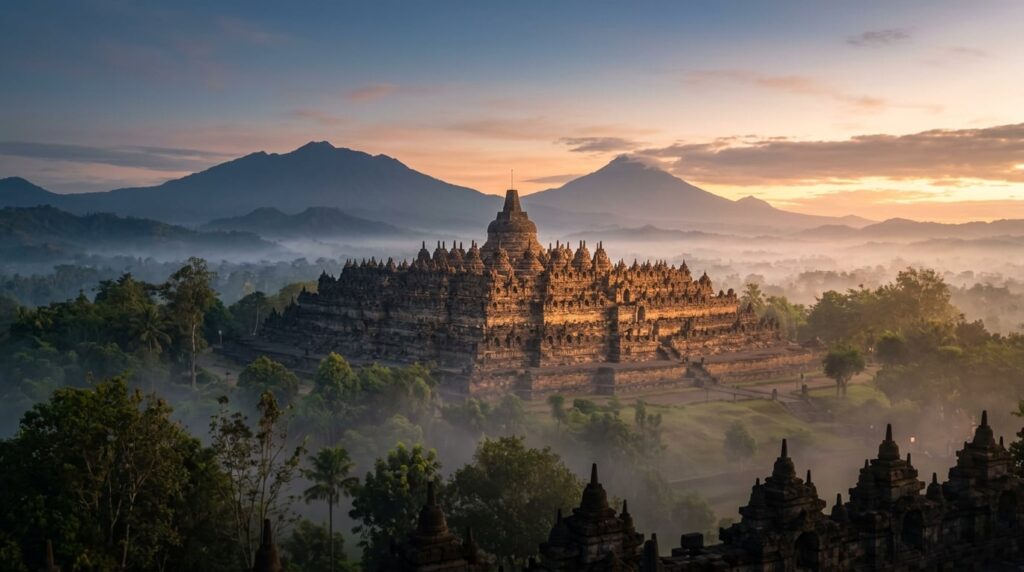
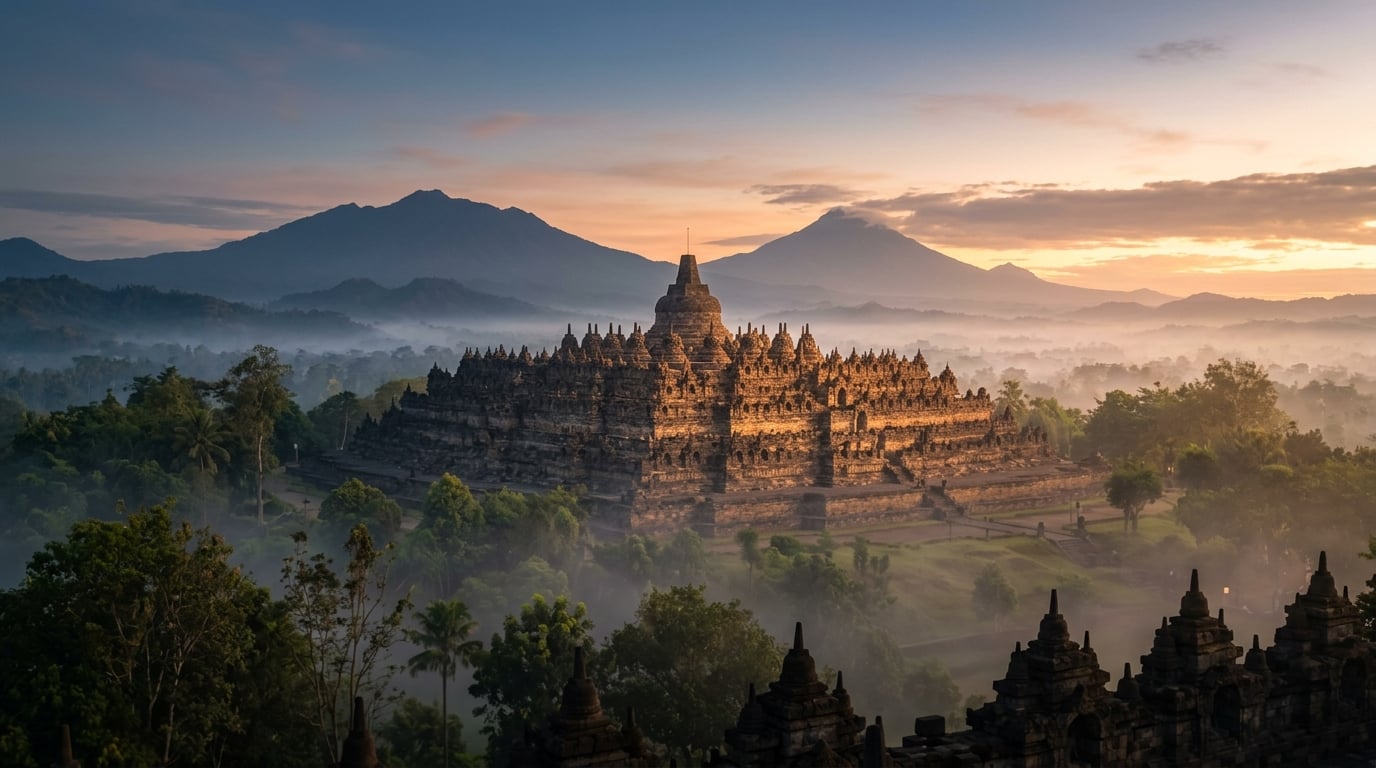
Sitting in the fertile plains of Central Java, Borobudur is the largest Buddhist temple in the world and one of Indonesia’s four UNESCO World Heritage cultural sites. It was built in the 9th century under the Sailendra dynasty, then lay buried under volcanic ash and jungle for centuries before a major restoration in the 1970s and ’80s brought it back to life. Standing in front of it, you get a real sense of how skilled ancient Javanese builders were — no mortar, just interlocking volcanic stone, fitted with a precision that still puzzles engineers today.
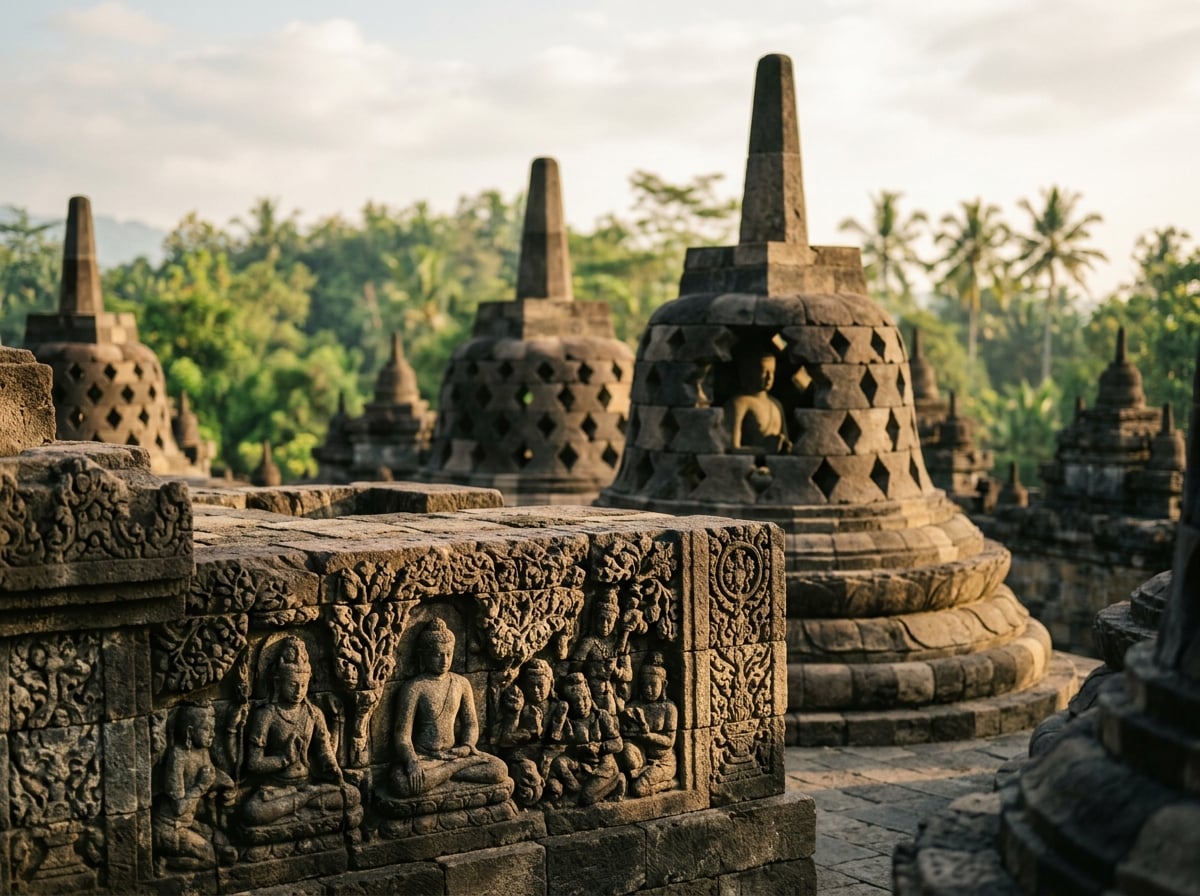
The architecture is the whole story. Borobudur is laid out as a giant mandala, a symbolic map of the Buddhist universe. Nine stacked platforms rise toward a central dome, decorated with more than 2,500 relief panels and 72 bell-shaped stupas, each sheltering a seated Buddha. Walk the platforms clockwise, as pilgrims have done for over a thousand years, and the carvings read almost like a stone comic strip of Buddhist teachings, moving from worldly desire at the base toward enlightenment near the summit.
A note on visiting these days: access has tightened up considerably over the past couple of years. To protect the ancient stonework, visitors now book timed slots in advance, and climbing to the upper terraces requires a licensed guide plus provided cloth sandals to reduce wear on the steps. Daily numbers are capped, so book ahead rather than showing up and hoping for the best — walk-in tickets for the summit terraces are no longer a reliable option. It’s a smaller crowd on the platforms and, honestly, a better experience for it. Expect ticket prices for foreign visitors to run noticeably higher than the local rate, which funds the ongoing conservation work.
Sunrise from the temple grounds remains the moment most people remember. When the mist lifts off the Kedu Plain and the silhouettes of Mount Merapi and Mount Merbabu emerge on the horizon, the place feels genuinely otherworldly. Note that this sunrise viewpoint is now typically accessed through a nearby hill rather than the temple itself during certain conservation periods, so it’s worth confirming the current arrangement when you book.
Time your trip around Waisak (Vesak Day), usually falling in May, if you can manage it. Thousands of monks and pilgrims gather for candlelit processions and lantern releases, and it’s one of the most moving cultural experiences on the island. If you’re building an itinerary around the temple, pair it with a night or two in Yogyakarta — see below — and check our guide to where to stay on Java Island for properties within easy reach of the site.
Mount Bromo
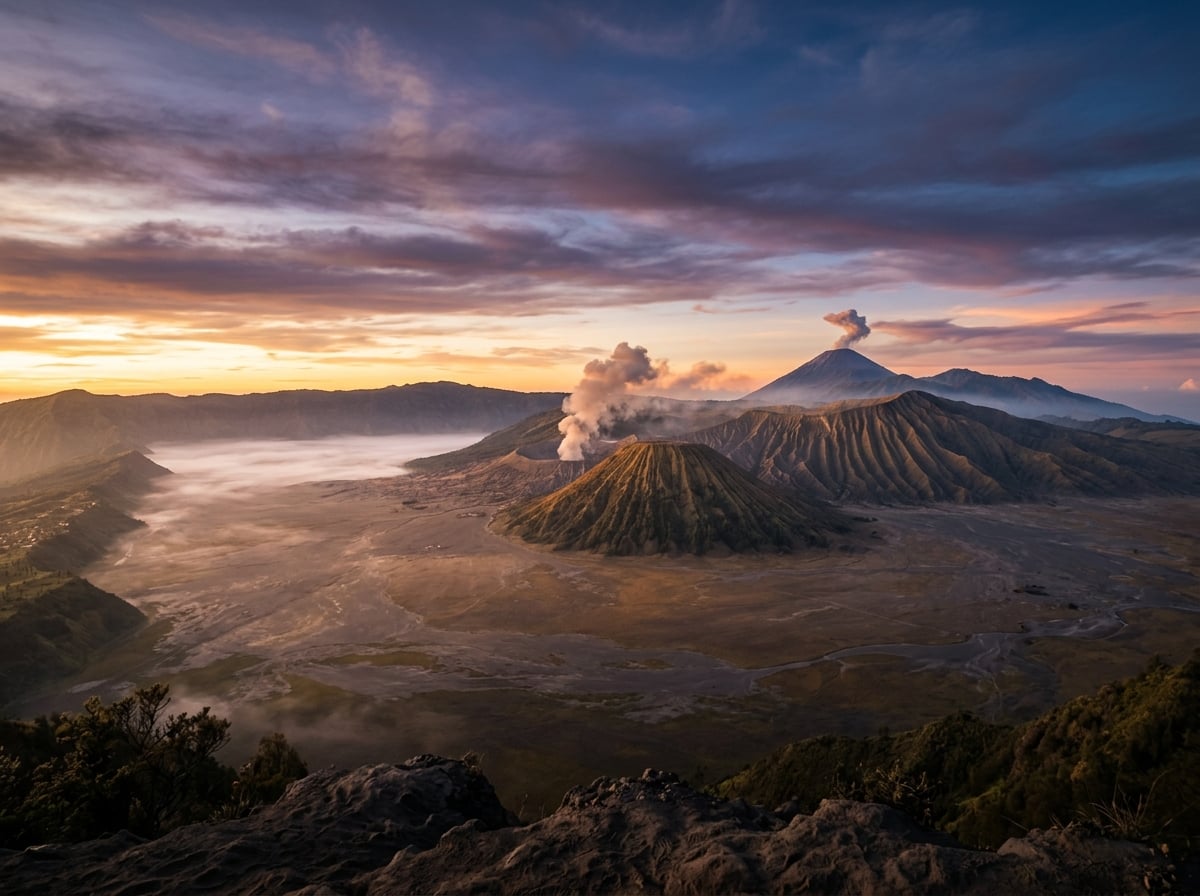
Over in East Java, Mount Bromo is the volcano that ends up on everyone’s Java photo reel, and for good reason. It’s active, it’s dramatic, and it’s surprisingly accessible from the town of Cemoro Lawang, which perches right on the caldera rim.
Sunrise here is the main event. Most people head up to the King Kong Hill or Penanjakan viewpoints in the pre-dawn dark — usually by 4WD jeep, since the roads are steep and the timing is tight — and wait for the light. When it comes, you get Bromo’s steaming cone, the jagged peak of Batok, and distant Semeru puffing on the horizon, all floating above a sea of cloud. It’s the kind of view that justifies the alarm clock, even on your third cup of instant coffee at 3:30am.
Getting to the crater means crossing the “Sea of Sand,” a wide plain of grey volcanic ash inside the caldera. You can walk it, or hire one of the local horses, then climb the final flight of steps to peer over the rim into the sulphur-belching crater itself. Check the current alert status before you go — Indonesia’s volcanology agency occasionally raises Bromo’s alert level and closes the crater zone when activity picks up, so build flexibility into your schedule rather than locking in a single narrow window.
The people give the place its soul. The Tenggerese, a Hindu community descended from the old Majapahit empire, live around the mountain and hold the annual Yadnya Kasada festival, tossing offerings of crops, livestock, and money into the crater to honor the mountain gods. If your dates line up, it’s an extraordinary thing to witness, and one of the few places in Java where Hindu tradition has survived largely untouched since the island’s pre-Islamic era.
Practical tip: bring a proper jacket, not just a fleece. Cemoro Lawang sits around 2,300 metres, and pre-dawn temperatures can drop close to freezing, which catches out plenty of visitors expecting tropical heat right up until the moment they’re shivering on a viewpoint at 4am.
Yogyakarta
If Java has a cultural capital, it’s Yogyakarta — Jogja to just about everyone who lives there or spends any real time in it. This is still a sultanate, with a reigning Sultan who doubles as the region’s governor, and that living royal heritage runs through everything from the Kraton palace to the batik workshops and gamelan performances staged most evenings around the old town.
It also makes the perfect base. Borobudur and the Hindu temple complex of Prambanan (another UNESCO site, with its soaring 47-metre central spire) are both easy day trips, and plenty of tours combine the two. In town, wander Malioboro Street for street food and shopping, drop into the underground tunnels of Taman Sari water castle, and try gudeg, the sweet young-jackfruit stew slow-cooked with palm sugar and coconut milk that’s the city’s signature dish.
Jogja is also Indonesia’s student city, which gives it a young, creative buzz — good coffee, a real live-music scene, and street art tucked down its side alleys. Getting there is easier than it used to be, with Yogyakarta International Airport in Kulon Progo now handling most long-haul and international arrivals, cutting down significantly on the old transfer times from Jakarta. Once you’ve settled on Jogja as your base, our roundup of top restaurants to eat on Java Island is worth a look before you commit to a dinner spot on Malioboro.
Bandung
West Java’s Bandung sits high enough in the mountains to earn its old nickname, the “Paris of Java,” and the cool, breezy climate is a genuine relief after the lowland heat of Jakarta or the coast. The Dutch left behind a stock of Art Deco buildings, and today the city is best known for two things: factory-outlet shopping and easy access to the volcanic highlands nearby.
Head north out of the city and you reach Tangkuban Perahu, a volcano you can practically drive up to and peer straight into steaming craters without much of a hike. Nearby, the Kawah Putih crater lake glows an eerie milky turquoise, colored by dissolved sulphur — it’s one of the most photographed spots in West Java, though it’s worth going early to beat the tour buses that start rolling in by mid-morning. For something gentler, the tea plantations around Ciwidey roll out in endless green terraces perfect for a slow morning walk or a quiet coffee break.
Bandung is also a food and coffee town, with a café culture that rivals Jakarta’s and arguably beats it for atmosphere. It works well as a weekend escape and pairs naturally with the highlands if you want a couple of days away from Java’s busier tourist trails. If Jakarta is also on your route, our guide to why Jakarta deserves a spot on your itinerary makes the case for spending a few days in the capital before or after heading up to Bandung.
Karimunjawa Islands
Most travelers picture Java as volcanoes and temples and forget it has islands. The Karimunjawa archipelago, off the north coast of Central Java, is where you go to correct that. It’s a marine national park made up of 27 islands, and only a handful are inhabited, which keeps things blissfully low-key compared to Bali’s busier coastlines.
The draw is the water. Coral reefs, decent snorkeling and diving, small blacktip reef sharks you can swim with in shallow pens near the main village, and beaches that see a fraction of Bali’s crowds. Days here move slowly — island-hopping by boat, grilled fish for lunch, sunsets from a wooden jetty with nothing much else on the agenda. It’s a genuinely good antidote if the temple-and-volcano circuit has left you needing to do absolutely nothing for a day or two.
Getting there takes some planning. Ferries and fast boats run from Jepara (and sometimes Semarang), but sailings depend heavily on the weather, and rough seas in the wet season can strand you or cancel crossings with little warning. Aim for the dry months, roughly April to October, and build in buffer days rather than booking a tight connection straight to your next flight. There’s also a small airstrip with limited seasonal flights if you’d rather skip the boat altogether.
Planning the Route
Five stops, five completely different sides of Java — a 9th-century temple, an active volcano, a royal cultural city, a cool highland retreat, and a quiet tropical archipelago. Realistically, most travelers won’t manage all five in one trip unless they’ve got two to three weeks free, and that’s fine. A tight week works well as Yogyakarta plus Borobudur plus Bromo, since the overland connection between Jogja and the Bromo region takes most of a day but can be broken up with a stop in Malang. Bandung and Karimunjawa sit better as a second trip, or as add-ons if you’re already routing through Jakarta.
Whichever combination you pick, it’s worth reading up on general Indonesia logistics before you go — things like SIM cards, tipping norms, and what to pack for a climate that swings between tropical heat and near-freezing volcano sunrises can trip up first-time visitors, and our travel tips guide covers most of that ground in one place.
It’s also worth saying plainly: Java doesn’t need to be an afterthought tacked onto a Bali trip. Travelers who treat it that way tend to rush Borobudur, skip the sunrise at Bromo entirely, and miss Yogyakarta’s food scene altogether because they only budgeted two days for the whole island. Give it a proper week on its own terms and it holds up against any other stretch of Indonesia, temples included. For comparison, travelers weighing Java against Indonesia’s other big draws — say, the volcanic scenery around Lake Toba or the rice-terrace calm of Ubud — will find Java holds its own on variety alone, since it’s really the only island in the country where you get temples, an active volcano circuit, and a marine park all within a day or two’s drive of each other.
When to Go and What to Budget
Dry season, roughly May through September, is the safest bet across the whole island. Roads to Bromo stay open, ferries to Karimunjawa run more reliably, and Borobudur’s sunrise sessions aren’t rained out as often. The shoulder months of April and October can still work, though you’ll want a backup plan for at least one rained-off morning. December through February brings the heaviest rain and the highest risk of cancelled boat crossings, so it’s not the best window if the islands are a priority.
Budget-wise, Java remains noticeably cheaper than Bali for comparable quality. A mid-range guesthouse near Borobudur or in Jogja’s old town typically runs a fraction of what a similar standard costs in Ubud or Seminyak, and street food meals across the island rarely stretch a travel budget. The one place costs creep up is organized tours — jeep trips to Bromo and boat charters around Karimunjawa are priced per vehicle or per boat, so traveling in a small group brings the per-person cost down substantially.
Either way, Java rewards travelers who slow down enough to notice the details: the carvings on a temple wall, the cold air before a volcanic sunrise, the smell of gudeg simmering on a Jogja street corner. Come with a loose plan and a little patience, and this island will hand you far more than the highlights reel promises.

3 thoughts on “5 Must-Visit Places on Java Island: Temples to Sunrises (2026)”
Comments are closed.