Java rarely gets the credit it deserves. Bali soaks up the influencer campaigns and the endless rice-terrace reels, while Java quietly holds Indonesia’s largest population, its capital city, its most significant ancient temples, and a chain of volcanoes that look like they belong on a different planet entirely. Spend a week here and you can go from a smoke-belching crater at dawn to a chaotic night market by evening, sometimes on the very same day.
There’s a reason experienced Southeast Asia travelers keep circling back to Java instead of treating it as a layover on the way to the Bali ferry. This guide runs through the things to do on Java Island that genuinely justify the trip, plus the practical details — permits, timing, transport — that separate a smooth itinerary from a stressful scramble. Entry fees, ticketing systems, and transport options have shifted enough over the past couple of years that older guides are worth double-checking, so treat this as the current, updated version for 2026 planning.
Explore the Ancient Temples of Borobudur and Prambanan
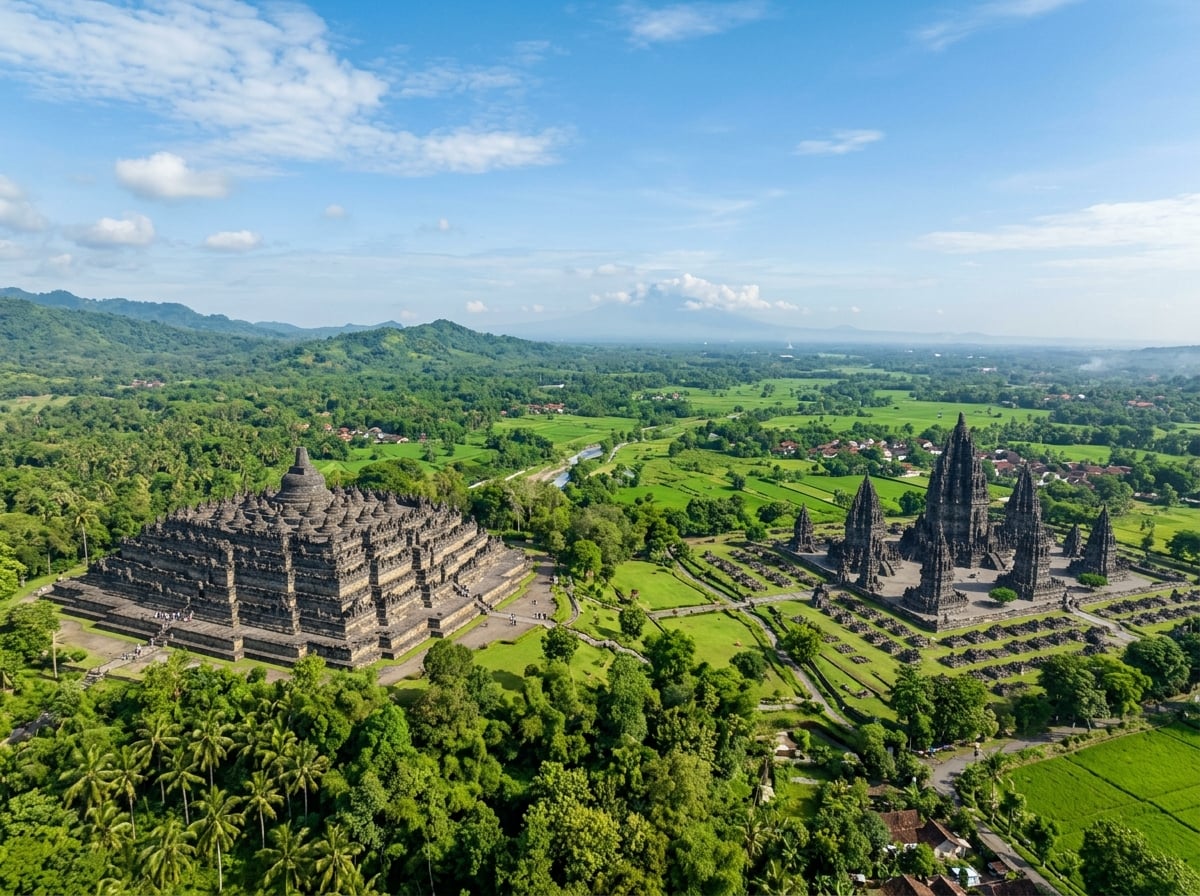
Skipping Java’s temples would be a bit like visiting Egypt and giving the pyramids a pass. Borobudur and Prambanan are both UNESCO World Heritage Sites, sit roughly 50 kilometres apart, and both reward an early wake-up call far more than a lazy midday visit ever would.
Borobudur
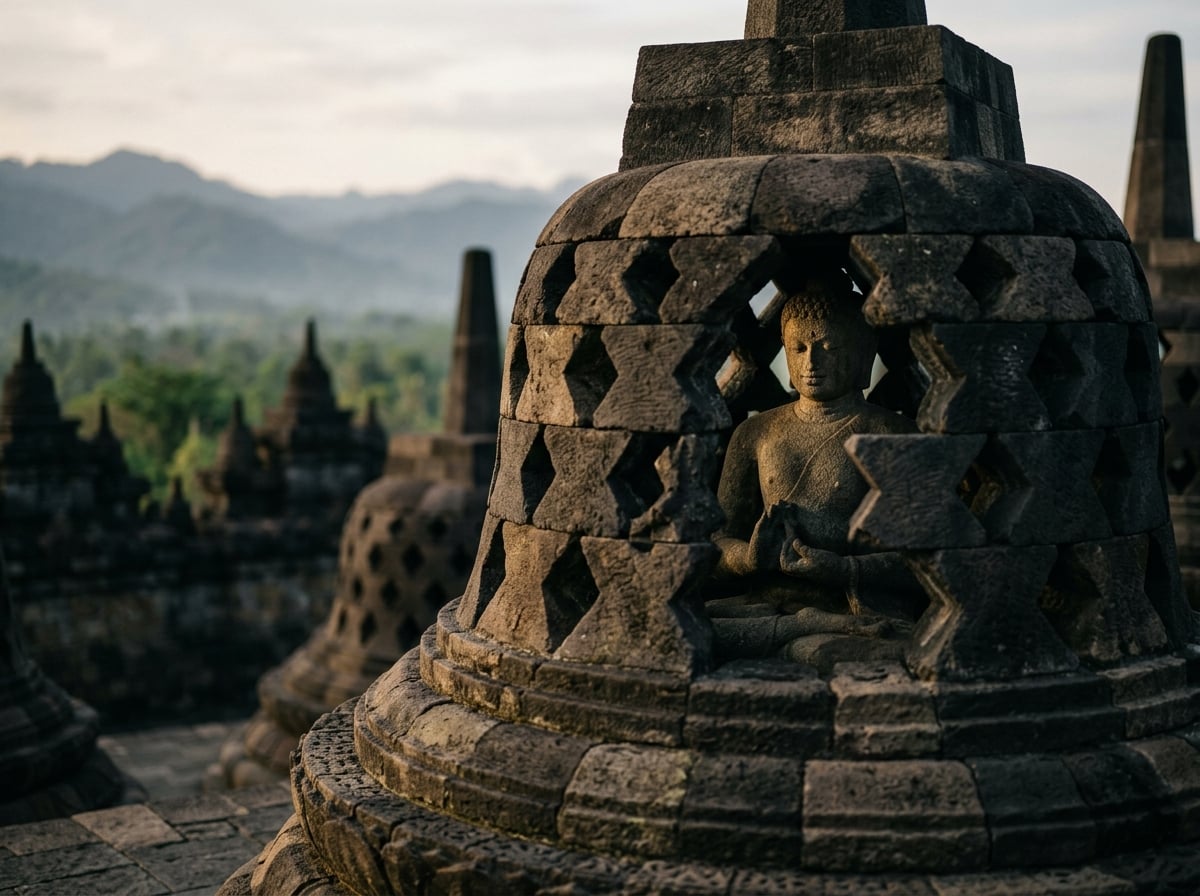
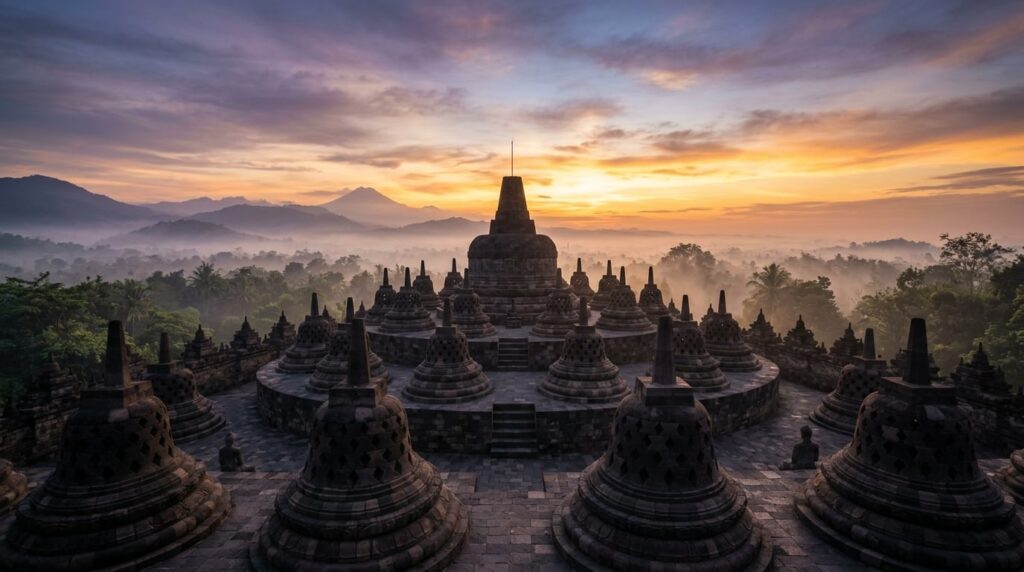
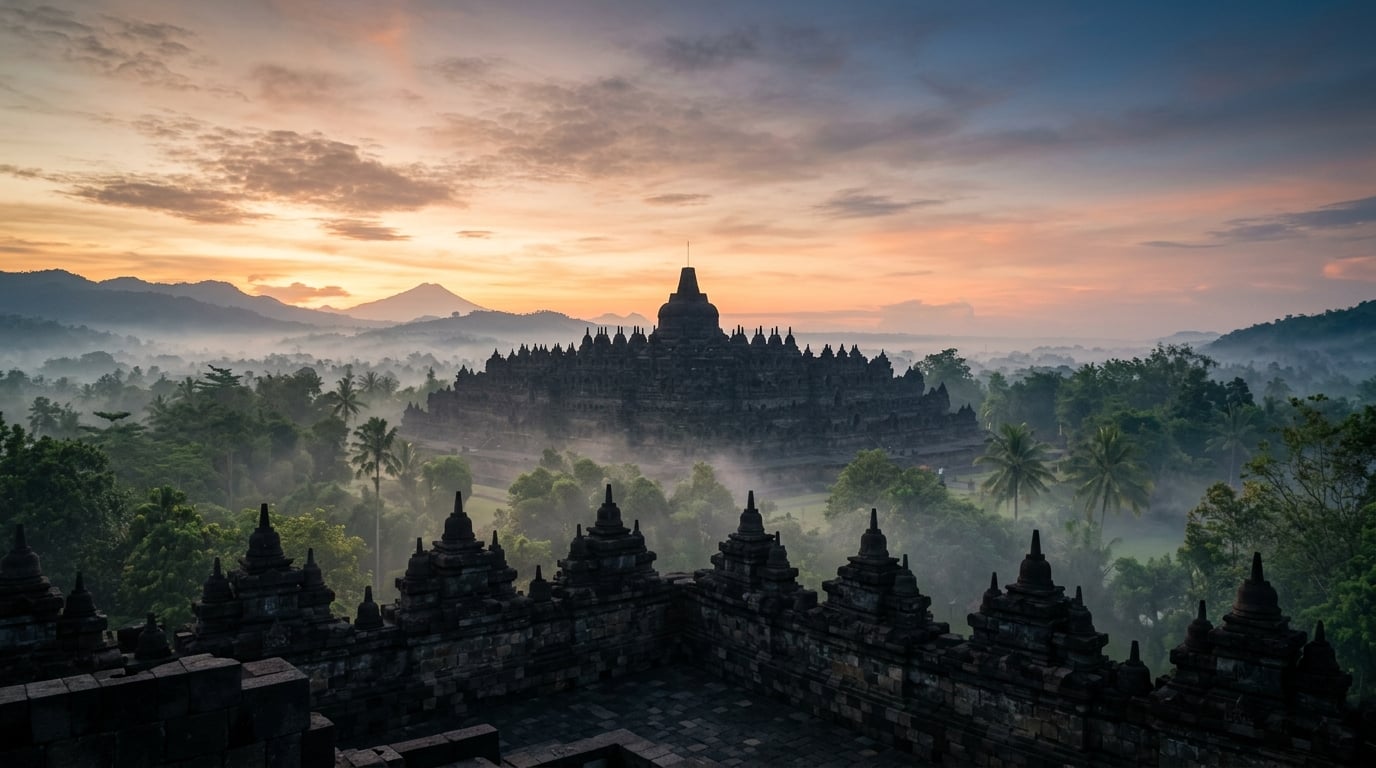
Borobudur, in Central Java, is the largest Buddhist monument on Earth, and standing at its base makes that immediately obvious. Built in the 9th century by the Sailendra dynasty, it rises through nine stacked platforms carved with more than 2,600 relief panels and crowned by 72 bell-shaped stupas, each once holding a seated Buddha statue. Authorities have kept a cap on daily visitor numbers for the upper terraces since 2023 and still require a guided, timed-entry ticket for anyone climbing to the top, so book through the official Borobudur reservation portal well before your trip rather than showing up and hoping for the best. The foreign-visitor combined ticket that includes terrace access currently runs around 455,000 IDR (roughly USD $28–30), with grounds-only entry priced considerably lower for those happy to admire the structure from below.
Arrive for sunrise if your schedule allows it. Every brochure uses that shot for a reason: the temple emerging from a sea of mist with Mount Merapi smoking gently on the horizon is one of those rare travel moments that actually lives up to the hype.
Prambanan
A short drive from Yogyakarta, Prambanan is a soaring Hindu temple complex dedicated to the Trimurti — Brahma, Vishnu, and Shiva. Where Borobudur feels rounded and contemplative, Prambanan feels sharp and vertical; its central spire reaches 47 metres, giving the whole site a dramatic, almost gothic silhouette against the sky. Time your visit for an evening Ramayana Ballet performance, staged with the floodlit temples as a backdrop during the dry season months. It leans touristy, no question, but the setting alone makes the ticket worth it.
Both sites pair well with a broader temple-and-culture itinerary, and if you’re mapping out which spots deserve the most time on a Java trip, it’s worth comparing them against the island’s other landmarks in this roundup of must-visit places on Java Island.
Hike Up Mount Bromo
Mount Bromo, part of the Tengger massif in East Java, is the volcano you’ve almost certainly seen in photos without ever knowing its name. Its active caldera and the surrounding “Sea of Sand” look more like a lunar landscape than anything you’d expect on a tropical island, which is exactly why it’s become one of Indonesia’s most photographed sunrise destinations.
The standard plan is a pre-dawn jeep ride up to Penanjakan or the King Kong Hill viewpoint, departing somewhere between 3 and 4 a.m. You’ll be cold, groggy, and questioning your life choices while queuing for coffee, but watching the sun crest the ridge and light up Bromo, Batok, and the distant smoking cone of Semeru behind them makes the early wake-up entirely forgivable. After sunrise, drive down into the volcanic plain, then either walk or hire a horse to Bromo’s base and climb the roughly 250-step staircase to peer over the crater rim into the steaming depths below.
A few practical notes worth remembering. Mornings up here genuinely hover near freezing, even though you’re still technically in the tropics, so pack a real jacket, gloves, and a beanie rather than relying on a thin hoodie. Entry to Bromo Tengger Semeru National Park currently runs roughly 220,000–320,000 IDR for foreign visitors, with slightly higher weekend rates, and these fees do get revised periodically, so confirm current pricing before you go. Most travelers base themselves in the village of Cemoro Lawang the night before, and joining an organised jeep tour is far easier — and safer — than trying to arrange transport solo in pitch darkness on mountain roads you’ve never driven.
Immerse Yourself in Yogyakarta’s Culture
Yogyakarta, or Jogja as everyone who’s been there calls it, is Java’s cultural anchor and the city I’d recommend as a base for almost any first-time visitor. It’s compact enough to explore on foot or by becak, friendlier than people expect from a large Indonesian city, and packed with things to do without ever feeling overwhelming.
Start at the Kraton, the sultan’s palace, which still functions as an active royal residence and hosts daily gamelan and traditional dance performances in its pavilions. Wander down Malioboro Street for street food stalls and shopping, then duck into the quieter side alleys to find batik studios where artisans still draw wax patterns by hand — a slower craft that’s genuinely worth watching up close rather than rushing past. Taman Sari, the old royal water castle with its underground tunnels and bathing pools, sits nearby and makes for a quick, photogenic stop between everything else.
Jogja also happens to be the perfect launch pad for both Borobudur and Prambanan, which is exactly why most itineraries have travelers spending three or four nights here and using it as a hub for day trips. If you’re deciding where to stay while based here, it’s worth checking a dedicated guide to the best hotels across Java Island before booking, since options range from heritage guesthouses near the Kraton to modern hotels closer to the airport.
Relax on the Beaches of Banyuwangi
Tucked into Java’s easternmost tip, Banyuwangi spent years getting overlooked by travelers rushing straight through to the Bali ferry. That’s changing fast, and for good reason. The region has beaches like Pulau Merah, named for its faint red-tinged sand and known for reliable, beginner-friendly surf, alongside the wild, protected shoreline of Alas Purwo National Park, where the legendary waves at G-Land pull serious surfers in from around the world every dry season.
Banyuwangi also serves as the gateway to Ijen, home to the famous electric-blue flames and a startlingly turquoise crater lake that ranks among the most surreal sights in Indonesia. If your schedule allows it, pair the two: a pre-dawn Ijen hike followed by a slower beach day in Banyuwangi makes for one of the best two-day stretches on the entire island. From there, it’s a short ferry hop over to Bali to continue the trip.
Discover Bandung’s Natural and Urban Delights
Up in the cool highlands of West Java, Bandung blends volcanic scenery with a genuinely lively food and shopping scene. Sitting at around 700 metres of altitude, the city stays noticeably cooler than the coast even during the hottest months, which alone makes it worth the detour for anyone tired of tropical humidity by that point in the trip.
Just outside town, Tangkuban Perahu is a volcano you can drive almost right up to, with steaming craters visible a short walk from the parking area. Kawah Putih, a bit further south, is a startling white-and-turquoise crater lake ringed by pale mineral cliffs that make it look almost otherworldly in photos and even more striking in person. Back in the city, Bandung’s factory outlets and cafe culture keep visitors busy for a day or two, and the surrounding tea plantations make for an easy, scenic day trip if you need a break from shopping bags.
A Rough Framework for Timing Your Trip
Most first-time visitors underestimate how much ground Java actually covers, and end up cramming too much into too few days. A realistic minimum is seven days: two or three around Yogyakarta for the temples and city itself, two around Bromo and the surrounding highlands, and a day or two either in Bandung or pushing east toward Ijen and Banyuwangi. Ten to twelve days lets you do all of it without feeling like you’re sprinting from jeep to train to temple gate. Anything shorter than five days is really only enough for Jogja plus one volcano, so be honest with yourself about what you can actually fit before building an ambitious wish list.
Bonus Tips for Traveling in Java
Getting around Java has genuinely improved over the past few years. The train network is efficient, with comfortable, punctual services linking Jakarta, Bandung, Yogyakarta, and Surabaya, and the Whoosh high-speed rail line now covers Jakarta to Bandung in around 40 minutes — a trip that used to eat half a day by road. Book tickets in advance through the KAI Access app, especially around Indonesian public holidays, when seats disappear quickly and prices climb. If you’re planning a wider Southeast Asia itinerary and want a broader refresher on packing, documents, and general trip logistics, this list of travel tips worth knowing before your next trip covers ground that applies well beyond Java too.
Java is predominantly Muslim, so dress modestly when visiting temples and mosques and keep a scarf handy if you plan on entering religious sites. Cash still dominates in smaller towns, though cards and QRIS mobile payments now work fine in cities and most tourist areas. The dry season, roughly May through September, remains the best window for volcano hikes and clear temple sunrises, since cloud cover and rain can wash out both during the wet months. Give yourself more time than the map suggests, too — distances look short on paper, but traffic around Jakarta and winding mountain roads elsewhere will eat hours you didn’t budget for.
Food is half the reason to linger. Java’s regional cooking varies more than people expect, from the sweet, slow-cooked gudeg of Yogyakarta to the fiery sambal-heavy dishes further east, and it’s worth building at least one meal stop around it rather than treating food purely as fuel between sights. A closer look at where to eat is covered in this guide to the top restaurants across Java Island, which is handy for planning stops between temple visits and volcano hikes.
If Jakarta features anywhere in your route — and for most flights into Java, it will — it’s worth carving out at least a day or two there before heading inland, rather than treating it purely as a layover city. There’s a solid case for the capital in its own right, laid out in this piece on why Jakarta is worth visiting.
It’s also worth deciding early whether Java is a standalone trip or one leg of a longer Indonesia run. Plenty of travelers pair it with Bali for the temples-and-beaches contrast, or push further north to Lake Toba for a completely different kind of scenery — deep volcanic crater lake instead of smoking cones and stone reliefs. If Sumatra is on the table, this rundown of things to keep in mind while visiting Lake Toba is a useful add to your reading list before you lock in flights.
Final Thoughts
Java rewards travelers who slow down instead of racing between checkboxes. You could technically tick off Borobudur, Bromo, and Ijen in a rushed week, but the island’s real pleasure sits in the in-between moments: a plate of gudeg in a Jogja warung, gamelan drifting across a palace courtyard at dusk, a highland morning cool enough to actually need a jacket. Build a route around two or three of the experiences above, leave room to wander off-plan, and Java will hand you far more than any checklist of sights ever could.


1 thought on “Things to Do on Java Island: 2026 Guide to Temples, Volcanoes & Culture”
Comments are closed.